HVAC in Ontario is a heating problem that has become a heating-and-cooling problem, and the whole market is being pulled toward electrification while still having to keep buildings warm through −25°C winters. That tension — decades of gas-fired heating meeting a provincial and federal push toward heat pumps — is the defining feature of Ontario HVAC contracting today, and it is why choosing the right contractor now involves more than tonnage and a price.
This page lists HVAC contracting companies operating in Ontario — residential heating and cooling installers and service firms, commercial and institutional mechanical/HVAC contractors, and refrigeration specialists. Shortlist here, then verify TSSA registration, licensing, WSIB standing and references directly with the company.
The credentials that actually matter
Ontario regulates the people and the fuel more tightly than most jurisdictions, and several of these are legal requirements, not nice-to-haves.
Gas work is TSSA-regulated. Any work on natural-gas or propane appliances — furnaces, boilers, rooftop units, water heaters — must be performed by a technician holding a G1 or G2 gas licence under the Technical Standards and Safety Authority (TSSA). This is non-negotiable and safety-critical; an unlicensed gas installation is both illegal and dangerous. Ask which gas licence the technician on your job holds.
Refrigerant handling is federally certified. Technicians who install or service air conditioners and heat pumps must hold ODP (ozone depletion prevention) certification to handle refrigerants, and Canada is phasing down high-GWP HFC refrigerants under the federal regulations, which affects what equipment and refrigerants are available on new installations.
The trade itself is certified. Residential (Sheet Metal Worker / Residential Air Conditioning Systems Mechanic, trade 313D) and related HVAC trades are recognised skilled trades in Ontario administered through Skilled Trades Ontario. And, as with all Ontario construction, HVAC firms must carry mandatory WSIB coverage — ask for a clearance certificate.
The heat-pump transition, honestly
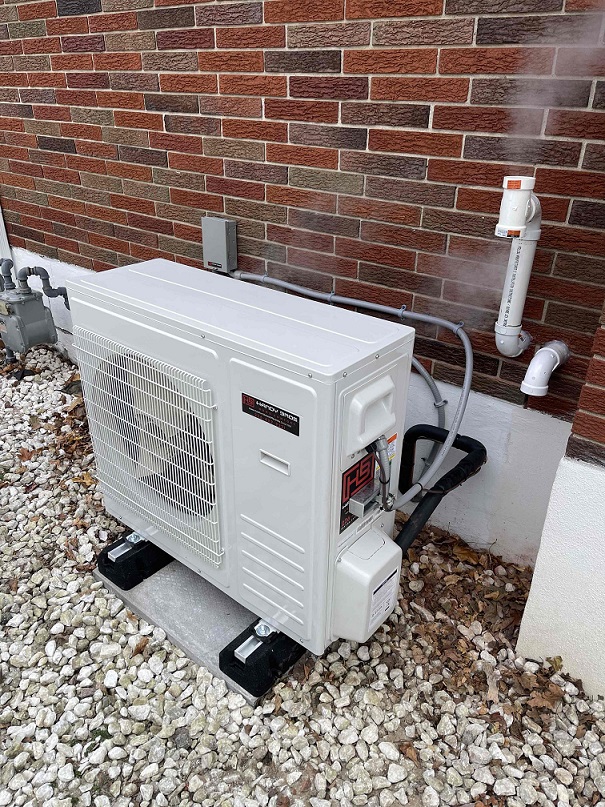
Heat pumps are the centre of Ontario's HVAC conversation, backed by federal and provincial incentives and by the Save on Energy programs. They genuinely work in cold climates now — cold-climate air-source heat pumps hold useful capacity well below freezing — but Ontario's deep-winter extremes mean the right answer for most homes is currently a dual-fuel (hybrid) system: a heat pump doing the heating and cooling for most of the year, with a gas furnace or electric backup taking over on the coldest days. A contractor who either dismisses heat pumps entirely or oversells a single cold-climate unit as a total gas replacement without discussing backup, electrical-panel capacity or a proper heat-loss calculation is not giving you the full picture.
The electrical side is the sleeper issue. Converting from gas heat to a heat pump can require electrical-service and panel upgrades that cost real money and take utility coordination, and that cost belongs in the comparison from the start. The best Ontario HVAC contractors run a proper heat-loss/heat-gain calculation (CSA F280), size the equipment to it, and lay out the electrical and backup implications before you sign — rather than swapping like-for-like tonnage and hoping.
Sizing, and why bigger is worse
The most common residential HVAC mistake in Ontario is oversizing. An oversized furnace or air conditioner short-cycles — it blasts to setpoint and shuts off before it has properly dehumidified in summer or evenly distributed heat in winter — which wastes energy, wears out equipment and leaves comfort complaints. Proper sizing comes from a room-by-room heat-loss and heat-gain calculation, not from replacing whatever was there before or from a rule-of-thumb per square foot. If a contractor quotes equipment size off the old unit's nameplate without measuring the house, that is a red flag.
Incentives, and reading a quote in that light
Ontario homeowners and building owners moving to high-efficiency and heat-pump equipment can often tap rebate and financing programs — the Home Renovation Savings / Save on Energy rebates and, at various times, federal grants and low-interest loan programs — but eligibility hinges on approved equipment, minimum efficiency ratings, licensed installation and, frequently, a pre- and post-retrofit energy assessment. The rules and available programs change, so an installer who works this market regularly should be able to tell you plainly what a given system currently qualifies for and what documentation you will need. Treat vague or absolute rebate promises with caution — a good contractor points you to the current program terms rather than guaranteeing a number.
The practical effect on your comparison is that the cheapest equipment is not always the cheapest project. A slightly more expensive qualifying heat pump that unlocks a rebate, installed by a licensed contractor who files the paperwork correctly, can beat a lower sticker price that qualifies for nothing. Ask each bidder to show the equipment's efficiency ratings and current rebate eligibility alongside the price.
The regional markets
The Greater Toronto Area is the deepest market — dense residential retrofit demand, a vast commercial and institutional building stock, and the province's most active heat-pump-conversion activity. Ottawa has the coldest sustained winters of the big cities, which sharpens the dual-fuel and backup-sizing question. Southwestern Ontario (London, Windsor, Kitchener–Waterloo) blends residential growth with a large industrial and manufacturing HVAC base, including process cooling for the EV-and-battery corridor. The snowbelt and cottage country add extreme-cold and shoulder-season swing demands that make backup heat and equipment reliability especially important.
How to shortlist
Confirm the technician's TSSA gas licence (G1/G2) and refrigerant certification. Ask for a current WSIB clearance certificate. For a heat-pump project, insist on a CSA F280 heat-loss calculation and a straight answer on backup heat and electrical-panel capacity — and get the electrical upgrade cost, if any, in the quote. For any replacement, make sure the sizing comes from a measurement of your building, not the nameplate on the old unit. And weigh the service side: an installer who will actually answer the phone in February is worth a premium in this climate.
Related on Exchange: browse all HVAC contracting companies, compare with HVAC contractors in Texas, and hire adjacent Ontario trades — mechanical contractors in Ontario, electrical contractors in Ontario, plumbing contractors in Ontario and general contractors in Ontario.
Nearby regions and related trades
HVAC contractors in other regions: Arizona, California, Florida, Georgia, Illinois, Maryland, North Carolina, Pennsylvania, South Carolina, Texas, Virginia.
Other trades in Ontario: Concrete, Drywall, Electrical, General Contracting, Mechanical, Plumbing, Roofing & Waterproofing, Site Works & Landscaping.
Jump to licence verification sources for HVAC in Ontario, or back to all hvac contractors on Exchange.
Frequently asked questions
What licence does a technician need to work on gas heating in Ontario?
Any work on natural-gas or propane appliances — furnaces, boilers, rooftop units, water heaters — must be done by a technician holding a G1 or G2 gas licence under the Technical Standards and Safety Authority (TSSA). It is a legal, safety-critical requirement; an unlicensed gas installation is both illegal and dangerous. Ask specifically which gas licence the technician assigned to your job holds before work begins.
Do heat pumps actually work in Ontario winters?
Yes, cold-climate air-source heat pumps retain useful heating capacity well below freezing and handle most of the Ontario year efficiently. But because Ontario winters reach extreme lows, the practical answer for most homes is a dual-fuel (hybrid) system — a heat pump for heating and cooling most of the time, with a gas furnace or electric backup for the coldest days. Be cautious of any contractor who either dismisses heat pumps outright or sells a single unit as a full gas replacement without discussing backup heat and electrical capacity.
Why does heat-pump conversion sometimes require an electrical upgrade?
Switching from gas heating to an electric heat pump adds significant electrical load, which can exceed the capacity of an older service or panel and require an upgrade — a real cost that also needs utility coordination. A good HVAC contractor identifies this before you sign by running a heat-loss calculation, sizing the equipment, and laying out the electrical and backup implications up front, so the electrical upgrade cost is part of the comparison rather than a surprise.
Why is correct HVAC sizing so important, and how is it done?
Oversized heating and cooling equipment short-cycles — reaching setpoint and shutting off before it has properly dehumidified in summer or evenly heated in winter — which wastes energy, wears out the equipment and creates comfort complaints. Proper sizing comes from a room-by-room heat-loss and heat-gain calculation (CSA F280), not from matching the old unit's nameplate or a per-square-foot rule of thumb. A contractor who sizes off the old equipment without measuring the building is a warning sign.
What certification is required to handle refrigerants in Ontario?
Technicians who install or service air conditioners and heat pumps must hold ODP (ozone depletion prevention) certification to handle refrigerants. Canada is also phasing down high-GWP HFC refrigerants under federal regulations, which affects which equipment and refrigerants are used on new installations. Reputable HVAC firms also carry mandatory WSIB workplace-injury coverage — ask for a current clearance certificate.
Which parts of Ontario have distinct HVAC demands?
The Greater Toronto Area is the deepest market, with dense residential retrofit demand and the most heat-pump-conversion activity. Ottawa has the coldest sustained winters of the major cities, which sharpens the dual-fuel and backup-sizing question. Southwestern Ontario blends residential growth with a large industrial HVAC base, including process cooling for the EV and battery corridor. The snowbelt and cottage country add extreme-cold and shoulder-season demands that make reliable backup heat especially important.
How many HVAC contractors are listed in Ontario on Exchange?
This page lists every HVAC contracting company in the Exchange directory with an Ontario presence, refreshed as companies are added and verified. Each listing links to a full company profile with contact details, service areas, trade categories and, where supplied, certifications, licensing and year founded. Companies can add or claim their own listing free through the Add a Listing page.