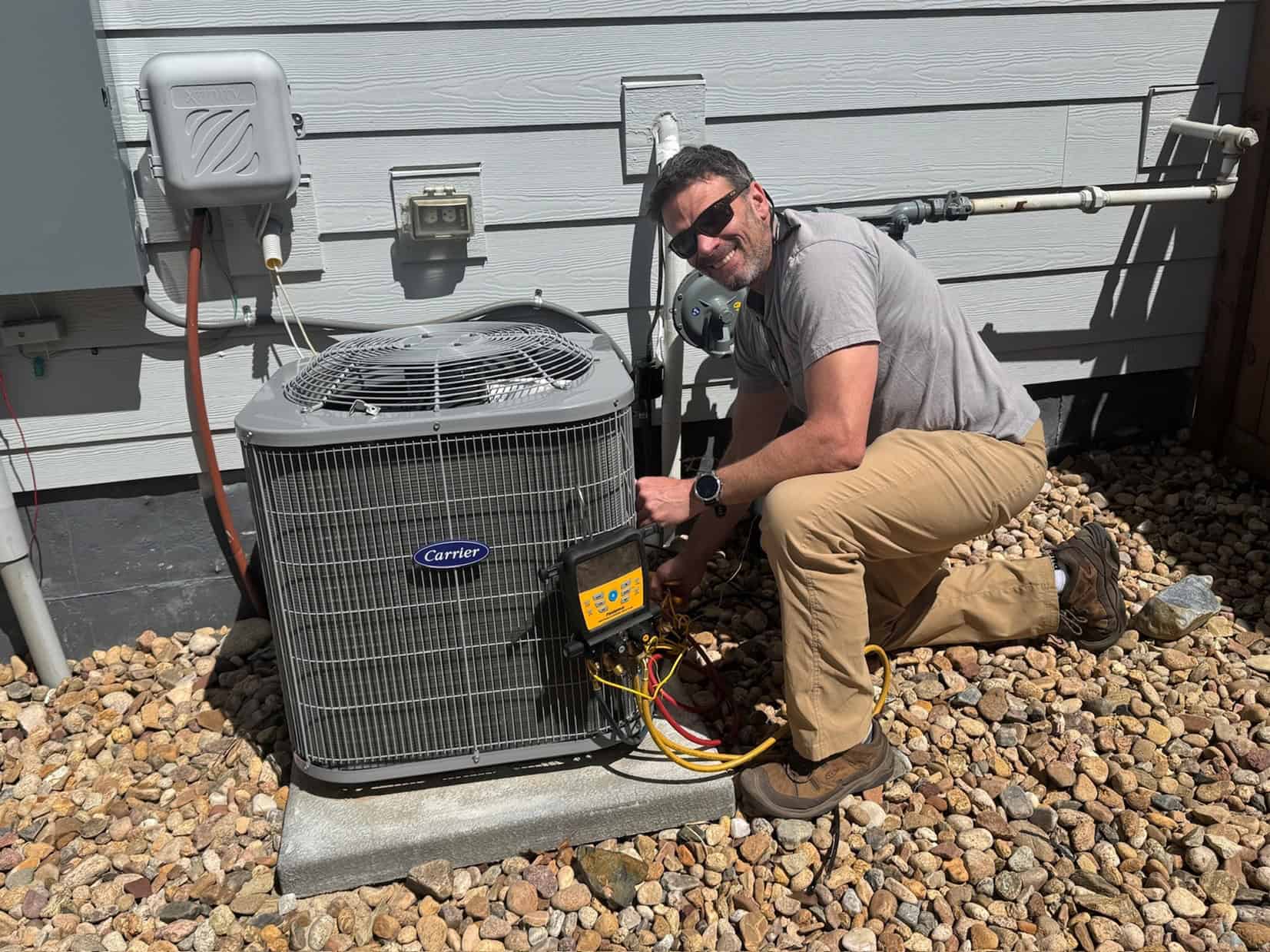
Short answer: Exchange lists 9 HVAC contractors in Pennsylvania. There is no statewide HVAC licence. What the state requires instead is Home Improvement Contractor registration with the Office of Attorney General for anyone doing more than $5,000 of residential work a year, while Philadelphia and Pittsburgh run their own contractor licensing, and the Uniform Construction Code applies statewide except in the municipalities that opted out of enforcing it.
HVAC contractors in Pennsylvania
Pennsylvania does not license heating, ventilation and air conditioning contractors at state level. There is no state HVAC board, no state trade examination and no state journeyman or master credential. For a contractor arriving from Maryland or New Jersey this is a genuine change of environment, and the risk is assuming that the absence of a state licence means an absence of registration obligations. It does not. Two separate regimes fill the space: a statewide consumer-protection registration, and municipal licensing in the two largest cities plus a scattering of smaller jurisdictions.
HICPA registration is a registration, not a licence
The Home Improvement Consumer Protection Act requires any contractor performing more than $5,000 of home improvement work in Pennsylvania in a calendar year to register with the Office of Attorney General. Registration requires liability insurance at a statutory minimum and disclosure of criminal history, and it produces a registration number that must appear on all contracts, estimates, advertisements and proposals. There is no examination and no competency assessment. The Act also imposes contract requirements that matter commercially: a home improvement contract must be in writing and signed, must include the registration number, a description of the work, the total price, approximate start and completion dates and specified notices, and the deposit is limited to one third of the contract price plus the cost of special-order materials. A contract that fails these requirements is voidable by the consumer, and an unregistered contractor is committing an offence under the Act.
Registration and licensing at a glance
| Requirement | Authority | Threshold | Exam |
|---|---|---|---|
| Home Improvement Contractor registration | Office of Attorney General, under HICPA | More than $5,000 of residential work in a calendar year | No |
| Philadelphia contractor and Warm Air trade licence | Department of Licenses and Inspections | Work within the city | Yes, for the named individual |
| Pittsburgh contractor registration | Permits, Licenses and Inspections | Work within the city | Varies |
| Uniform Construction Code | Department of Labor and Industry, or the municipality | Statewide, subject to municipal opt-out for enforcement | — |
| Section 608 refrigerant certification | Environmental Protection Agency | Any technician handling refrigerants | Yes |
Philadelphia and Pittsburgh license separately
Philadelphia's Department of Licenses and Inspections issues a contractor licence and, separately, trade licences including a Warm Air licence covering heating and air conditioning work, with an examination and experience requirement for the named individual. Pittsburgh requires contractor registration and permits through its Permits, Licenses and Inspections bureau. Several other municipalities — particularly in the Philadelphia collar counties and in Allegheny County — maintain their own registration requirements. The practical consequence for a growing HVAC firm is the same as in other home-rule states: the state registration is the floor, not the ceiling, and market entry into Philadelphia specifically requires a qualified individual with a trade credential the state does not itself issue.
The UCC and the municipalities that opted out
Pennsylvania adopted the Uniform Construction Code under Act 45 of 1999, which brought the state its first statewide building code and applies the International Codes with Pennsylvania amendments. The distinctive feature is the opt-out: municipalities were permitted to decline to administer and enforce the UCC, in which case enforcement for commercial work falls to the Department of Labor and Industry and residential enforcement is limited. A contractor working across county lines will encounter municipalities with their own code officials, municipalities using third-party agencies, and municipalities where the permit route runs through the state. Confirming which of the three applies before quoting a job is a routine part of estimating in Pennsylvania and is the most common source of schedule surprise on small commercial HVAC work.
Refrigerant, efficiency and the federal layer
The federal obligations carry most of the technical weight in the absence of state licensing. Section 608 certification is required for any technician handling refrigerants, in the appropriate type, and the transition away from high global warming potential refrigerants under the American Innovation and Manufacturing Act has changed equipment availability and servicing practice for the trade. Pennsylvania sits in the federal northern region for residential efficiency standards, which sets minimum efficiency levels for split-system air conditioners and heat pumps that differ from the southern region, and installing or selling equipment below the regional minimum is a federal matter. Heat pump adoption across the state is rising quickly on both retrofit and new construction, and cold-climate performance data rather than nameplate efficiency is what a Pennsylvania specifier should be reading.
Getting paid: liens and the notices directory
Pennsylvania mechanics lien practice runs under Title 49. A subcontractor must serve a formal notice of intention to file at least thirty days before filing, and the claim itself must be filed within six months of completion of the claimant's work, with service on the owner within a month of filing and suit within two years. Pennsylvania also operates the State Construction Notices Directory, which applies to searchable projects above a statutory cost threshold: where an owner files a notice of commencement on a project of $1,500,000 or more and the project is entered in the directory, a subcontractor must file a notice of furnishing in the directory within forty-five days of first furnishing labour or materials to preserve lien rights. A subcontractor that does not check the directory at the start of a large project can lose its lien without ever receiving a document in the post, and this is the single most avoidable loss of security in Pennsylvania construction.
Climate, old housing stock and what the work is
Pennsylvania spans several heating climate zones, from the relatively mild south-east around Philadelphia to genuinely cold conditions in the north-central and north-west of the state, and equipment selection that is correct in Delaware County is undersized in Potter County. The housing stock is among the oldest in the country: Philadelphia rowhouses, Pittsburgh's hillside housing and a great deal of pre-war and pre-1950 stock across the commonwealth, much of it with hydronic heat, no existing ductwork and limited chase space. That combination is why ductless and ducted mini-split retrofits and high-velocity small-duct systems are disproportionately common in Pennsylvania residential HVAC, and why load calculation on an uninsulated masonry rowhouse produces very different numbers from the same floor area in a frame house. Radon mitigation interacts with ventilation design in much of the state, which sits over geology with elevated radon potential.
Verify a licence and check the source
Check credentials directly with the issuing agencies before you rely on any of them:
Home Improvement Contractor registration, Pennsylvania Office of Attorney General; Uniform Construction Code, Department of Labor and Industry; Philadelphia Department of Licenses and Inspections; Pennsylvania State Construction Notices Directory; Section 608 technician certification, Environmental Protection Agency.
Nearby regions and related trades
HVAC contractors in other regions: Arizona, California, Florida, Georgia, Illinois, Maryland, North Carolina, Ontario, South Carolina, Texas, Virginia.
Other trades in Pennsylvania: General Contracting, Mechanical, Roofing & Waterproofing.
Jump to licence verification sources for HVAC in Pennsylvania, or back to all hvac contractors on Exchange.
Frequently asked questions
Do HVAC contractors need a licence in Pennsylvania?
Not from the state. Pennsylvania issues no HVAC licence. Contractors doing more than $5,000 of residential work a year must register with the Office of Attorney General under HICPA, and Philadelphia and Pittsburgh license separately.
What is HICPA registration?
Registration under the Home Improvement Consumer Protection Act with the Office of Attorney General, required above $5,000 of residential work a year. It requires liability insurance and produces a registration number that must appear on all contracts, estimates and advertising. There is no examination.
How much deposit can a Pennsylvania HVAC contractor take?
On a home improvement contract the deposit is limited to one third of the contract price plus the cost of special-order materials. A contract that fails HICPA's written requirements is voidable by the consumer.
What licence is needed to do HVAC work in Philadelphia?
A contractor licence from the Department of Licenses and Inspections plus a Warm Air trade licence covering heating and air conditioning, with an examination and experience requirement for the named individual.
Does the Uniform Construction Code apply everywhere in Pennsylvania?
The UCC applies statewide, but municipalities were permitted to opt out of administering and enforcing it. Where they did, commercial enforcement falls to the Department of Labor and Industry. Confirming which route applies before quoting is routine in Pennsylvania.
What is the State Construction Notices Directory?
An online register for projects of $1,500,000 or more. Where the owner files a notice of commencement, a subcontractor must file a notice of furnishing in the directory within forty-five days of first furnishing labour or materials to preserve lien rights, and will receive no document in the post to prompt it.
Why are mini-split and high-velocity systems common in Pennsylvania?
Much of the housing stock is pre-war, with hydronic heat, no existing ductwork and limited chase space. Ductless and ducted mini-splits and small-duct high-velocity systems solve the distribution problem that rowhouse and hillside housing creates.