Oklahoma City has laid out how its main airport could grow from 4.6 million annual passengers to as many as 20 million. The city unveiled the Will Rogers International Airport “Cleared for Takeoff” development plan on Oct. 13, 2026: a 25-year, three-phase program in which each step is triggered by passenger demand rather than a calendar date.
Short-term projects total about $114 million. An airport spokesperson put long-term work at an estimated $1.1 billion, with preliminary figures of $300 million for terminal expansion, $500 million for additional gates, $100 million for a parking garage and $100 million to $200 million to rebuild the departures and arrivals roadway.
Project Scope
Phase 1 sizes the airport for about 6 million passengers and goes after the landside first. The centerpiece is a new five-level parking structure north of Garage C, estimated at about $90 million, which News 9 reported was expected to start within about a month of the unveiling. It’s going up over existing surface lots, so parking gets tighter before it gets better. Garage A comes down, and the rideshare waiting area gets a canopy.
Phase 2, at about 8 million passengers, pushes the terminal front west to roughly 550 feet of curb. The concourse grows to 24 to 26 gates, including at least one widebody gate, and a permanent two-level roadway separates drop-off from pickup. Phase 3 takes the airport to 40 gates (it has 17 now) and widens the curbside roadway to six lanes with two separate curbs. The later phases also include a light rail connection to downtown.
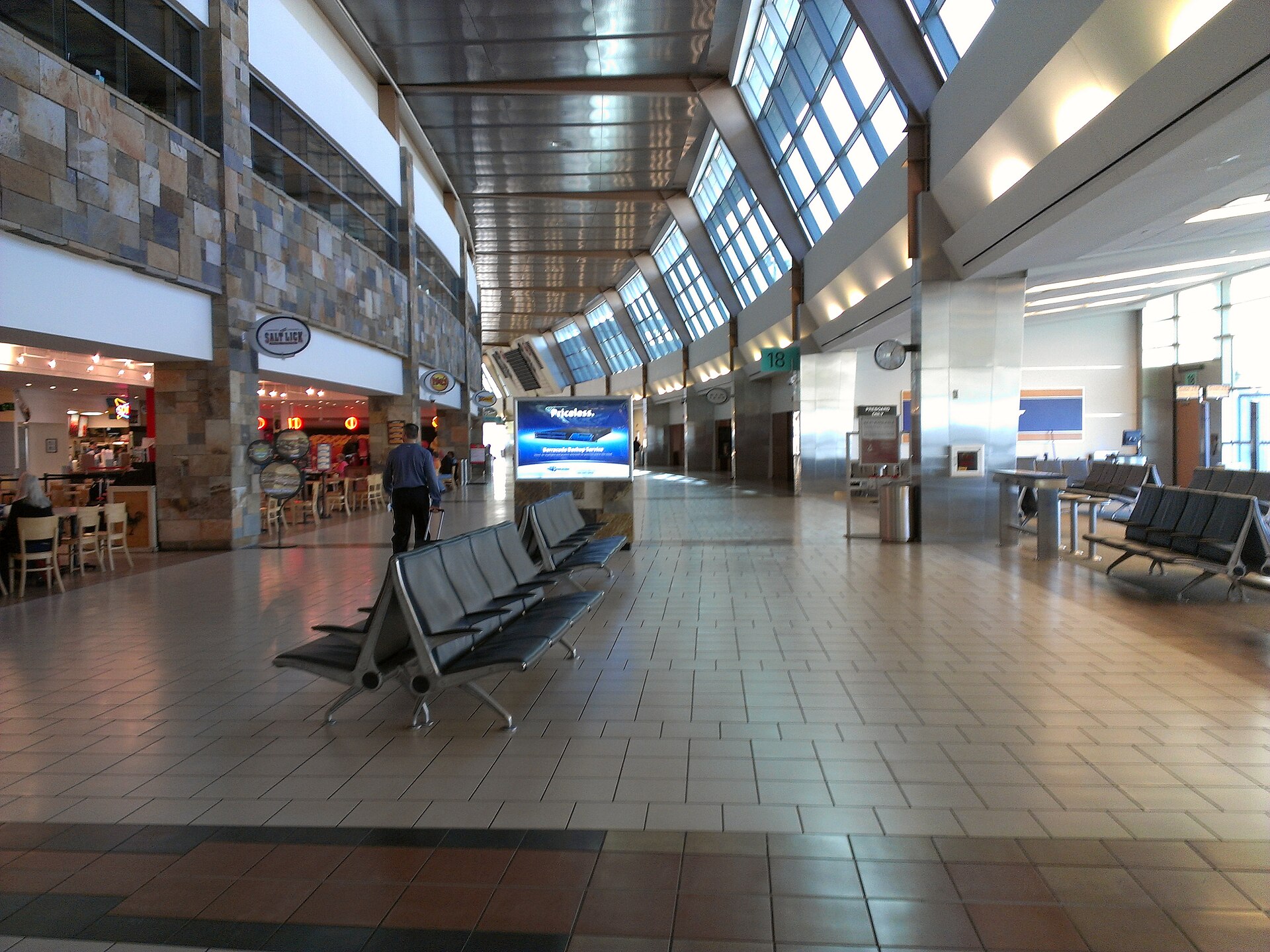
Smaller jobs aren’t waiting. Terrazzo is replacing the tile floors that Director of Airports Jeff Mulder admits are known for their “clickety clack,” with work running to January 2028. A roundabout at Terminal Drive and Amelia Earhart Drive will replace the traffic signals, with the mounted Will Rogers statue moving to its center, and runs to February 2028. Restroom renovations are due by December 2027.
The Oklahoma City Airport Trust hired Mead & Hunt for terminal programming and cost estimating. Nobody’s named a design team or contractor for the expansion itself.
Why It Matters
The plan is frank that today’s problem is the landside, not the airfield. Parking and curbs have fallen behind the gates, and that’s why a garage comes before any new concourse.
Financing will draw on revenue bonds, airport funds, passenger facility charges, FAA grants and state and federal transportation money. The trust had $126.13 million in junior lien bonds outstanding as of June 30, 2025. But the 20-million-passenger end state assumes growth the airport hasn’t shown yet, and demand-triggered phasing is the right hedge. The light rail link is the piece most likely to stay on paper, since the plan doesn’t attach a cost or funding source to it.
Related coverage & projects
Project Team & Details
| Owner / Client | Oklahoma City Airport Trust (City of Oklahoma City) |
|---|
| Consultants | Mead & Hunt (Terminal Programming and Cost Estimating) |
|---|
| Status | Planned |
|---|
| Funding Source | Mixed |
|---|