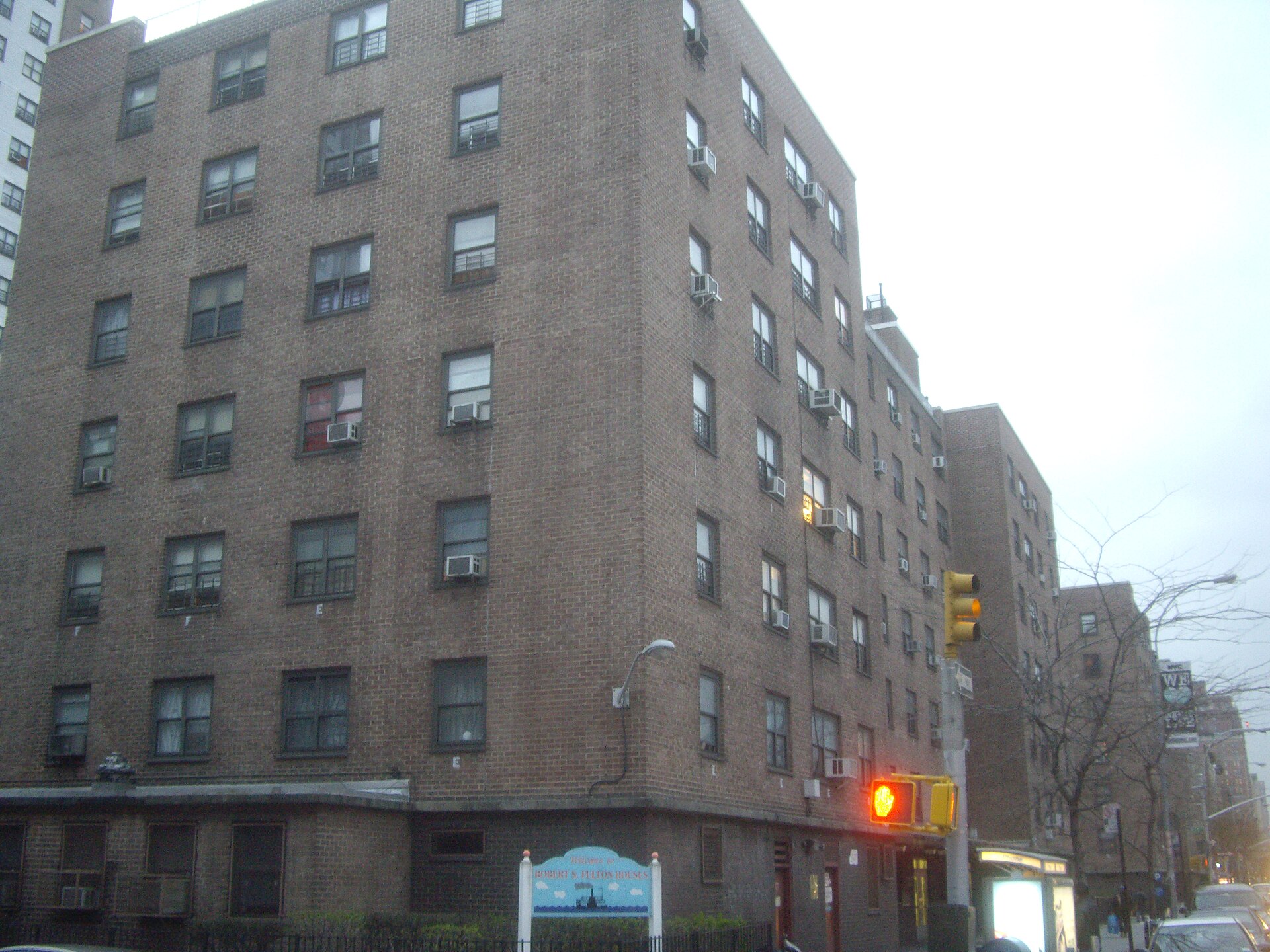
HUD reissued the RAD conversion commitments in the first days of August, clearing the largest public-housing rebuild in New York City history to proceed. Eighteen NYCHA buildings holding 2,056 apartments across two Chelsea campuses come down and get replaced one-for-one in six taller, narrower buildings.
Project Scope
Full build-out reaches up to 5,510 apartments across the Fulton Houses and Elliott-Chelsea Houses sites, of which up to 3,094 will be permanently affordable. That’s roughly 1,000 net-new affordable homes on top of the one-for-one replacements. The program also adds healthcare facilities, community centers, grocery and retail space, and reconfigured open space. Projected cost has risen to roughly $2 billion.
The phasing is the engineering problem. Residents move directly from their existing apartments into completed replacement units, with only about 6 percent requiring temporary relocation. That means the first new buildings go up on parking lots and open space before any demolition happens, and each subsequent phase is unlocked by the one before it. Phase one runs about three years, with the first replacement buildings ready in 2028 or 2029. Full build-out is targeted within eight years.
Related Companies and Essence Development lead as developers. PAU, COOKFOX Architects and Ismael Leyva Architects share the design work. A state court cleared the last legal challenge in July 2026, weeks before the HUD approval.
Why It Matters
Six percent temporary relocation on a 2,056-unit demolition is the number that makes this project unusual. The standard public-housing redevelopment moves everybody out, holds the site for years and loses a meaningful share of the original tenancy along the way. Building first and demolishing second costs more and takes longer, and it’s the only version that keeps a community in place.
It also constrains the design. Six buildings replacing eighteen means going considerably taller on a smaller footprint, which is what taller and narrower means in practice, and why the open-space reconfiguration is part of the scope rather than a leftover.
Whether the net 1,000 affordable units justify demolishing sound postwar housing is a live argument in Chelsea and will be elsewhere. The precedent being set here is procedural. PACT can now be used at this scale, and NYCHA has more than 100,000 units carrying a capital backlog it can’t fund directly.
Project Team & Details
| Developer | Related Companies and Essence Development |
|---|
| Owner / Client | New York City Housing Authority (NYCHA) |
|---|
| Architect | PAU (Practice for Architecture and Urbanism) |
|---|
| Consultants | COOKFOX Architects (Design Architect)
Ismael Leyva Architects (Architect of Record) |
|---|
| Status | Planned |
|---|
| Delivery Method | Public-Private Partnership (P3) |
|---|
| Funding Source | Public-Private Partnership (P3) |
|---|