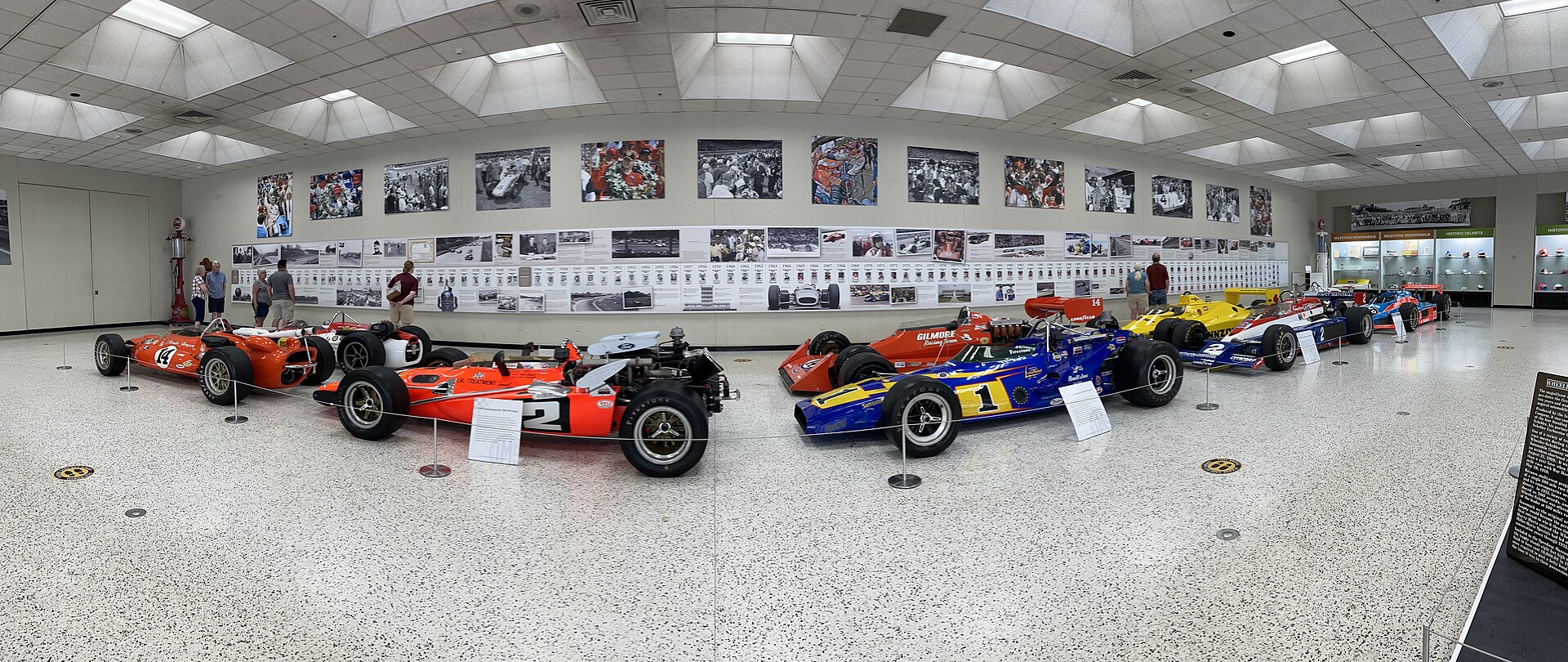
The Indianapolis Motor Speedway Museum owns more than 150 vehicles and can display a fraction of them. The rest sit in storage that was never designed for the job.
Ground broke on 13 May 2026 for an 87,000 square foot restoration and event facility at 1111 Polco Street in the Town of Speedway, a short distance outside the oval. Schmidt Associates designed it and Shiel Sexton is building it, the same pairing that delivered the main museum renovation that reopened in April 2025.
Project Scope
The building carries multiple restoration bays, detailing bays, and dedicated climate-controlled vehicle storage, plus mezzanine event space that adds a rentable venue to the Indianapolis market. Cars not on display at the main museum at 4750 West 16th Street will live here, and the museum plans rotating exhibits and public tours of the restoration floor rather than hiding the work behind a roll-up door.
Cost sits at roughly $15 million as a line item inside the museum’s $89 million capital campaign, per Indianapolis Business Journal reporting. No figure was released at the groundbreaking itself, and an earlier planning-stage report put the facility at $18 million, so the number should be read as approximate. Completion is stated for May 2027, ahead of that year’s Indianapolis 500.
The museum’s collection runs to more than 55,000 artifacts alongside the vehicles. Additional full- and part-time restoration staff will be hired for the new building, and the facility extends the museum’s automotive restoration education program with hands-on classes.
Why It Matters
Climate-controlled collection storage is a specification problem more than a cost problem. Racing cars carry magnesium castings, period rubber, cellulose-based finishes, and fuel systems that were never meant to sit still for decades, and each of those degrades on a different curve. Getting temperature, relative humidity, and air exchange right across a mixed collection in an 87,000 square foot volume is genuinely harder than it looks on a mechanical schedule.
Putting the restoration floor on public view is the other design decision worth noting. It turns a back-of-house function into programmable space, which is how the event revenue and the education program both get paid for. Museums have been doing this with conservation labs for years. Applying it to a shop with lifts and solvent handling raises the life-safety and ventilation bar considerably.
Related coverage & projects
Project Team & Details
| Owner / Client | Indianapolis Motor Speedway Museum |
|---|
| Architect | Schmidt Associates |
|---|
| General Contractor | Shiel Sexton |
|---|
| Status | Under Construction |
|---|
| Funding Source | Private |
|---|