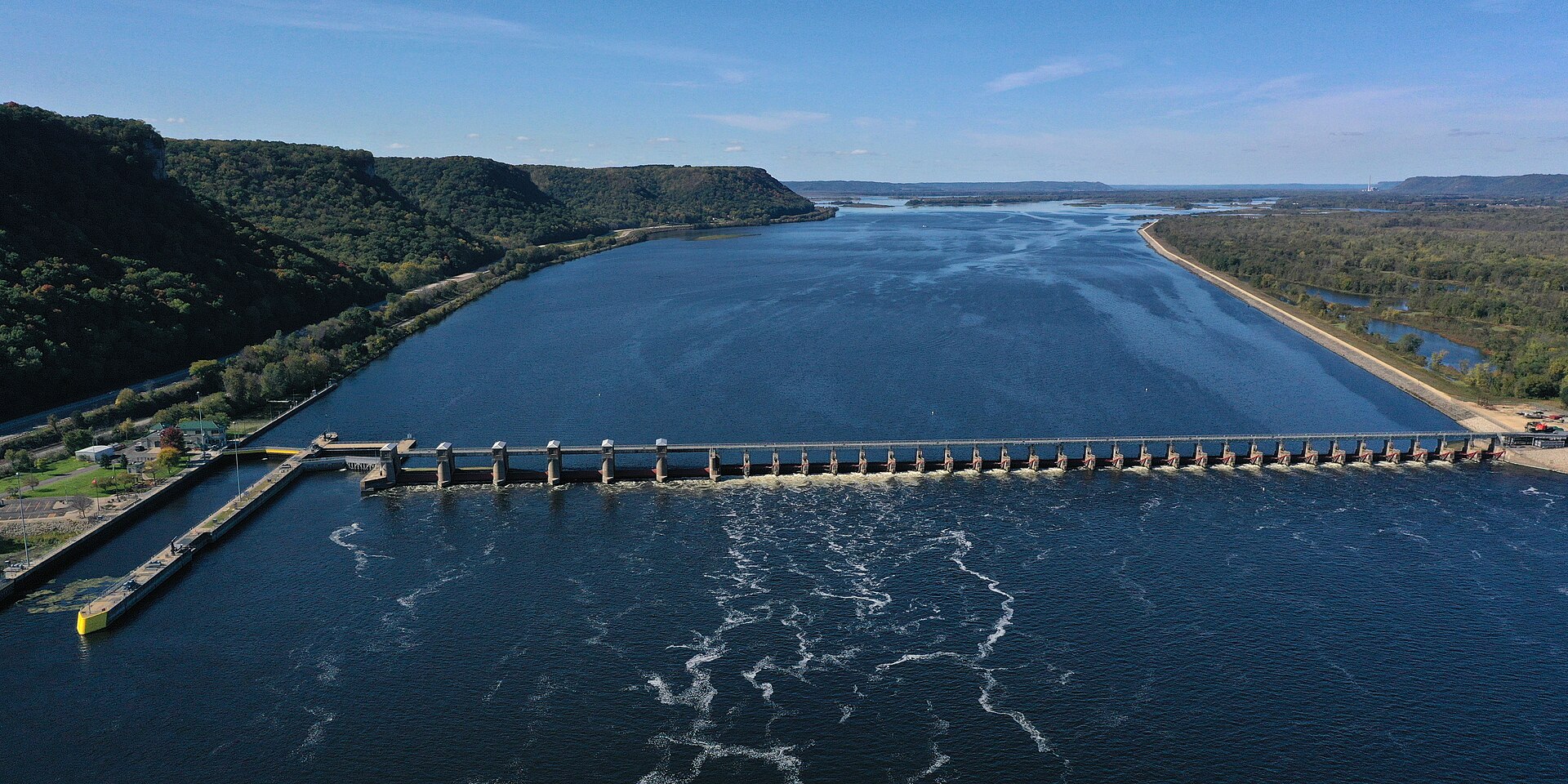
The gates are almost a hundred years old and they’re still holding the pool. The U.S. Army Corps of Engineers’ St. Paul District passed the halfway mark this summer on a rehabilitation of the roller gates at Lock and Dam 5 and Lock and Dam 5A, two of the structures that keep a nine-foot navigation channel on the Upper Mississippi.
Project Scope
The work targets the roller gates themselves, the large steel cylinders that regulate pool elevation. They’ve been in the water since the 1930s and they show it: corrosion through the steel, damage from debris coming downriver, and coatings long past their service life. Crews are stripping and rebuilding gates on a four-construction-season schedule that started in 2023 and runs to the end of 2029. Reported cost is more than $40 million, a figure that comes from local coverage rather than a Corps release.
Navigation hasn’t stopped. Because the scope sits in the dam rather than the lock chamber, tows have kept moving through both sites for the duration. The Corps expects the rebuilt gates to carry roughly 50 more years of service.
Why It Matters
The Upper Mississippi lock and dam system is one of the clearest examples of American infrastructure running decades past its design life because replacement is unaffordable and shutdown is unacceptable. Most of these structures were built between 1930 and 1940 under a single federal program. They all age at the same rate, which means the maintenance bill arrives everywhere at once.
Rehabilitation is the pragmatic answer, and it’s a harder job than building new. Crews work in and around moving water, on submerged load-bearing steel, on a schedule set by the navigation season and the ice. There’s no clean site and no clean shutdown. What the Corps buys with it is another half-century on a structure that moves grain to the Gulf, at a fraction of what a replacement dam would cost. Expect more of these, not fewer.
Project Team & Details
| Owner / Client | U.S. Army Corps of Engineers, St. Paul District |
|---|
| Status | Under Construction |
|---|
| Funding Source | Public (Federal) |
|---|