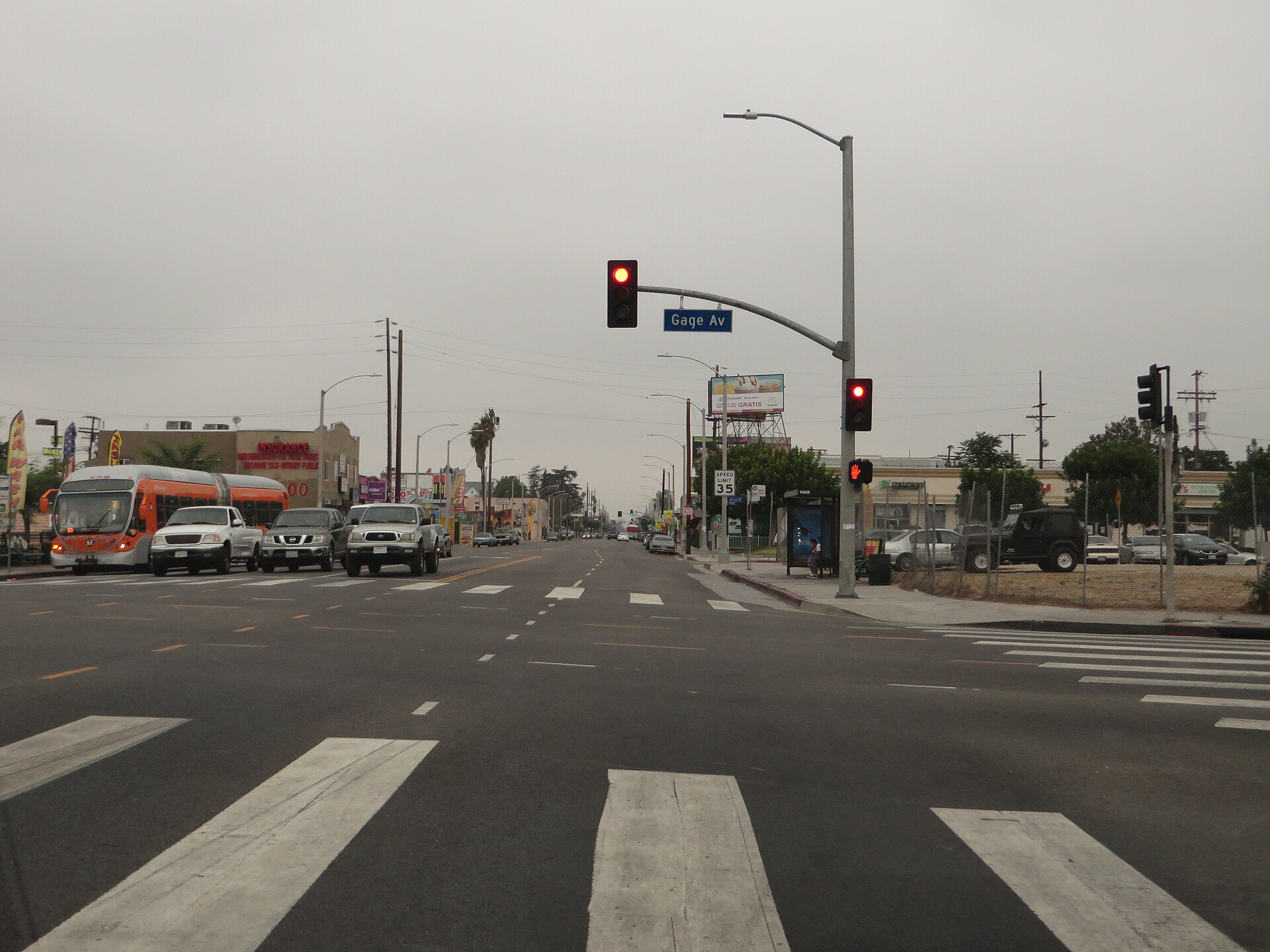
Vermont Avenue carries more bus riders than any other corridor in Los Angeles County, and it’s done it in mixed traffic. That changes now. LA Metro broke ground on Oct. 21, 2026, on the Vermont Transit Corridor, a 12.4-mile bus rapid transit line running from Sunset Boulevard in East Hollywood south to 120th Street in West Athens.
The target is the 2028 Summer Olympics. The line passes the Coliseum and Exposition Park, both Games venues, plus USC, the Lucas Museum of Narrative Art and Los Angeles City College.
Project Scope
This is side-running BRT, not a center-lane busway. Metro is converting the travel lane next to curbside parking into a bus-only lane in both directions for about 12 miles, adding transit signal priority, off-board fare payment and all-door boarding. Where Vermont narrows, crews will remove bottlenecks; the right-of-way swings from 55 feet to 160 feet curb to curb along the route.
The corridor gets 26 upgraded stations at 13 intersections, with better lighting, real-time arrival screens, emergency call buttons and accessible ramps. Bus bulb-outs, continental crosswalks, wider sidewalks and protected bike lanes come with the street work. Metro says end-to-end trips will be up to 24 percent faster.
Construction is front-loaded on paint and pavement. The plan calls for all-day bus lanes open by late 2027, with stations finished by mid-2028, so local buses can use the lanes before the BRT service starts. Segments will open as they’re done.
FTA’s last project profile put the cost at about $328 million. FTA signed a Small Starts grant of nearly $150 million on Sept. 1, 2026, and the rest comes from state funds and Measure M, the county’s 2016 sales tax. Metro says the project is fully funded. It awarded a construction manager/general contractor contract in February 2026. An AECOM-led joint venture with Terry A. Hayes Associates and RAW International handled planning, environmental and design work.
Why It Matters
Metro’s long-range plan still eyes rail on Vermont, but conversion money isn’t available until after 2067. For now it picked a side-running bus design partly because it qualified for a California CEQA exemption under SB 922 and a federal categorical exclusion, which kept environmental review from eating the Olympic deadline.
That’s the bet. The project is cheap and quick by LA transit standards, a few hundred million dollars for 12 miles. But side-running lanes work only if parking and turning cars stay out of them, and that’s an enforcement problem, not a construction one. Metro expects about 66,000 daily riders. Hitting that number will depend on whether the lanes stay clear.
Related coverage & projects
Project Team & Details
| Owner / Client | Los Angeles County Metropolitan Transportation Authority (LA Metro) |
|---|
| Consultants | Vermont Corridor Partners: AECOM-led JV with Terry A. Hayes Associates and RAW International (Planning, Environmental and Design) |
|---|
| Status | Under Construction |
|---|
| Funding Source | Mixed |
|---|