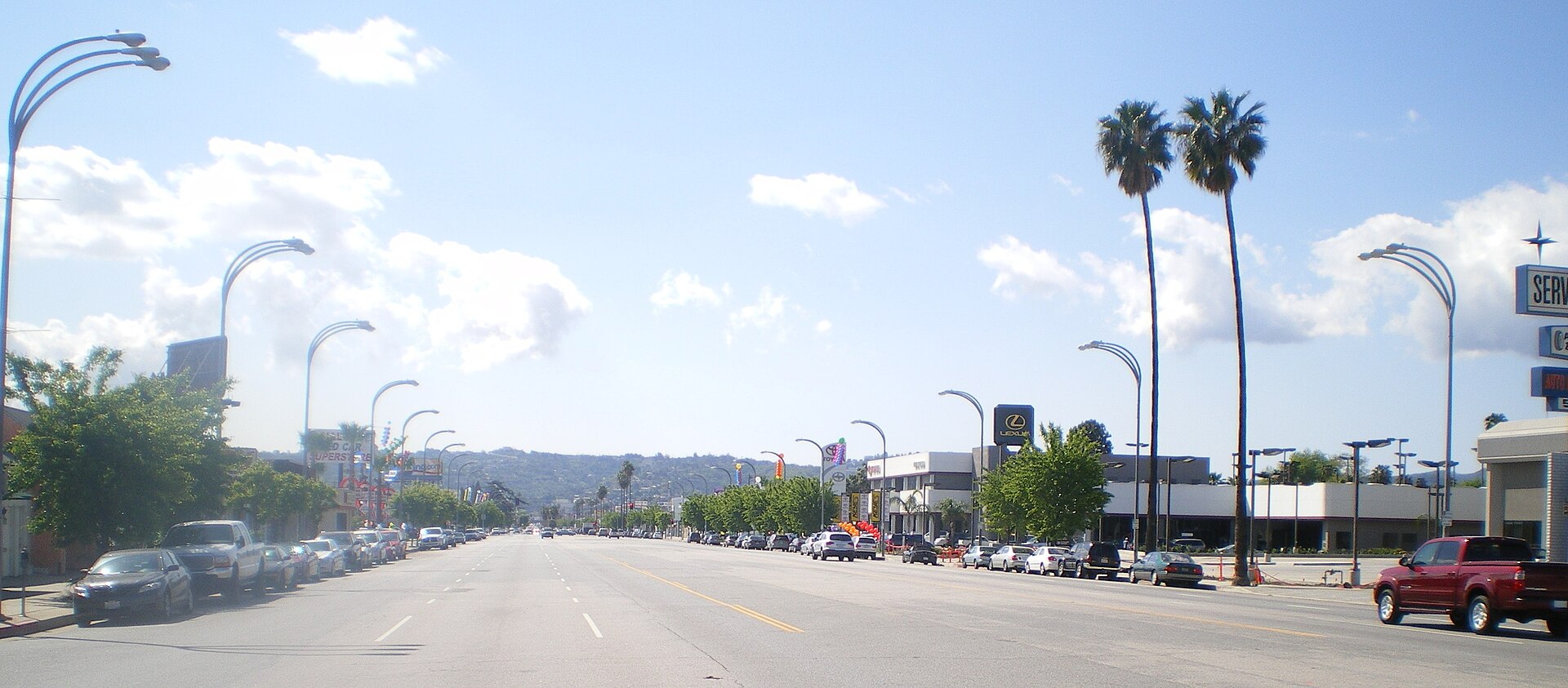
The East San Fernando Valley light rail line will put trains down the middle of Van Nuys Boulevard, one of the Valley’s busiest bus corridors, and it’s going in entirely at street level. In August 2026, San Fernando Transit Constructors, a joint venture of Skanska USA Civil and Stacy Witbeck, signed a $1.9 billion construction contract to build it.
Counting preconstruction and early works, the JV’s total contract value reaches about $2.4 billion. Metro carries the overall project at roughly $3.6 billion.
Project Scope
The line runs 6.7 miles in the center median of Van Nuys Boulevard, from the Metro G Line at Van Nuys north toward San Fernando, through Panorama City, Arleta and Pacoima. All of it is double-track and at grade. Metro lists 11 center-platform stations, spaced about three-quarters of a mile apart, including Victory, Sherman Way, Van Nuys Metrolink, Roscoe, Nordhoff, Arleta, Laurel Canyon and San Fernando.
The contract also covers a rail and maintenance facility, utility relocations and street improvements along the corridor. Skanska describes the yard at 26 acres. Metro’s project FAQ says 21 acres and a 33-vehicle fleet. Contractor sources say a separate public-private arrangement will design and support a solar system expected to supply about 70% of the yard’s power.
AECOM is lead designer under the JV and is advancing final design. Metro is delivering the job as progressive design-build, which let the builder and designer price and phase the work together before the main contract was set.
Underground utility work started earlier and is scheduled to continue through 2028. Major civil street work was set to begin in late spring 2026. Completion is expected in December 2031.
Why It Matters
The Valley has been promised rail on Van Nuys Boulevard for decades. Today the corridor runs on buses, and the new line will tie into the G Line and the Van Nuys Metrolink and Amtrak station, giving the northeast Valley a one-seat link to the regional network.
The money came together in pieces. FTA committed an $893 million grant, and the state had already put in about $600 million. Measure M and other local sources cover the rest.
The bigger construction story is the delivery model. Street-running light rail is mostly a utilities and traffic-control job, and most of the risk sits underground. Progressive design-build lets Metro and the contractor find conflicts before they’re priced into a hard bid. If the JV keeps this schedule on a 6.7-mile urban median, expect more transit agencies to try the same approach on surface lines.
Related coverage & projects
Project Team & Details
| Owner / Client | Los Angeles County Metropolitan Transportation Authority (LA Metro) |
|---|
| Consultants | AECOM (Lead Designer) |
|---|
| General Contractor | San Fernando Transit Constructors (Skanska USA Civil and Stacy Witbeck joint venture) |
|---|
| Status | Under Construction |
|---|
| Delivery Method | Design-Build |
|---|
| Funding Source | Mixed |
|---|