
Plaquemines LNG Export Terminal, Mississippi River, Louisiana
A construction project located in Port Sulphur.
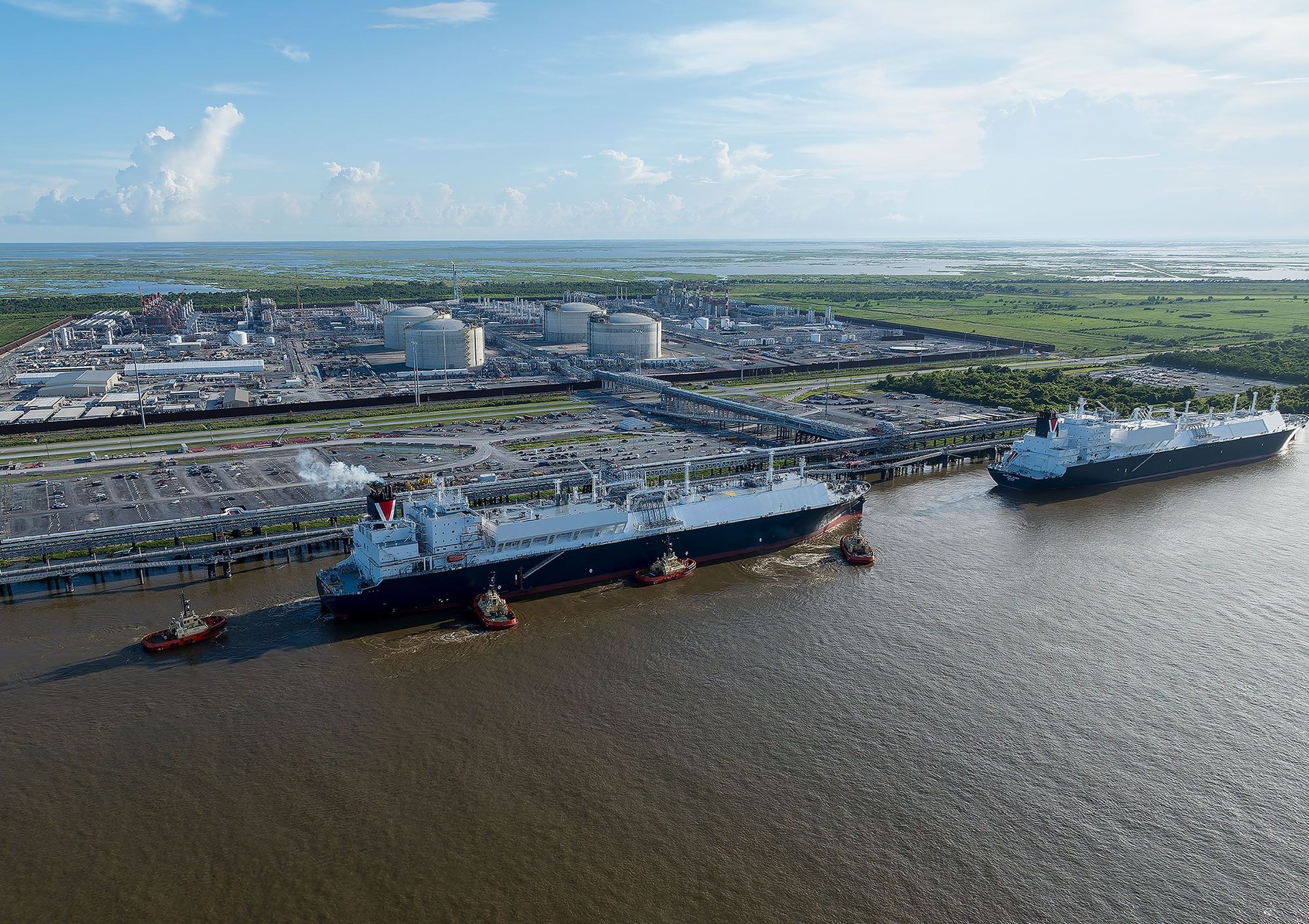
A Bit About Plaquemines LNG Export Terminal, Mississippi River, Louisiana
Thirty-six liquefaction trains, not four.
That’s the bet Venture Global made at Plaquemines, and it’s the reason the terminal repays study even from contractors who will never touch an LNG job. Instead of stick-building a handful of enormous trains on the Mississippi River, the developer ordered mid-scale modular units from fabrication yards and shipped them in, moving a large share of the hours off a Louisiana site where craft labor is the binding constraint. First LNG and first cargo came in December 2024, making Plaquemines the eighth U.S. LNG export terminal to start up, per EIA.
KBR and Zachry Group formed KZJV specifically for this job.
Project Scope
The terminal occupies 632 acres roughly 20 river miles south of New Orleans. Phase 1 is 10 mtpa across 18 mid-scale trains, and Phase 2 adds 18 more for about 20 mtpa nameplate. KZJV’s scope covers development, engineering, procurement and construction plus integration of the owner-furnished modularized liquefaction equipment, a split that puts KBR’s engineering depth and Zachry’s craft organization on opposite ends of the same contract. Feedgas arrives through the dedicated Gator Express pipeline system.
Phase 1 capital cost runs about $15.75 billion and Phase 2 about $7.8 billion, for a combined $23.3 billion to $23.8 billion as of March 2025.
The plant is already moving serious volume. By mid-July 2025 it was drawing more than 2.6 Bcf/d of feedgas, with a peak day of 2.92 Bcf/d. Venture Global projects 351 to 364 export cargoes from Plaquemines across 2026, a company figure rather than an independently verified one.
A proposed expansion would add 32 more trains and roughly 17.8 mtpa at an estimated $18 billion, with FID targeted for the first half of 2027 and first LNG in 2029, pending FERC approval. Fully built out across every phase, the site would reach about 44.8 mtpa, putting it among the largest LNG facilities anywhere.
Why It Matters
Plaquemines is the clearest large-scale proof of the modular mid-scale model on the Gulf Coast, and it reached first LNG considerably faster than conventionally built terminals of similar capacity. Whether the cost advantage holds all the way through commercial operations is a separate question, and the numbers to settle it won’t be public for a while.
The sequencing is the other lesson. Phase 2 began producing LNG before Phase 1 finished its commissioning and assurance testing, which means KZJV has been running construction, commissioning and startup concurrently across a live hydrocarbon facility. That is an aggressive posture, and it is the schedule the next round of Gulf Coast developers will be asked to match.
For craft contractors between New Orleans and Lake Charles, Plaquemines has been one of the largest single sources of labor demand of the decade, and the modular strategy means a meaningful share of that work never reached the parish at all.
Project Team & Details
| Developer | Venture Global LNG, Inc. |
|---|---|
| Owner / Client | Venture Global Plaquemines LNG, LLC |
| General Contractor | KZJV - a joint venture of KBR and Zachry Group |
| Status | Under Construction |
| Delivery Method | Design-Build |
| Funding Source | Private |
Where to find this project
Sorry, no records were found. Please adjust your search criteria and try again.
Sorry, unable to load the Maps API.
More images from Plaquemines LNG Export Terminal, Mississippi River, Louisiana


Project Team & Details
| Developer | Venture Global LNG, Inc. |
|---|---|
| Owner / Client | Venture Global Plaquemines LNG, LLC |
| General Contractor | KZJV - a joint venture of KBR and Zachry Group |
| Status | Under Construction |
| Delivery Method | Design-Build |
| Funding Source | Private |