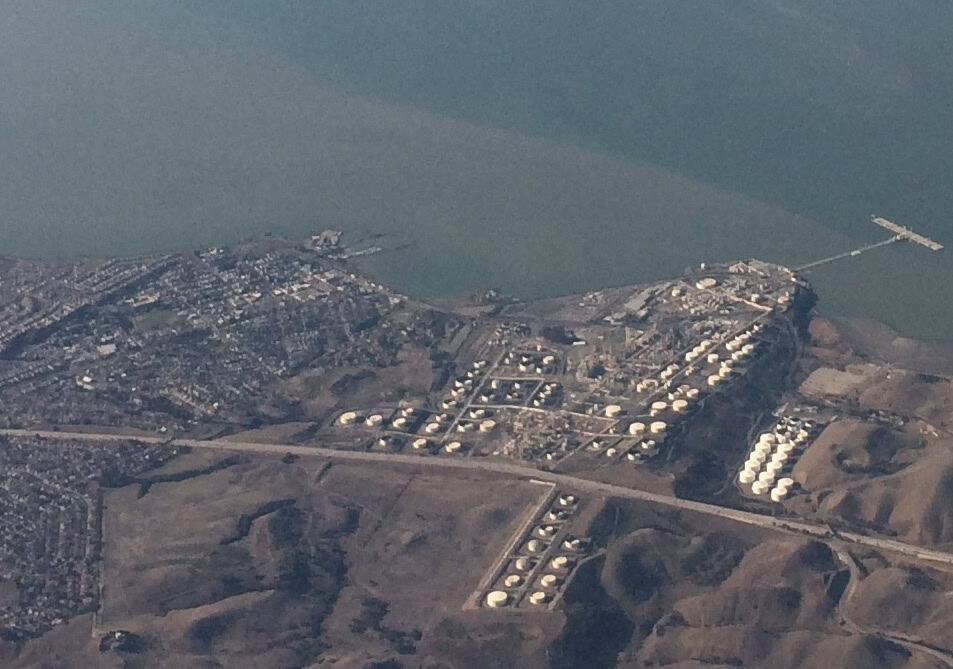
The San Francisco Refinery at Rodeo started making fuel in 1896. It stopped processing crude oil in 2024, and it’s still making fuel.
Project Scope
The conversion repurposed existing hydrocracking and hydrotreating units rather than building new ones, added pretreatment units for used cooking oil, fats, greases and vegetable oils, and reconfigured tankage and the rail and marine receiving infrastructure for a completely different feedstock slate. The crude units shut down, as did the associated Santa Maria facility and the pipelines feeding it. Output is renewable diesel, renewable gasoline and sustainable aviation fuel at 50,000 barrels a day, more than 800 million gallons a year, which puts Rodeo among the largest renewable fuels facilities anywhere. Phillips 66 put the cost at $1.25 billion and ran the four-year program inside an operating refinery. Contra Costa County was the permitting authority.
Why It Matters
Most renewable fuels capacity in the U.S. has come from greenfield plants on the Gulf Coast. Rodeo is the counter-example: a 130-year-old brownfield site in a dense Bay Area airshed, converted in place, with the existing hydroprocessing assets doing most of the work. That matters to anyone estimating a similar job, because the cost per barrel of a conversion and the cost per barrel of a new build aren’t comparable numbers, and the permitting path isn’t either. It also matters as a decommissioning case. Shutting the crude units and the Santa Maria feed line was as much of the project as building the pretreatment train, and that half rarely shows up in the press release.
Project Team & Details
| Owner / Client | Phillips 66 |
|---|
| Status | Completed |
|---|
| Funding Source | Private |
|---|