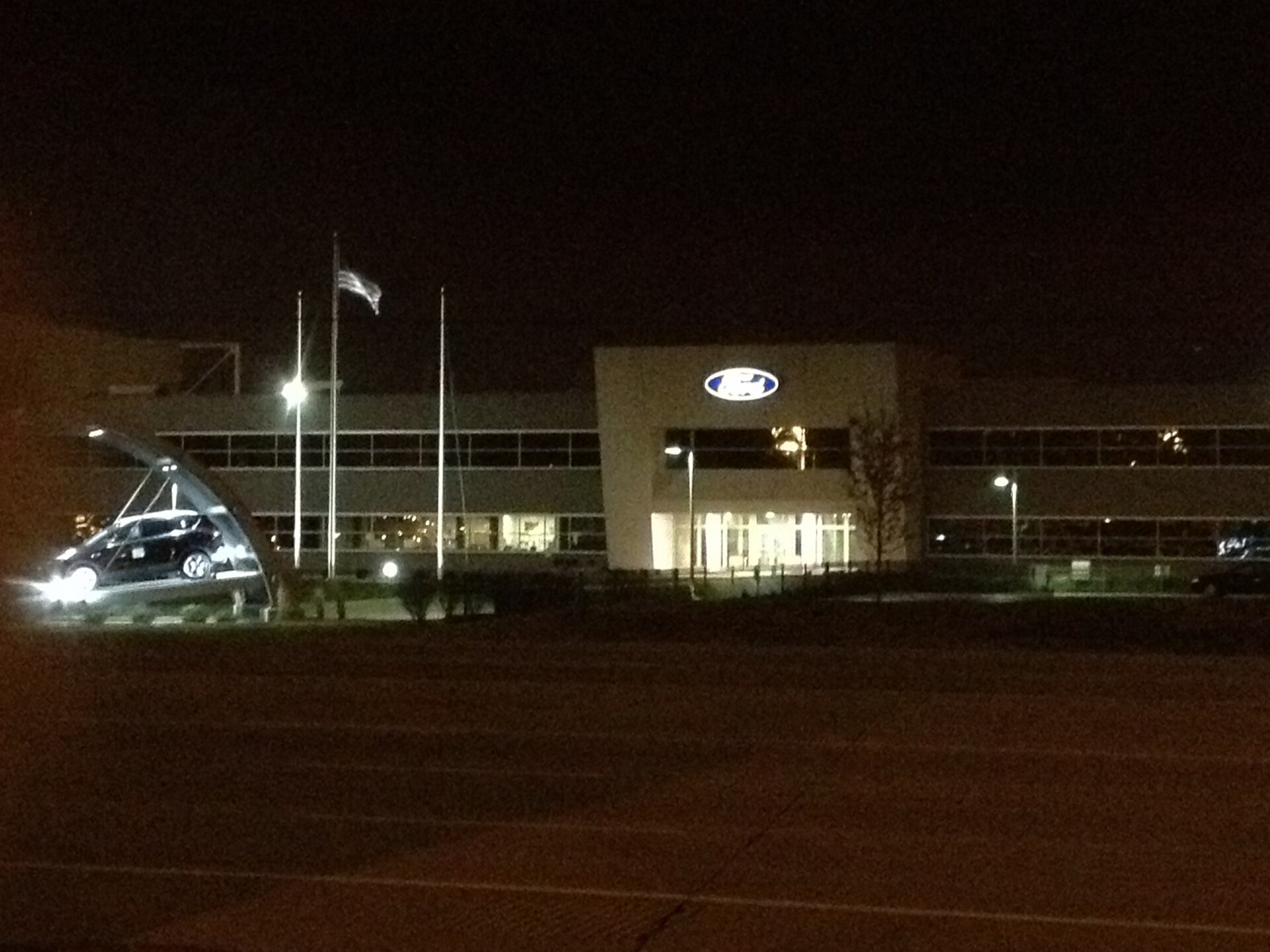
Twenty-five thousand tons of tooling came out of the building first. That’s about 2,600 truckloads, hauled off a live automotive plant before a single piece of the new line went in. Ford’s Louisville Assembly Plant, open since 1969 and most recently building the Escape and the Lincoln Corsair, is being converted to an all-electric facility under a $2 billion program.
Project Scope
The plant covers roughly three million square feet, and the retrofit reaches most of it. After the legacy tooling was stripped out, crews poured new concrete across more than 230,000 square feet of floor to carry the loads and tolerances of Ford’s Universal EV Production System. That system is the real change: instead of one linear moving line, the plant runs a three-branch assembly tree, with sub-assemblies built in parallel and married late. It’s a different building problem, because the equipment layout, the pit locations and the conveyor geometry don’t map onto what was there.
The plant will build the Fathom, a midsize electric pickup Ford has targeted under $30,000, with production slated for 2027. Ford said on August 13, 2026 that the conversion is tracking.
Why It Matters
Automotive retrofits are the quiet half of the EV buildout. Greenfield battery plants get the announcements, but converting an existing assembly plant is often faster, and the constraint isn’t money, it’s the structure you already have: column spacing set in the 1960s, roof capacity sized for older equipment, and floor slabs that were never meant to carry robotic cells.
Doing it inside twelve months on a plant this size is the number worth watching. It sets a benchmark for every legacy assembly building that has to change what it makes without moving where it makes it.
Project Team & Details
| Developer | Ford Motor Company |
|---|
| Owner / Client | Ford Motor Company |
|---|
| Status | Under Construction |
|---|
| Funding Source | Private |
|---|