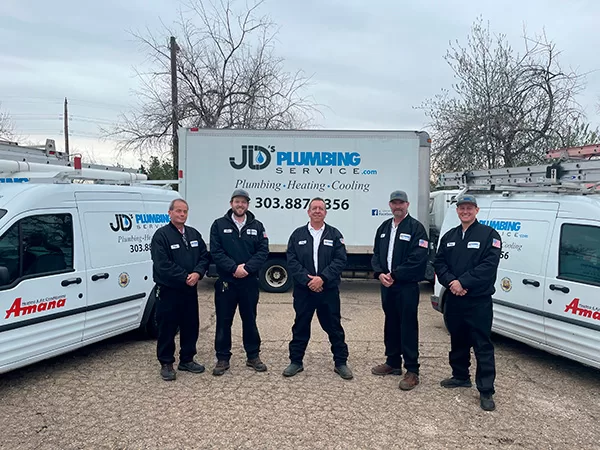
Colorado is one of the states that licenses plumbers at the state level. The Colorado State Plumbing Board, operating under the Department of Regulatory Agencies (DORA), issues residential, journeyman and master plumber licenses that are valid across the state, and a plumbing contractor must have a licensed master plumber behind the business to register and pull permits. That statewide system is a real advantage for anyone hiring here: whether your project is in Denver, Colorado Springs, Fort Collins or a mountain town, you can verify a plumber's license in DORA's free online lookup in under a minute. Local building departments still issue the permits and run inspections — and in areas without a local plumbing inspection program, state inspectors step in — but the credential itself does not change from one county to the next.
Plumbing in a high, dry, freeze-prone state
Colorado's geography does a lot of the plumbing scoping for you. Along the Front Range, frost depth requirements put water service lines several feet down, and every fall brings a wave of burst-pipe and frozen-hose-bib calls when the first hard freeze arrives ahead of schedule. In the high country, seasonal and short-term-rental homes make winterization and remote freeze monitoring a standard service line; a vacation property in Summit or Eagle County that loses heat in January can suffer catastrophic pipe damage in a single weekend. Hard water is the other constant: much of the Front Range draws mineral-heavy supply that scales water heaters and fixtures, so softener installs and tank flushes are routine maintenance rather than upsells. And because Colorado water law and recurring drought keep conservation on the agenda, the state has phased in efficiency standards so that the fixtures sold here are WaterSense-level low-flow — a detail a good plumber will factor into fixture selection and drain sizing rather than treat as an afterthought.
What the market looks like
Metro Denver dominates the market, with a dense population of service-and-repair shops, drain-cleaning specialists and new-construction plumbing contractors following the housing growth through Aurora, Littleton, Centennial, Arvada and the northern suburbs toward Fort Collins and Greeley. Colorado Springs runs its own substantial market, and the mountain corridor supports premium-priced specialists who handle everything from boiler-based snowmelt systems to septic work on unincorporated county land. Hydronic heat is a genuine Colorado specialty: boilers, in-floor radiant and snowmelt loops are far more common here than in most of the country, which is why many of the state's best plumbing firms are equally fluent in heating — and why the plumbing and mechanical trades overlap heavily on commercial jobs. On the commercial side, tenant finish work in Denver's office and retail stock, multifamily construction, and institutional work for schools and healthcare keep the larger contractors busy alongside the residential service economy.
Costs and common projects
Service-call pricing in metro Denver typically starts with a diagnostic or trip fee, with drain clearing among the most commonly flat-rated jobs — the “drain cleaning Littleton” searches that bring many readers to this page usually resolve to a fixed price for a mainline cable or jetting visit, with camera inspection quoted separately. Water heater replacement pricing splits by type: conventional tank swaps are the baseline, tankless conversions add venting and gas-line scope, and heat-pump water heaters — increasingly incentivized by Colorado utilities and state electrification rebates — add electrical work. Sewer line repair is the big-ticket item; Denver's older neighborhoods still hold clay tile laterals with root intrusion, and trenchless lining or bursting is often cheaper than open excavation once landscaping and flatwork are counted. For any four-figure job, get two or three itemized quotes, confirm the license and insurance, and make sure the permit appears in the price.
Hiring well in Colorado
Verify the license class (residential, journeyman, master) against the scope of your job in DORA's lookup, confirm liability insurance and workers' compensation, and ask how permits and inspections will be handled — a legitimate Colorado plumber pulls the permit rather than asking you to. For remodels and new construction, ask whether the contractor's crews are licensed plumbers or laborers working under supervision ratios, and get the fixture schedule in writing. Browse the plumbing companies listed below, compare them with Colorado's HVAC and general contractors for larger projects, and track major regional builds in the Exchange projects directory.
Nearby regions and related trades
Plumbing contractors in other regions: California, New South Wales, Ontario, Queensland, Texas.
Other trades in Colorado: General Contracting, Renovation & Remodeling, Roofing & Waterproofing.
Jump to licence verification sources for Plumbing in Colorado, or back to all plumbing contractors on Exchange.
Frequently asked questions
Do plumbers need a license in Colorado?
Yes. Colorado licenses plumbers statewide through the State Plumbing Board under DORA: residential, journeyman and master classes. A plumbing contractor must be backed by a licensed master plumber, and you can verify any license free in DORA's online lookup. Local jurisdictions issue permits and inspect the work.
How much does drain cleaning cost in the Denver area?
Most Denver-metro shops flat-rate standard drain clearing, with mainline cabling or hydro-jetting priced above a simple fixture drain, and camera inspections quoted separately. Prices in Littleton, Centennial and the south metro are competitive because the market is dense - get two quotes and confirm whether a camera check is included.
Why do Colorado homes need winterization?
Front Range frost depths and sudden hard freezes make burst pipes a leading claim here, and mountain vacation homes are especially exposed because nobody is on-site when heat fails. Winterization, heat tape on vulnerable runs, and remote temperature monitoring are standard Colorado plumbing services.
Is hard water a problem in Colorado?
Much of the Front Range has mineral-heavy water that scales water heaters, fixtures and appliances. Regular water-heater flushes and, in many homes, a softener or conditioner extend equipment life. Ask your plumber for a hardness test before sizing a softener.
What does sewer line repair cost in Colorado?
It is the big-ticket plumbing job. Older Denver neighborhoods still have clay laterals prone to root intrusion; trenchless lining or pipe bursting often beats open excavation once landscaping, sidewalks and driveways are counted. Always get a camera inspection and a recorded video before signing a repair contract.
Do I need a permit for a water heater replacement in Colorado?
Yes, in nearly all Colorado jurisdictions a water heater replacement requires a plumbing (and sometimes mechanical or electrical) permit and inspection. A licensed contractor pulls the permit as part of the job - treat any suggestion to skip it as a red flag.