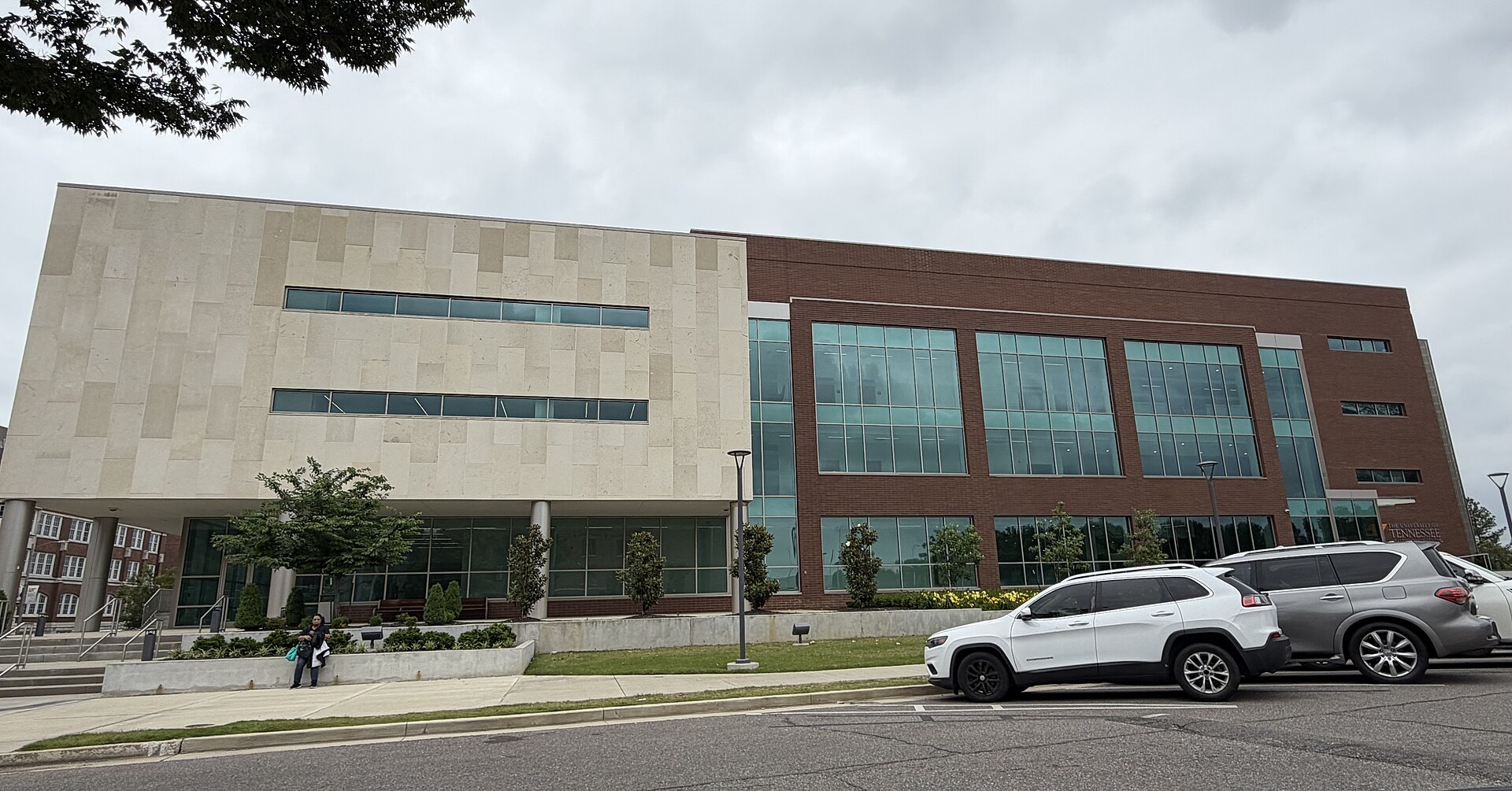
The University of Tennessee Health Science Center broke ground Oct. 8, 2026, on its College of Medicine Interdisciplinary Building in Memphis, a $350 million, 300,000-square-foot project that gives the college its first dedicated home. Flintco is the contractor, with HOK and Memphis-based brg3s architects on design.
The money is mostly public. The Tennessee General Assembly put up $311 million, which Construction Dive reports is the largest capital investment the legislature has made in a higher education institution. The university is raising another $50 million privately, $39 million for the building and $11 million for programs, and says more than $20 million is committed so far, led by a $5 million gift from the First Horizon Foundation.
Project Scope
The building goes up at the corner of Madison Avenue and Dudley Street on the Memphis campus. UTHSC describes flexible classrooms, simulation space and immersive technology for practicing patient care, plus a second-floor Interdisciplinary Commons meant to pull students from different programs into one place. Technology-enabled rooms will connect students and faculty across the state.
Substantial completion is targeted for 2029, with full occupancy in 2030. The university hasn’t published a floor count or an engineering team.
The enrollment plan explains the square footage. The medical school’s class grows from 175 to 250 students per cohort, and the Physician Assistant Program doubles from 30 to 60 a year. UTHSC says the expansion supports about 1,450 additional health professionals in the first five years.
Why It Matters
Tennessee is short on doctors. A January 2026 Tennessee Hospital Association study cited by Construction Dive counted about 18,800 practicing physicians, roughly 13% below the national average per capita. UT System President Randy Boyd framed the building as the state’s main lever: “If we want to make a difference in the health of our state, it has to come through here.”
It’s a reasonable bet with a long lag. Students who start classes in the new building in 2030 won’t finish residency until well into the next decade, and graduates don’t always stay in state. A bigger class adds supply. Residency slots and where young doctors choose to practice decide whether Tennessee actually closes the gap.
For the Memphis market, it’s one of the largest institutional jobs on the books, and it puts a local firm, brg3s, on a marquee commission next to a national design practice.
Related coverage & projects
Project Team & Details
| Owner / Client | University of Tennessee Health Science Center (University of Tennessee System) |
|---|
| Architect | HOK
brg3s architects |
|---|
| General Contractor | Flintco |
|---|
| Status | Under Construction |
|---|
| Funding Source | Mixed |
|---|