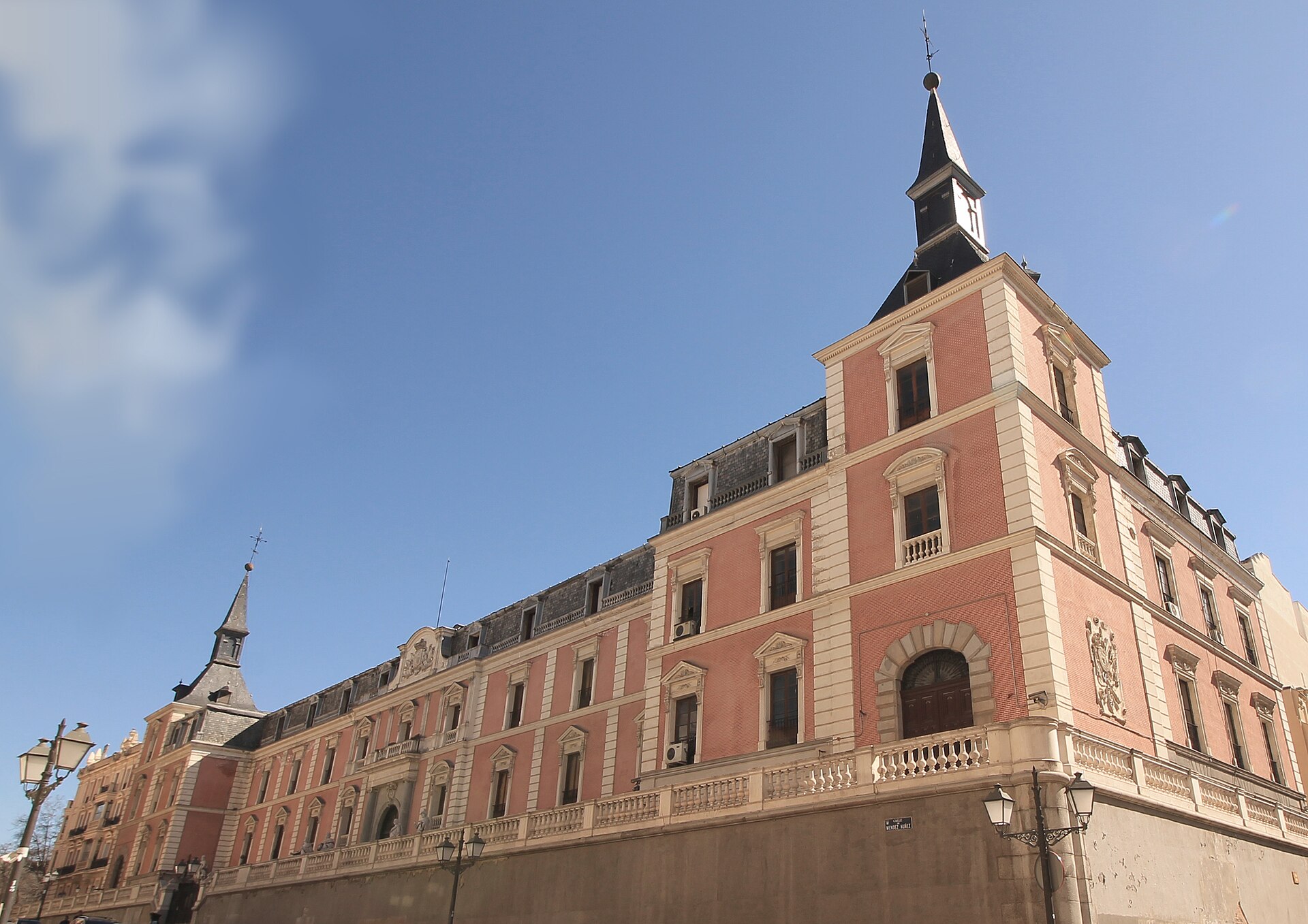
Dig anywhere in central Madrid and you find something. Dig next to the Prado, on the last standing wing of a 17th-century royal palace, and what you find stops the job. Archaeological remains of the Buen Retiro Palace turned up during excavation for the Salon de Reinos conversion, and the discovery has added roughly 18 months and 11.1 million euros to a contract awarded at 34.8 million.
Project Scope
Foster + Partners won the competition with Carlos Rubio Carvajal’s Rubio Arquitectura on a scheme called Hidden Design. It cuts a semi-open entrance atrium into the south facade and reinstates original windows and balconies that were bricked up over centuries of institutional use. Sacyr Construccion and Empty S.L. hold the construction contract as a joint venture. The 2026 budget authority alone is 19.7 million euros, and Spain’s State Comptroller is reviewing the overrun. Construction targets the end of 2026, with the public opening set for 2028.
Why It Matters
The building has been closed to the public for 16 years and spent most of the last century as the Army Museum. It is the only surviving wing of the Buen Retiro, and the Prado has wanted it since the 1990s for the same reason every major museum wants adjacent floor area: most of the collection is in storage.
The cost story is the one worth watching. An 11 million euro overrun on a 35 million euro contract is a 32 percent increase, and it came from a risk that any competent team would have priced as likely on this site. Whether the comptroller treats archaeological discovery as an unforeseeable condition or a scope failure will set a marker for public heritage work across Spain.
Project Team & Details
| Owner / Client | Museo Nacional del Prado (Spanish State) |
|---|
| Architect | Foster + Partners with Rubio Arquitectura |
|---|
| General Contractor | Sacyr Construccion / Empty S.L. JV |
|---|
| Status | Under Construction |
|---|
| Delivery Method | Design-Bid-Build |
|---|
| Funding Source | Public (State) |
|---|