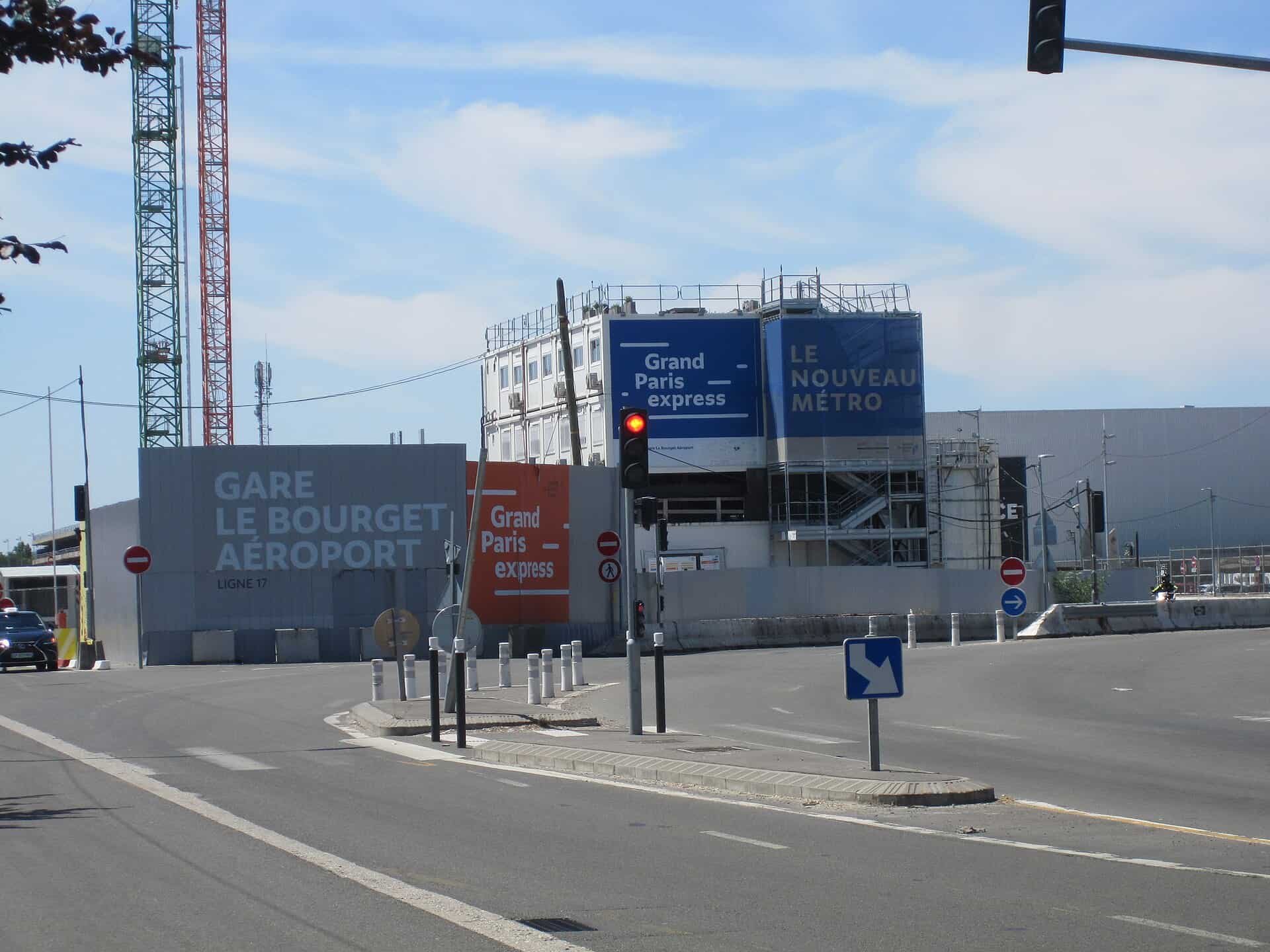
Paris is building the largest metro expansion in Europe, and most of it never sees daylight. The Grand Paris Express adds 200 kilometres of fully automated track and 68 stations in a ring around the capital, about 90% of it underground, linking the suburbs to each other instead of routing every trip through the center. The first new sections open in 2026, and the full network is due by 2031.
Project Scope
Four new lines, numbered 15 through 18, plus extensions of existing Lines 11 and 14, make up the program, overseen by the state’s Societe des grands projets. Line 15 South alone runs 33 kilometres; Line 16 stretches nearly 47; Lines 17 and 18 reach the airports and the Saclay research cluster. The budget sits around 35 billion euros, roughly $42.6 billion. French majors Vinci, Eiffage, and Bouygues hold big civil packages alongside Webuild and NGE, while Alstom supplies 183 driverless trains across the four lines. Several openings are scheduled through 2026, including initial sections of Lines 15, 16, 17, and 18.
Why It Matters
Most metro projects extend a line. This one rewires how a metropolis of 12 million moves, betting that suburb-to-suburb travel, not just radial trips downtown, is what an aging network needs most. The tunnelling alone, with dozens of boring machines working at once beneath a dense city, ranks among the most complex civil efforts anywhere. It’s the European counterpart to fast-growing transit builds like the Riyadh Metro, and a real test of whether one agency can deliver four automated lines on a single timeline.
Project Team & Details
| Developer | Societe des grands projets (SGP) |
|---|
| Owner / Client | Societe des grands projets (SGP) |
|---|
| Consultants | Egis / Systra / Setec (Engineering)
Parsons (Line 18 Program Management) |
|---|
| General Contractor | Multiple (Vinci, Eiffage, Bouygues, Webuild/NGE) |
|---|
| Major Subcontractors | Alstom (Rolling Stock)
Kone (Vertical Transport) |
|---|
| Status | Under Construction |
|---|
| Funding Source | Public (State) |
|---|