
Carolabrücke Replacement, Dresden
A construction project located in Dresden.
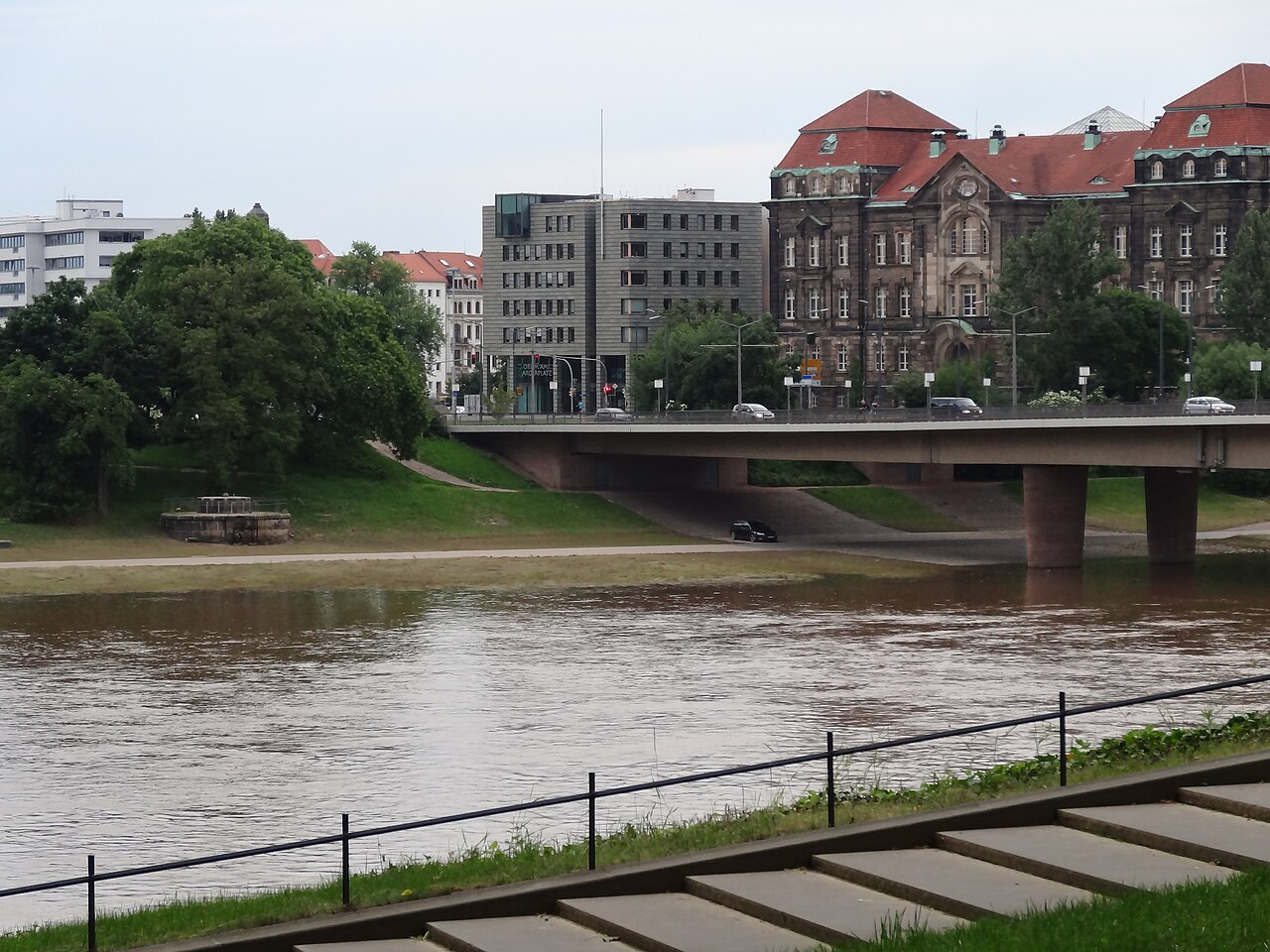
A Bit About Carolabrücke Replacement, Dresden
A tram crossed the Carolabrücke at 2:48 a.m. on 11 September 2024. About fifteen minutes later, a 100-metre length of the bridge’s western section fell into the Elbe. Nobody was on it. Dresden has spent the two years since demolishing what was left and arguing about what replaces it, and on 3 September 2026 the city council settled the question by a vote of 39 to 31.
The winning entry, submitted under the name CAROLA 3.0, pairs the Spanish structural practice FHECOR through its German arm with TSSB Architekten. The city signed the design contract on 10 September 2026.
Project Scope
The 1971 bridge carried four lanes, two tram tracks and footways across roughly 375 metres of river on three separate superstructures, designated A, B and C. Section C failed first. Sections A and B were taken down in a controlled programme that finished in September 2025, so the crossing is now an empty gap between Terrassenufer and Carolaplatz.
The replacement keeps four lanes. It also sits about 2.5 metres higher than the competing entry, a detail that matters on a river with Dresden’s flood record. Approval-ready design is due in early 2027 and the construction tender goes out in autumn 2027, with work starting in the second quarter of 2028 and completion targeted for 2031. No contractor has been appointed and no construction cost has been published. The demolition alone came to about €32 million, of which €27 million covered taking down the three superstructures and €5 million went on securing the site, traffic management and assessments.
Why It Matters
The forensic finding is the part the rest of the industry should read. Investigators attributed the collapse to hydrogen-induced stress corrosion cracking in the prestressing steel, compounded by fatigue. At the fracture plane, roughly 68 percent of the tendons were severely damaged. None of it was visible. The bridge had been inspected and was not flagged as being at risk of imminent failure.
That combination of a specific steel chemistry, a specific era of prestressed construction and a failure mode that hides inside the concrete is not unique to Dresden. Germany alone has thousands of prestressed structures from the same decades. Dresden’s replacement timeline, seven years from collapse to reopening, is also a useful benchmark for anyone estimating how long a modern European city needs to put a river crossing back.
Project Team & Details
| Owner / Client | City of Dresden |
|---|---|
| Architect | TSSB Architekten |
| Consultants | FHECOR Deutschland GmbH (Structural Engineering) |
| Status | Planned |
| Funding Source | Public (Municipal) |
Where to find this project
Sorry, no records were found. Please adjust your search criteria and try again.
Sorry, unable to load the Maps API.
More images from Carolabrücke Replacement, Dresden


Project Team & Details
| Owner / Client | City of Dresden |
|---|---|
| Architect | TSSB Architekten |
| Consultants | FHECOR Deutschland GmbH (Structural Engineering) |
| Status | Planned |
| Funding Source | Public (Municipal) |