Britain hasn’t switched on a new nuclear plant since 1995. Hinkley Point C is the project meant to break that streak, and it has become a case study in how hard, and how expensive, large nuclear has become in the West.
Project Scope
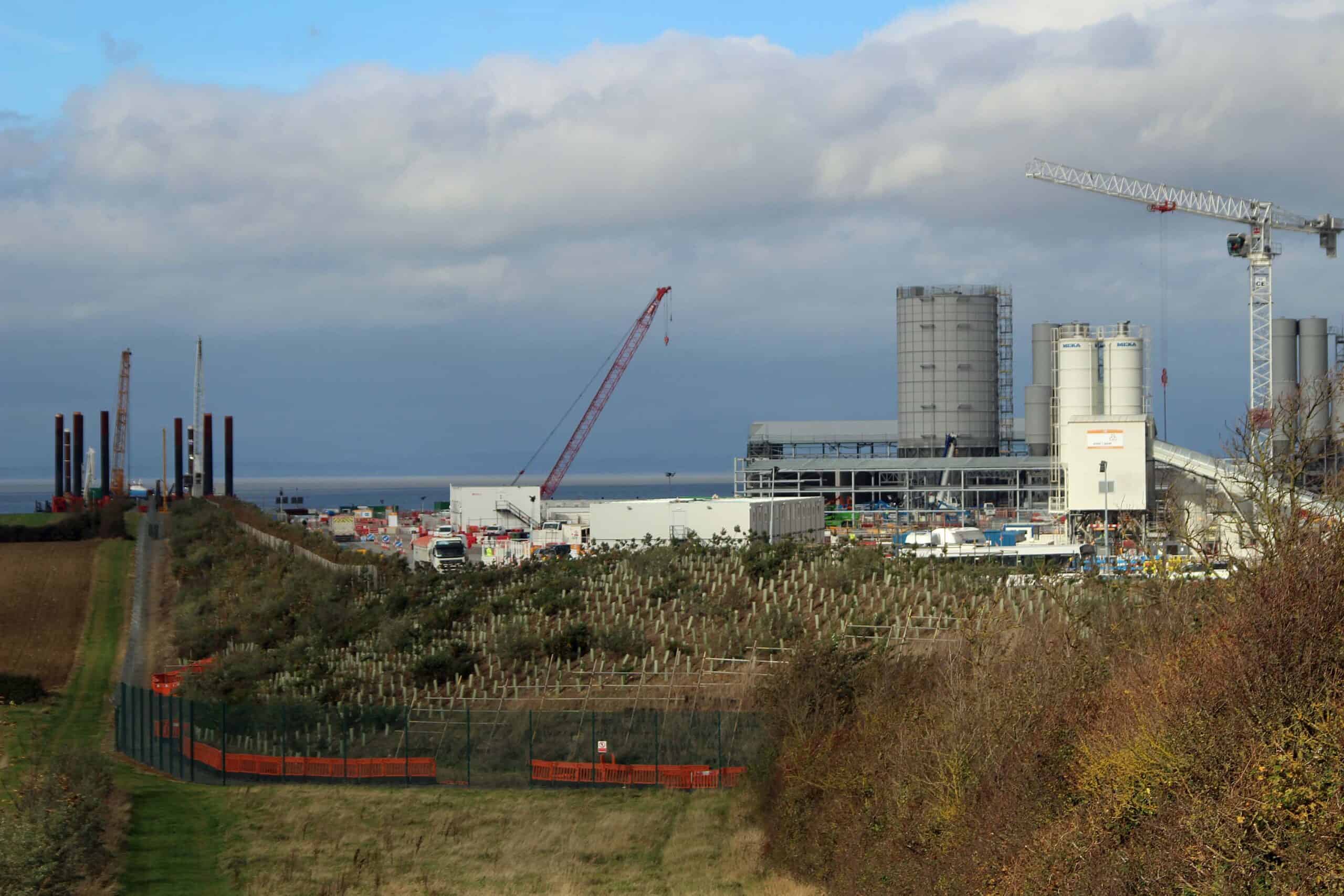
The plant pairs two EPR reactors of about 1,630 MWe each, enough to power roughly six million homes once both run. EDF leads the build, with China General Nuclear holding a minority stake, and the Bylor joint venture of Bouygues and Laing O’Rourke handles the main civil works. The scale is staggering even on paper: millions of cubic meters of concrete, a bespoke jetty to land materials by sea, and some of the largest cranes in the world standing over the Somerset coast. Reactor components come from Framatome.
Why It Matters
Hinkley is a lesson in nuclear’s cost problem. Approved at around GBP18bn, the estimate has climbed to roughly GBP35bn in 2015 prices, close to GBP50bn in today’s money, and Unit 1 has slipped to 2030. EDF blames lower productivity on the complex electromechanical work, the piping and cabling that turn a concrete shell into a working reactor. The takeaway for the industry is blunt. First-of-a-kind nuclear in a country that stopped building it is brutally hard, which is exactly the argument small modular reactor backers now make. Like the megafabs reshaping the chip world, including TSMC’s Arizona expansion, Hinkley shows what it costs to rebuild industrial capacity a country let lapse.
Project Team & Details
| Developer | EDF Energy |
|---|
| Owner / Client | NNB Generation Company (EDF, with China General Nuclear) |
|---|
| General Contractor | Bylor JV (Bouygues Travaux Publics / Laing O'Rourke) |
|---|
| Major Subcontractors | Framatome (Reactor Islands) |
|---|
| Status | Under Construction |
|---|
| Delivery Method | Design-Build |
|---|
| Funding Source | Private |
|---|