
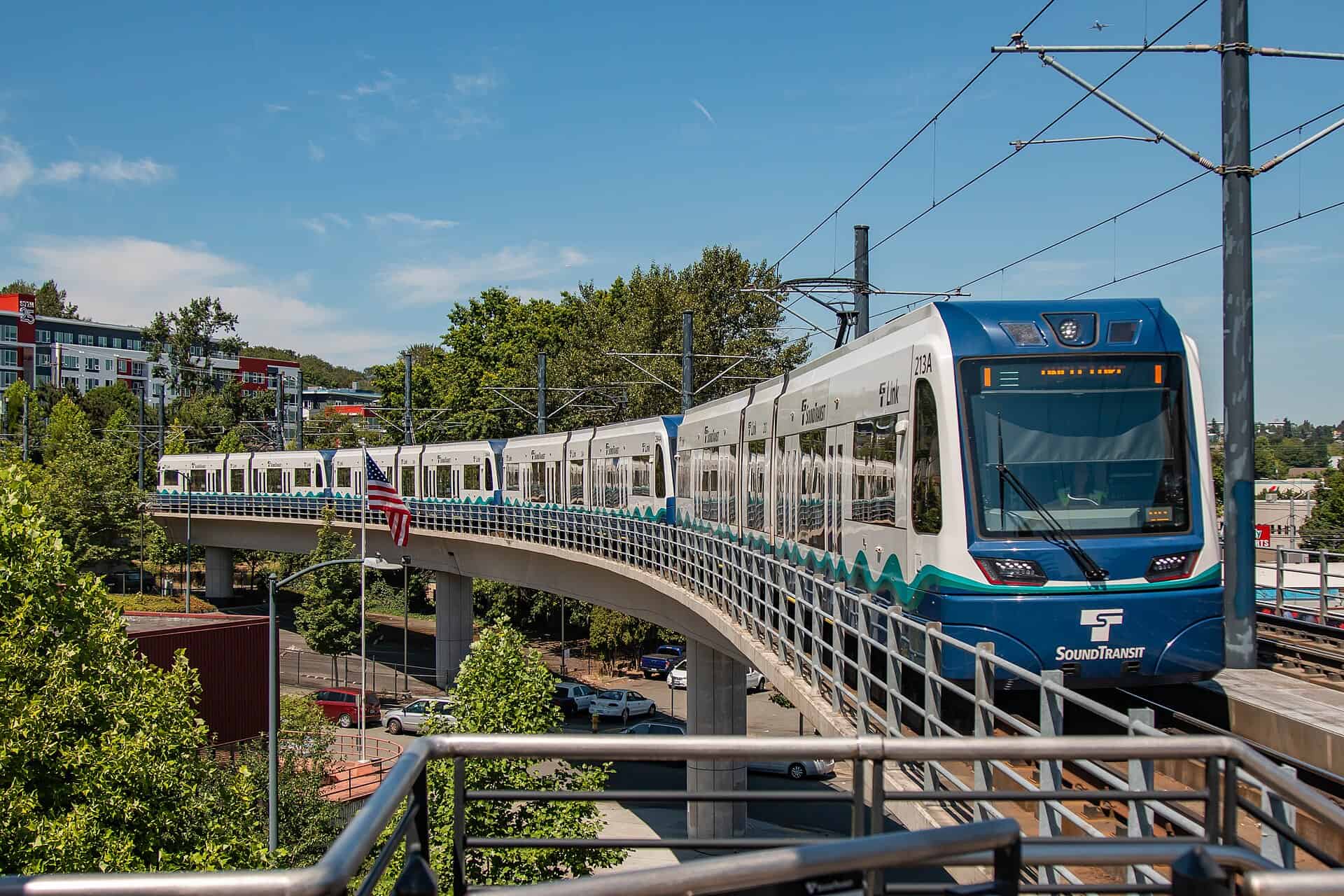
Three years of schedule bought a little over $2 billion of scope reductions. That’s the trade Sound Transit just made on the West Seattle Link Extension, and it’s the trade every funding-gapped transit agency in the country is going to be weighing.
Revenue service moves from 2032 to 2035. Construction start moves to 2028. The agency’s stated causes are the time spent analyzing cost savings, plus longer construction durations for the bridge and an extended tunnel section.
What the savings exercise actually removed
More than $2 billion in potential cuts, including elimination of the proposed Avalon Station. The trigger was a September 2024 estimate that found the project unaffordable under the long-range financial plan. Behind that sits an ST3 capital program with an estimated $34.5 billion funding gap over 20 years and a total that has grown to roughly $185 billion, a figure the Seattle Times reports rather than the agency.
Worth holding those numbers at arm’s length. The delay explanation, the $2 billion and the $34.5 billion all come from a written statement Sound Transit sent to Construction Dive. There is no named executive, no board vote and no cited board document. The savings are also potential, not realized.
The procurement calendar is unchanged, and that’s the story
For bidders the schedule slip matters less than the fact that packaging and delivery approach did not change. Two packages are already advertised: Duwamish River Crossing and Guideways went out as heavy civil GC/CM in June 2026, and SODO Station in August. Two more hit the market in October 2026, trackwork and systems plus Alaska Junction Station. Design-bid-build procurements for the West Seattle tunnels and Delridge Station follow in late 2027 and early 2028.
That is four major packages between now and early 2028, with a documented delivery-method split. Heavy civil goes GC/CM now; the tunnels go design-bid-build later. Anyone building a Pacific Northwest pipeline can plan against that calendar even with the opening date three years further out.
The pattern to watch
An owner absorbing three years of schedule to buy scope reductions is not a Seattle problem. It’s what agencies do when the capital plan stops closing, and the cost usually lands on the packages that go out last. Compare the concession model on London’s Silvertown Tunnel, where the private partner absorbed construction risk and Transport for London paid nothing until the tunnel opened. Different mechanism, same underlying problem: neither agency could fund the job out of the operating base.
Source: Construction Dive.