
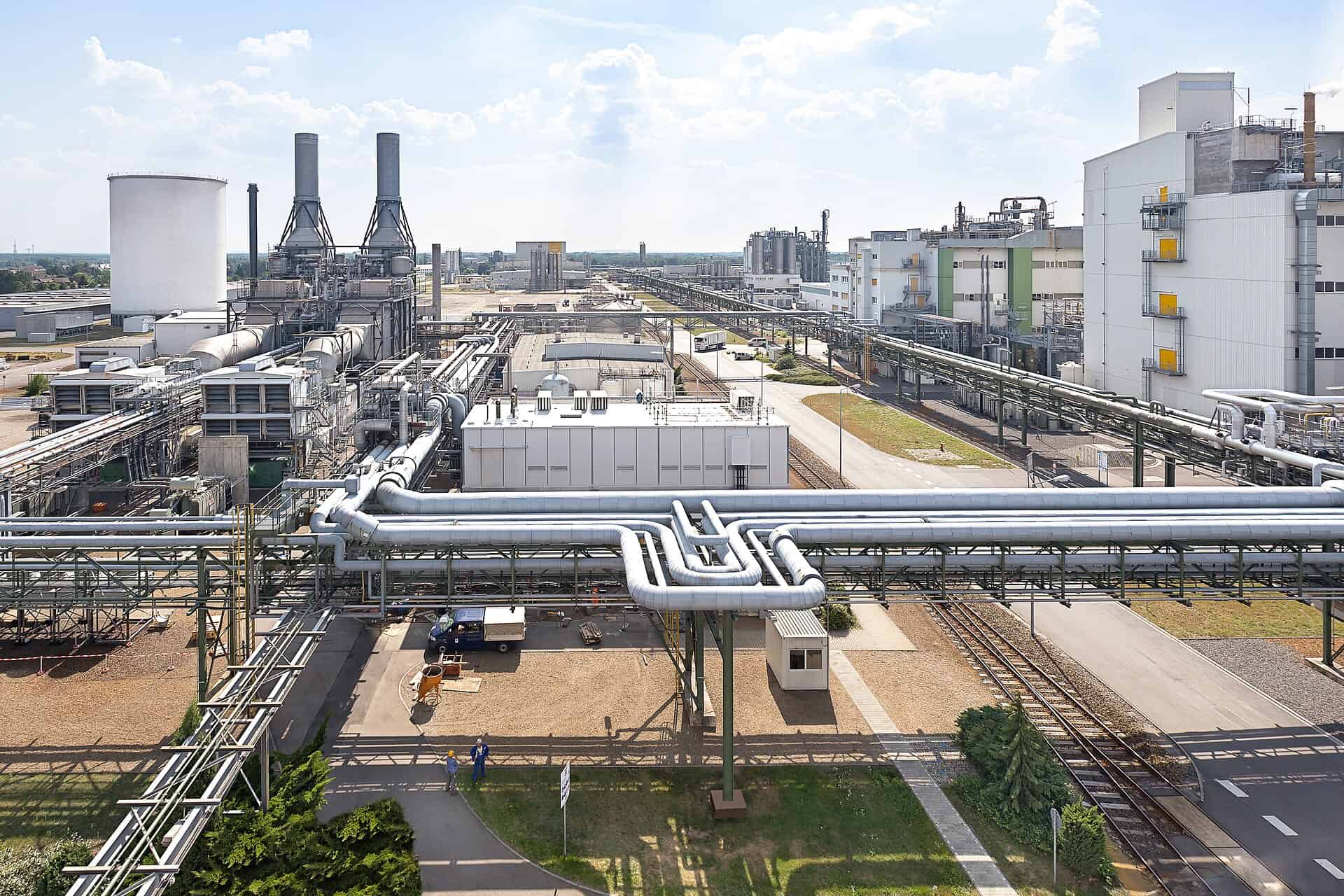
The munitions industrial base has stopped being a one-off market. On 9 September the Army awarded Nitradyn LLC a firm-fixed-price contract worth $581,160,062 to design, construct and commission a plant making Insensitive Munition eXplosive 104, and it goes next door to an Army TNT plant already under construction in the same western Kentucky town.
The contract terms
Contract number W519TC-26-F-A454, firm-fixed-price and indefinite-delivery/indefinite-quantity, through Army Contracting Command at Rock Island Arsenal. Estimated completion is 9 August 2030. Nitradyn says it will be fully commissioned before the end of 2030.
Nitradyn is a Tampa company founded in 2025 as a joint venture of Dyno Nobel and Paligen Chemical, with Braden Lusk as president. The stated capacity is about 8 million pounds of IMX-104 a year with excess capacity for other formulations, and the site will also make HMX. IMX-104 is a mix of RDX, NTO and DNAN, formulated to be far less likely to detonate from shock or fire than the material it replaces.
Two things the notice doesn’t say
The Graham, Kentucky siting comes from the company release. The government notice says only that work locations and funding are determined with each order, which is standard for IDIQ. That also means the $581 million is a ceiling delivered through task orders, not a guaranteed lump sum, and anyone modelling revenue off the headline should account for that.
The 8 million pound capacity, the jobs language and the end-of-2030 commissioning date are company projections rather than contract terms. Neither party disclosed a jobs number, acreage or square footage.
What it means for the sub market
This is a half-billion-dollar industrial design-build with a hard commissioning deadline, on a site that already has an active federal build running. That is sustained multi-year demand for heavy industrial, process piping, electrical and blast-resistant structures trades in western Kentucky, and a second bite for firms already mobilized there.
Energetics facilities also narrow the qualified pool considerably. Quantity-distance separation requirements, hardened structures and the siting constraints that come with them are not scopes a general industrial sub picks up cold. Compare the federal execution problem at Portsmouth Naval Shipyard, where a $634 million utility recapitalization has to be phased around live submarine work. Different constraint, same conclusion: the federal industrial pipeline is deep right now, and it is not open to everybody.
Sources: U.S. Department of War and Nitradyn.