
The number that sets the capital program for every water agency between Denver and San Diego just went below its floor.
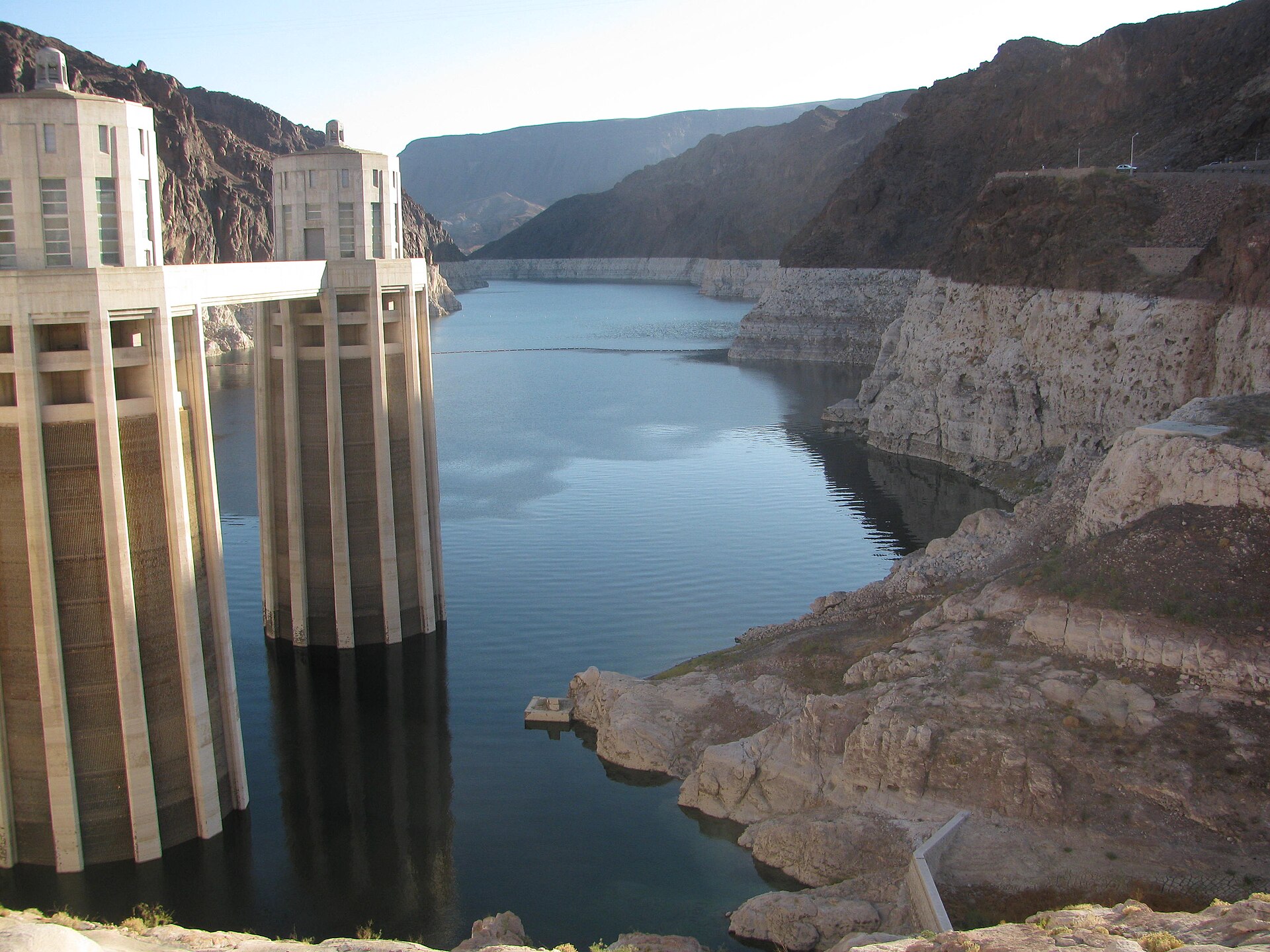
Lake Mead dropped to 1,040.5 feet on Thursday, Aug. 6. Bureau of Reclamation data published the following day confirmed it had broken the previous all-time low of 1,040.58 feet, set on July 28, 2022. Reclamation’s hourly gauge shows the reservoir declining every single day since July 31, after the worst snowpack on record in the Colorado River Basin.
Ninety years of record, and this is the bottom
Reclamation has tracked the elevation since filling began in the 1930s. The 2026 trajectory is a straight line down: 1,065.37 feet at the end of January, 1,056.32 in April, 1,050.00 in May, 1,044.58 in June, 1,041.10 at the end of July. For scale, the lake closed several months of 2020 above 1,090 feet and rebounded to roughly 1,068 feet at the end of 2023 after two wetter winters.
More than 20 million people in the Lower Basin draw from it. Hoover Dam sits at the outlet, and generating capacity falls with head, so the number is a power question as much as a water one.
What it puts into design
Elevation drives intake relocations, pump station rebuilds, recycled water plants, and turbine derate studies. Southern Nevada already spent roughly $1.5 billion on a third intake and a low lake level pumping station because of exactly this curve. Agencies further down the system have been holding similar projects in study phase waiting for a number that would justify the bond.
They now have one, and it arrived days after Reclamation released its shortage management framework for post-2026 operations, which our earlier coverage looked at from the operations side. Policy and hydrology lining up in the same week is what moves capital.
The other customer at the table
A Congressional Research Service report dated July 31 put U.S. data center direct water use at roughly 17 billion gallons in 2023, up from about 5.6 billion in 2014, with 97% of it supplied by public water systems. Some of those systems are Central Arizona Project cities pulling from this same river.
That’s the collision worth watching. The basin now has a documented supply cliff and a fast-growing industrial customer class asking for hookups, and the siting fights that follow will be argued in front of the same boards that have to approve the intake work.