
Walk the floor at CONEXPO 2026 and the diesel rumble has competition. Every major equipment maker now ships a battery-electric excavator or loader, and the conversation in Las Vegas this spring shifted from whether electric machines work to which job they belong on.
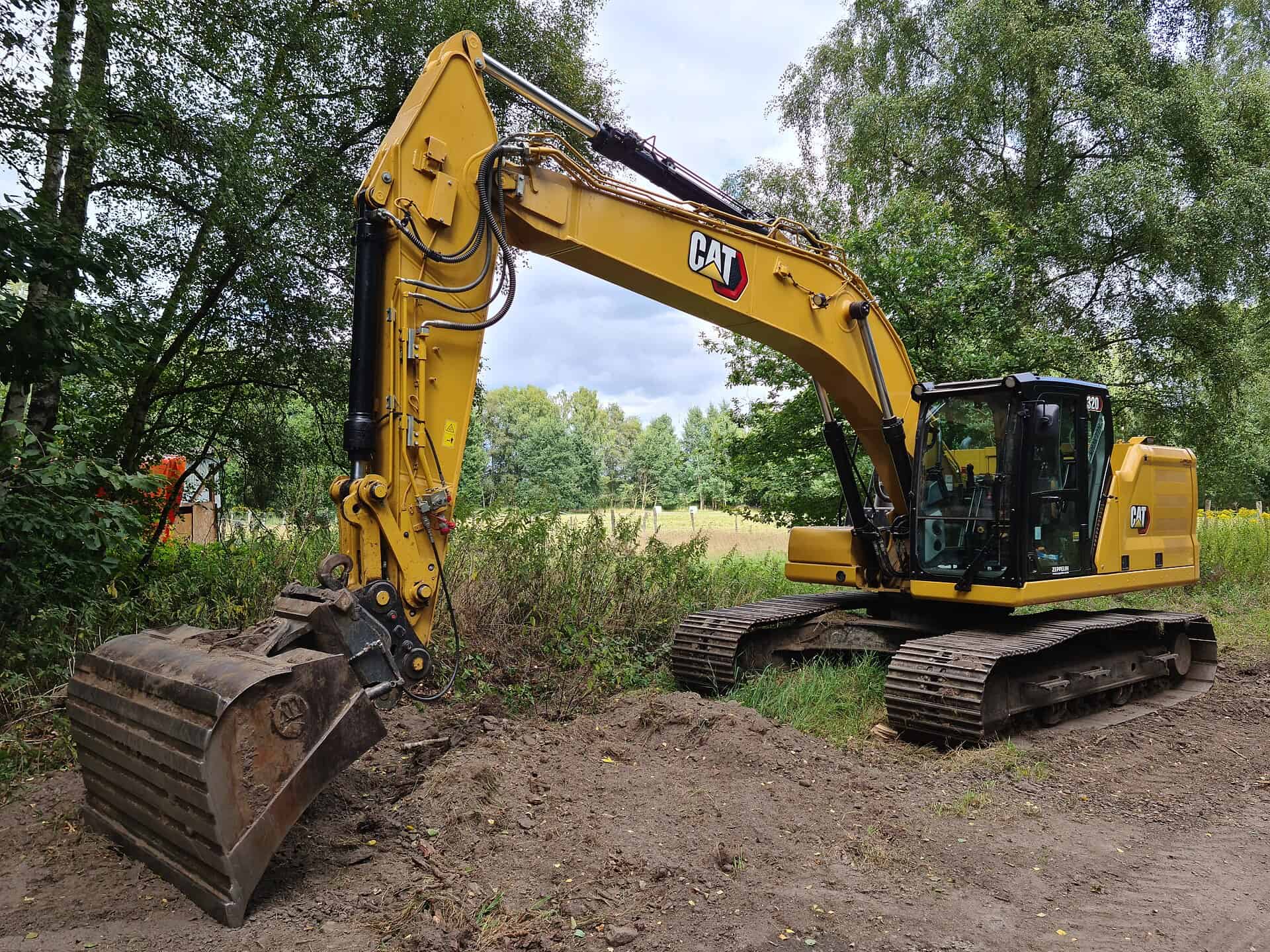
That’s a real change from three years ago, when electric construction equipment meant a handful of compact machines aimed at indoor demolition. The 2026 lineup runs heavier. Caterpillar’s 320 Electric, Volvo CE’s EC230 Electric, Komatsu’s PC210E, JCB’s 19C-1E, and LiuGong’s 922FE put battery power into the 20-tonne class that does the bulk of earthmoving.
What’s actually shipping in 2026
The pitch has moved from emissions to operating cost. A 20-tonne electric excavator can save somewhere around $12,000 a year in fuel against a diesel equivalent, and electric drivetrains cut scheduled maintenance by up to half: no engine oil, no fuel filters, far fewer moving parts. LiuGong claims total cost of ownership runs about 40% lower over a machine’s life. Operators like them for the obvious reasons too: less noise, no fumes, lower vibration through a long shift.
Rules are doing some of the pushing. The EU’s Stage V limits on non-road engines above 56 kW tighten through 2029, and California’s CARB off-road program phases in zero-emission requirements for larger fleets on the way to full enforcement by 2035. Cities with low-emission zones are starting to write electric-only clauses into public work.
Where electric pencils, and where diesel still wins
The economics are not yet universal. Upfront price still runs a third to half higher than diesel, and that gap only closes if a machine logs enough hours to bank the fuel savings. The harder constraint is energy. A battery excavator on a tight urban site near a power drop is easy; the same machine running ten-hour duty cycles on a remote highway job, far from a charger, is not. Heavy continuous earthmoving still favors diesel, and will for a while.
Adoption reflects that. Forecasts put electric machines at roughly 3% of sales by 2028, with optimists reaching for 10% by 2030. Those aren’t blockbuster numbers, but they’re the same curve on-road trucking climbed a decade ago.
The wild card is power. Construction is already colliding with grid limits on the data center side, and electrifying the iron that builds projects like the Stargate campus in Abilene adds load at the exact sites straining hardest. Solve the charging-and-grid piece and electric stops being a niche for clean job sites. Until then, contractors are doing the math machine by machine, and for a growing slice of work the electric one wins.