
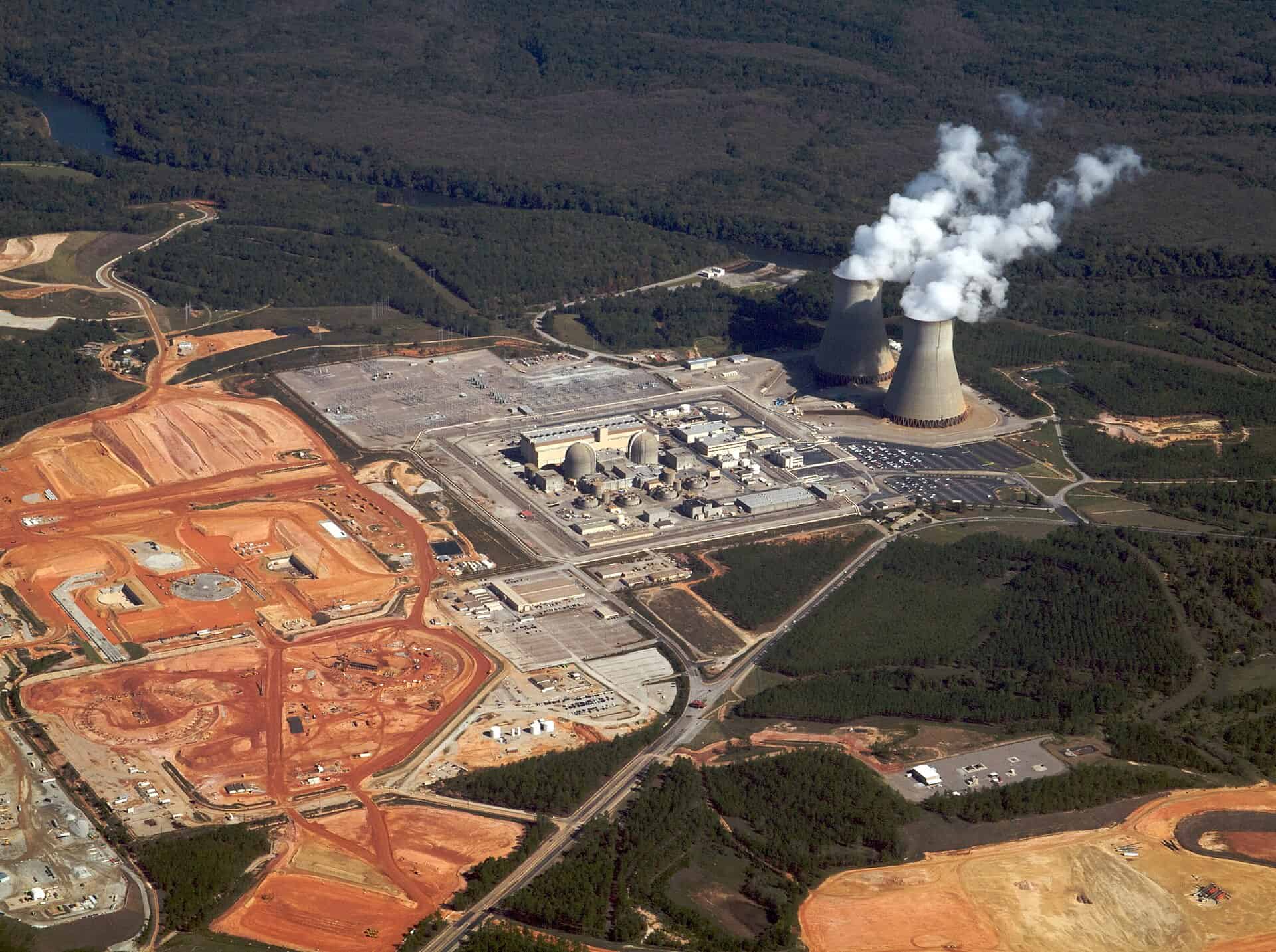
The Energy Department is putting real money behind big nuclear again. On June 23, DOE announced plans for up to $17.5 billion in loans to finance long-lead equipment for as many as 10 Westinghouse AP1000 reactors at five U.S. sites — the largest federal push for full-size nuclear construction since Vogtle.
What the DOE nuclear loans actually fund
The loans target the components that set nuclear schedules: reactor pressure vessels, steam generators and the rest of the forgings that take years to order and fabricate. Buying long-lead equipment before final investment decisions could compress project timelines by as much as three years, according to the department. Dominion Energy, DTE Energy, WEC Energy Group, Public Service Enterprise Group and Entergy are positioned to benefit, per research firm Capstone, with specific recipients expected in the second half of 2026.
The bet is on standardization. The AP1000 is now a known quantity: Vogtle Units 3 and 4 in Georgia proved the design can be built in the U.S., late and over budget the first time, but with a completed supply chain and a trained workforce at the end of it. Ordering 10 identical units is the closest thing nuclear has to a production run, and it’s how costs actually come down.
Large reactors rejoin the SMR race
The announcement lands a week before Holtec and TVA landed up to $800 million to push small modular reactors toward construction. The two tracks aren’t competing so much as covering different loads: SMRs for incremental capacity and industrial sites, AP1000s for the gigawatt-scale demand that AI data centers and electrification are stacking onto utility resource plans.
For the construction industry, large nuclear is a different animal. A single AP1000 build peaks at 7,000-plus craft workers and runs most of a decade. Ten units would strain a nuclear-qualified workforce that had mostly dispersed after Vogtle — welders certified for nuclear work don’t materialize on demand.
The catch
These are conditional loan offers, not shovels in the ground. No utility has taken a final investment decision on a new AP1000 pair, and the financing only covers equipment, not the $15-billion-plus per-site construction bill. The loans lower the cost of keeping the option open. Whether boards exercise it depends on power demand holding and Washington’s appetite surviving the next budget cycle.
Still: five years ago the pipeline for new large reactors in America was zero. Today it’s 10, with the federal balance sheet behind the order book. Details at ENR.