
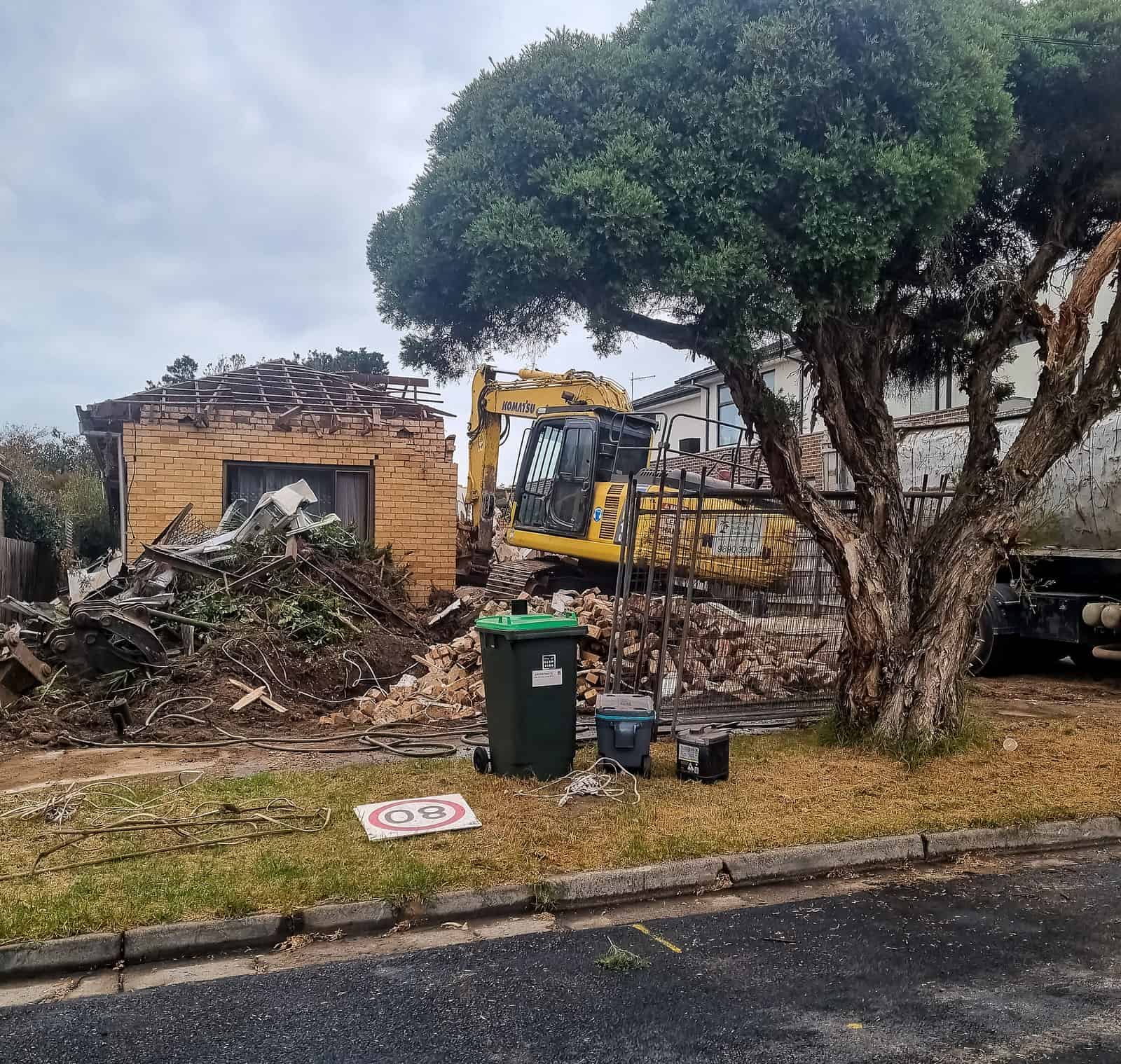
Most coverage of reuse and low-carbon materials runs on pilot-project optimism. A new assembly of Finnish data does the opposite, and the numbers are hard to argue with. Selective demolition can cost three times conventional demolition. Donor components can cost thirteen times the equivalent virgin raw material. Circular supply chains carry up to 40% material and process waste.
Those figures come from Robert van den Brink of VTT, presented at the Building 2030 Summer Seminar and collected by Aarni Heiskanen at AEC Business alongside two other 2026 data points that point the same direction.
A low-carbon binder company is laying people off
Betolar, a Finnish circular-materials firm whose Geoprime binder carries 85% lower CO2 than cement, has announced layoffs. CEO Tuija Kalpala told Tekniikka&Talous that demand for low-carbon concrete has weakened substantially and permanently.
Her explanation is worth quoting carefully, in Heiskanen’s translation from the Finnish: there is talk about green construction but no market pull, because cost drives the market, and even a small emission reduction is enough as long as you can tell the customer you use low-carbon products. That last clause is the uncomfortable one. It describes a procurement system that rewards the claim rather than the tonnage.
Design for Disassembly doesn’t pay back at current prices
Tampere University’s DfD Ecosystem project studied Design for Disassembly in Finland’s precast-dominated construction sector. Its finding: a DfD building may currently be slightly more expensive than conventional construction, and would cut CO2 by roughly 10% over a 50-year period.
The demolition side is blunter. The project ran four case studies, one conventional crushing and three disassembly-with-recovery, assuming a 50% resale price on recovered components. It concluded that dismantling conventionally built concrete buildings for reuse isn’t profitable and can’t become profitable without a dramatic change in the business environment.
What a specifier should take from this
If you’re pricing reclaimed material into a bid, these are the figures on the other side of the ledger. A 3x demolition premium and a 13x component premium don’t get closed by procurement preference points or a few evaluation credits. They get closed by carbon pricing, by regulation, or by a resale market that doesn’t currently exist at scale.
Now the discounting, and there’s a fair amount of it. Everything here is Finnish: precast-heavy building stock, a small market, high labor cost, and a demolition-contracting structure that doesn’t map cleanly onto North American practice. Betolar is one company’s commercial failure being read as a market verdict. The Tampere study’s 50% resale assumption drives its own conclusion and isn’t independently validated. And the source is an industry analyst’s synthesis of cited research rather than peer-reviewed work.
Take it as the counter-case that reuse advocacy usually leaves out, not as a settled answer. The retrofit route remains a different proposition entirely. RIBA is putting its own Grade II* listed 1934 headquarters through a GBP 40 million deep retrofit as a pilot for the UK Net Zero Carbon Building Standard, where the reused component is the whole building.