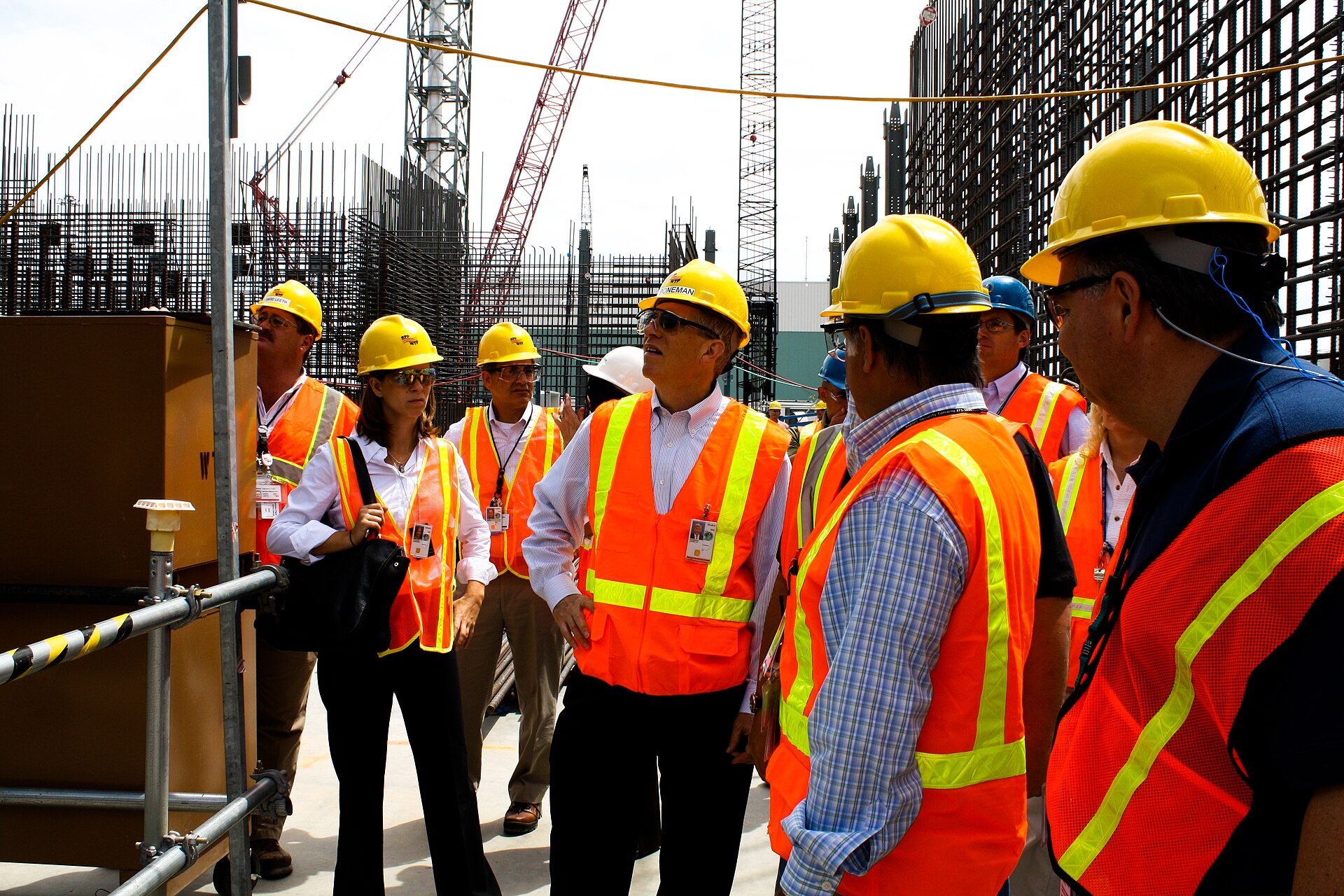
Twenty-five years after Bechtel National broke ground, the Hanford Waste Treatment and Immobilization Plant began vitrifying radioactive tank waste on 15 October 2025. The original completion date was 2011. The original estimate was $5.8 billion. Current estimates run between $17 billion and $20 billion.
The plant exists to deal with 54 million gallons of chemical and radioactive waste sitting in 177 underground tanks at the Hanford Site, some of which have leaked. The Department of Energy’s Office of River Protection owns it. Bechtel designed it, built it and is commissioning it.
Project Scope
Four facilities make up the plant: Low-Activity Waste vitrification, an Effluent Management Facility, an Analytical Laboratory and Balance of Facilities. The LAW building alone measures 330 by 240 feet and stands 90 feet tall. It took roughly 28,500 cubic yards of concrete, 6,200 tons of structural steel, 943,500 pounds of ductwork, 103,000 feet of piping, 843,000 feet of cable and 2.337 million craft hours.
Two 300-ton melters run at about 2,100°F. Waste is mixed with glass-forming material, melted and poured into stainless steel containers, each holding about 6.6 tons. The plant is designed for up to five containers a day and is currently processing on the order of 5,300 gallons of waste daily. High-level waste vitrification, which needs the HLW facility and the pretreatment plant, is not expected before 2033.
Why It Matters
Hanford is the reference case for what happens when a first-of-a-kind nuclear facility meets a requirements set that keeps moving. Construction was suspended in 2012 over technical disputes about whether the pretreatment vessels could keep solids in suspension. It restarted on a different sequencing plan, called Direct-Feed Low-Activity Waste, that gets the LAW plant running first and defers the hardest part.
That decision is why glass is being poured now instead of in the late 2030s. It also means the highest-activity waste, the part driving the schedule risk, is still in the ground. For contractors and owners planning long-duration nuclear work, the Hanford record is the clearest available answer to what a 25-year, three-times-over build actually looks like in practice.
Project Team & Details
| Owner / Client | U.S. Department of Energy, Office of River Protection |
|---|
| General Contractor | Bechtel National, Inc. |
|---|
| Status | Under Construction |
|---|
| Delivery Method | Design-Build |
|---|
| Funding Source | Public (Federal) |
|---|