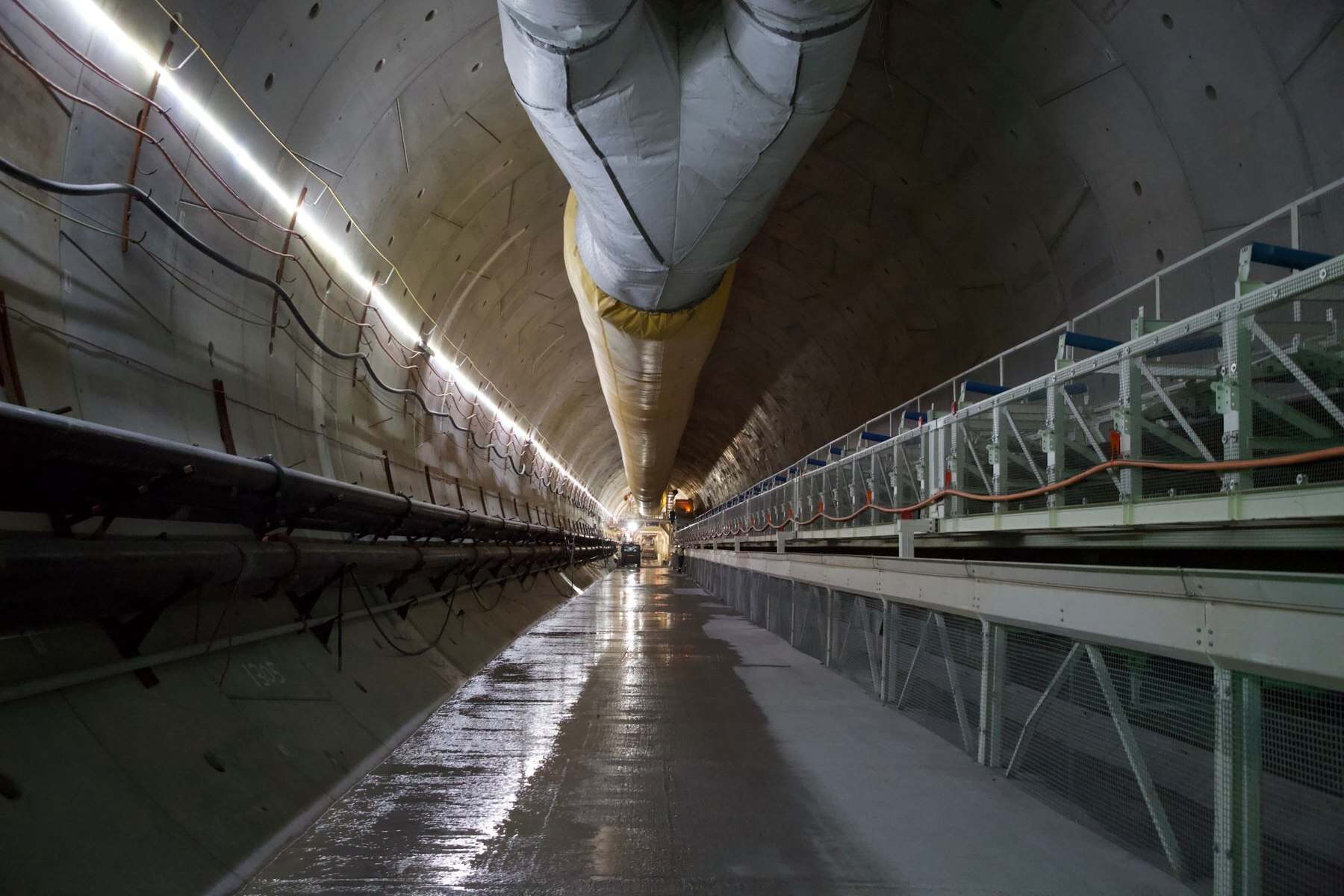
Snowy 2.0 links the existing Tantangara and Talbingo reservoirs with 27 kilometres of tunnels and a machine hall roughly 800 metres underground, converting the 1949-era Snowy Scheme into a 2,200 MW battery with about 350,000 MWh of storage. It’s the largest committed renewable energy project in Australia and one of the largest underground civil works anywhere.
Project Scope
Four tunnel boring machines, a power station cavern at depth, and the shafts and adits to serve them. Future Generation Joint Venture holds the work: Webuild, Clough and The Lane Construction Corporation. Snowy Hydro Limited, wholly owned by the Australian Commonwealth, is both developer and owner. A fourth purpose-built TBM, 178 metres long, was commissioned in early 2026 specifically to drive a 5 km section through the Long Plain Fault Zone, the geology behind the project’s worst delays. Progress is now past 70 percent, and monthly delivery has roughly doubled from 0.57 percent to 0.91 percent since the contract was restructured.
Why It Matters
The budget was reset to A$12 billion in 2023. That’s six times the original estimate, and the schedule moved to end-2028 with further overruns under review. The contract itself was restructured from a fixed EPC design-and-construct arrangement into a collaborative incentivised model, which is what usually happens when a fixed-price tunnel meets ground nobody characterised properly.
That is the lesson worth carrying off this job. Snowy 2.0 was priced before the Long Plain Fault Zone was understood, on a delivery model that put the geological risk on a contractor who couldn’t price it either. Both parties then spent four years discovering what the ground was. Every pumped-storage scheme now in feasibility in Australia is being scoped against that history.
Project Team & Details
| Developer | Snowy Hydro Limited |
|---|
| Owner / Client | Snowy Hydro Limited (Australian Commonwealth Government) |
|---|
| General Contractor | Future Generation Joint Venture (Webuild / Clough / The Lane Construction Corporation) |
|---|
| Status | Under Construction |
|---|
| Delivery Method | Design-Build |
|---|
| Funding Source | Public (Federal) |
|---|