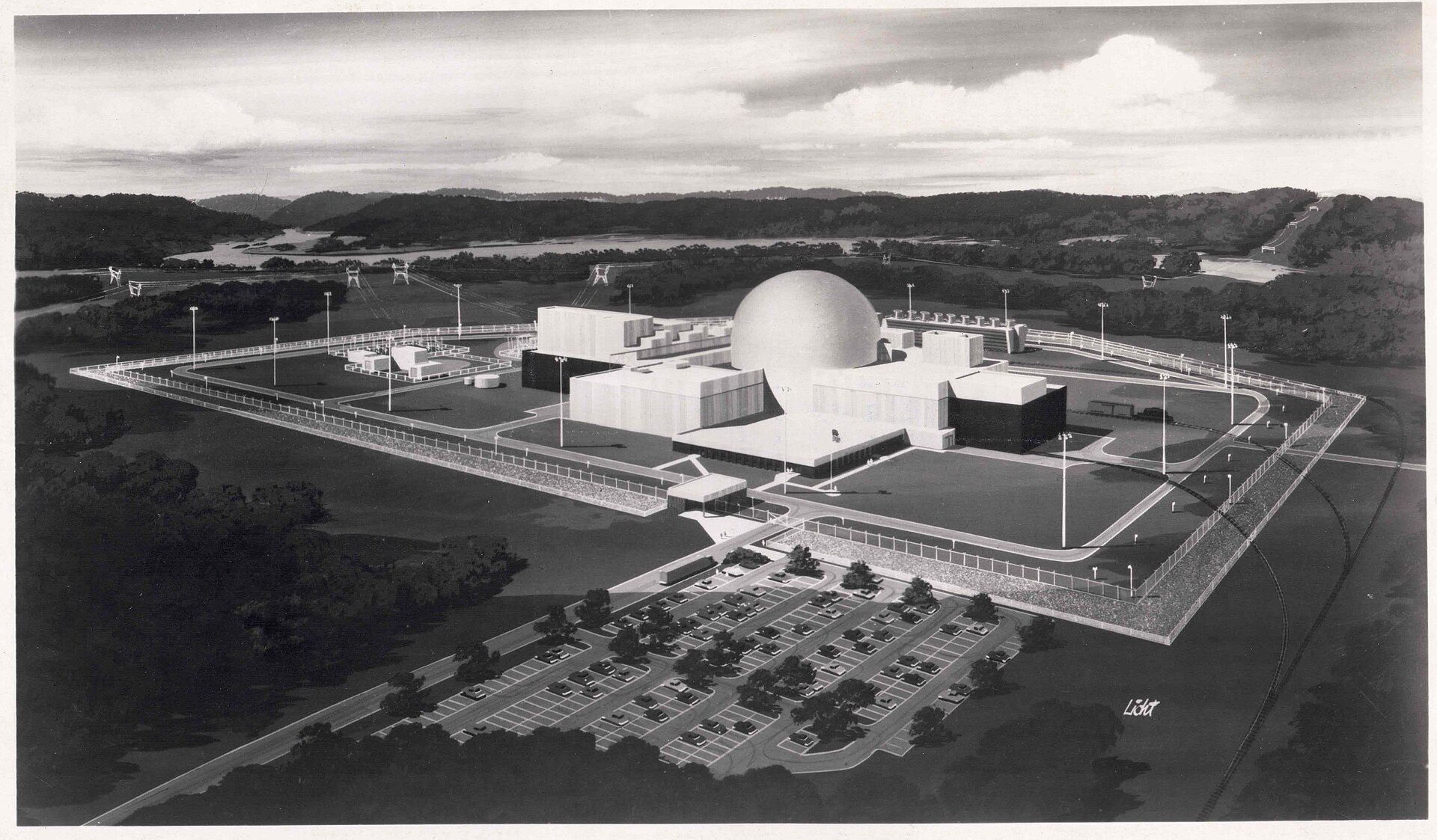
The Nuclear Regulatory Commission finished its safety evaluation five months early. That’s not a sentence anyone has written about American nuclear licensing in a long time.
TVA’s Clinch River Unit 1 is the first BWRX-300 in the United States to reach that stage. NRC staff recommended issuance of the construction permit in June 2026, against a projection of November, and cut its own effort estimate from 25,000 staff hours to roughly 16,500 along the way. Several other utilities are queued behind TVA on the same reactor design, watching how this one goes.
Project Scope
Unit 1 is a 300 MWe natural-circulation boiling water reactor on a 1,200-acre site along the Clinch River arm of Watts Bar Reservoir. Bechtel leads construction and Sargent & Lundy is doing the detailed site-specific design; GE Vernova Hitachi Nuclear Energy owns the reactor technology. Preliminary site preparation started in 2026, with nuclear construction targeted for late 2028 and commissioning by the end of 2032.
TVA’s board has authorized $350 million cumulatively for its New Nuclear Program through FY2026, and DOE selected TVA for $400 million in federal cost-shared funding. Neither figure is a total project cost, and TVA has not published one.
Why It Matters
The design case rests on passive safety. Natural circulation, passive decay heat removal, coolant retention through reactor isolation — no pumps to fail, fewer active systems to build and maintain. The Advisory Committee on Reactor Safeguards said as much, then flagged the open item: natural-circulation stability at startup and low power still has to be demonstrated, and that demonstration lands at the operating-license stage, not now.
There’s history on this parcel. It’s where the Clinch River Breeder Reactor was supposed to go in the 1970s and ’80s before Congress killed it. Forty years later the site is finally getting a reactor, at a tenth the output and a fraction of the footprint.
For the construction market, the real question is repeatability. A 300 MWe unit only pencils if the second one costs meaningfully less than the first, and nobody in the U.S. has built a fleet of anything nuclear since the 1970s. Clinch River is where that argument gets tested with concrete.
Related coverage & projects
Project Team & Details
| Owner / Client | Tennessee Valley Authority |
|---|
| Consultants | Sargent & Lundy (Detailed Site-Specific Design)
GE Vernova Hitachi Nuclear Energy (Reactor Technology) |
|---|
| General Contractor | Bechtel |
|---|
| Status | Planned |
|---|
| Delivery Method | Design-Build |
|---|
| Funding Source | Public (Federal) |
|---|