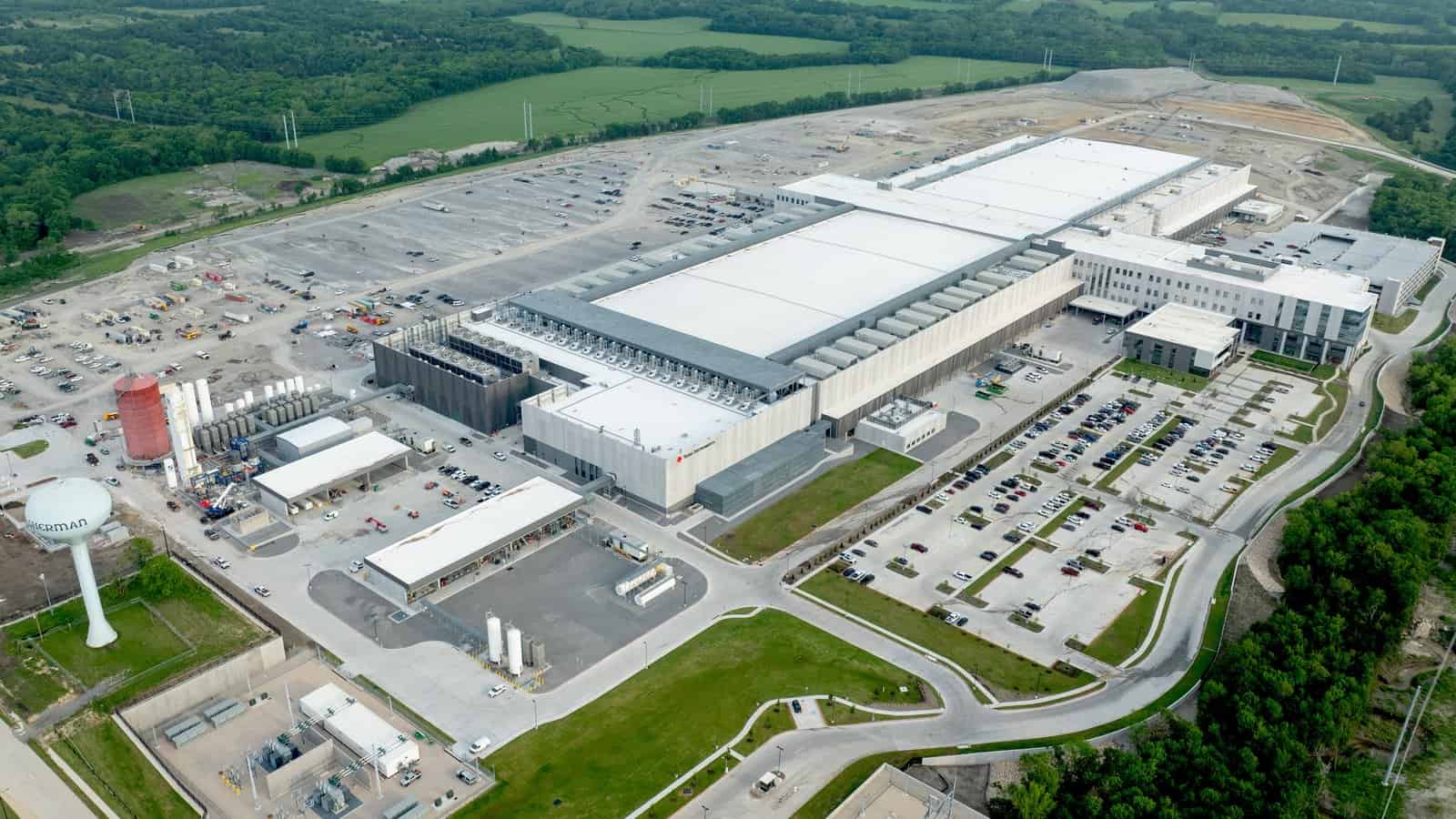
Texas Instruments turned on its first Sherman fab in December 2025, and the chips coming off the line are the kind almost every device quietly depends on. SM1 is a 300mm wafer plant making analog and embedded processing silicon, the first of up to four connected fabs on a north Texas campus that carries more than $30 billion in planned investment and could reach $40 billion.
Project Scope
SM1 went from groundbreaking to production in about three and a half years, fast for a leading-edge 300mm facility. At capacity the campus is built to push out tens of millions of chips a day. The shell for the second fab, SM2, is already up, with cleanroom build-out and tool install slated to run through 2026.
This is heavy industrial construction at the top of the difficulty curve: vibration-isolated slabs, vast cleanrooms, and the chemical, gas, and ultrapure-water systems a modern fab needs before a single wafer moves. TI is designing the new fabs to a LEED Gold target, and the build pulls a mix of company capital and federal CHIPS Act support.
Why It Matters
Analog chips don’t get the headlines that AI accelerators do, but they’re in cars, appliances, and industrial gear by the billions, and most have been made overseas. Sherman is one of the largest bets on bringing that production back to U.S. soil.
It also extends a national fab build-out happening in parallel, from TSMC’s Arizona campus to Samsung’s Taylor plant down the road. For the contractors and trades who can deliver cleanroom-grade work on a semiconductor schedule, Sherman is years of pipeline, and SM2 through SM4 mean the campus won’t go quiet when SM1 ramps.
Project Team & Details
| Developer | Texas Instruments |
|---|
| Owner / Client | Texas Instruments |
|---|
| Status | Under Construction |
|---|
| Sustainability Certification | LEED Gold (target) |
|---|
| Funding Source | Mixed |
|---|