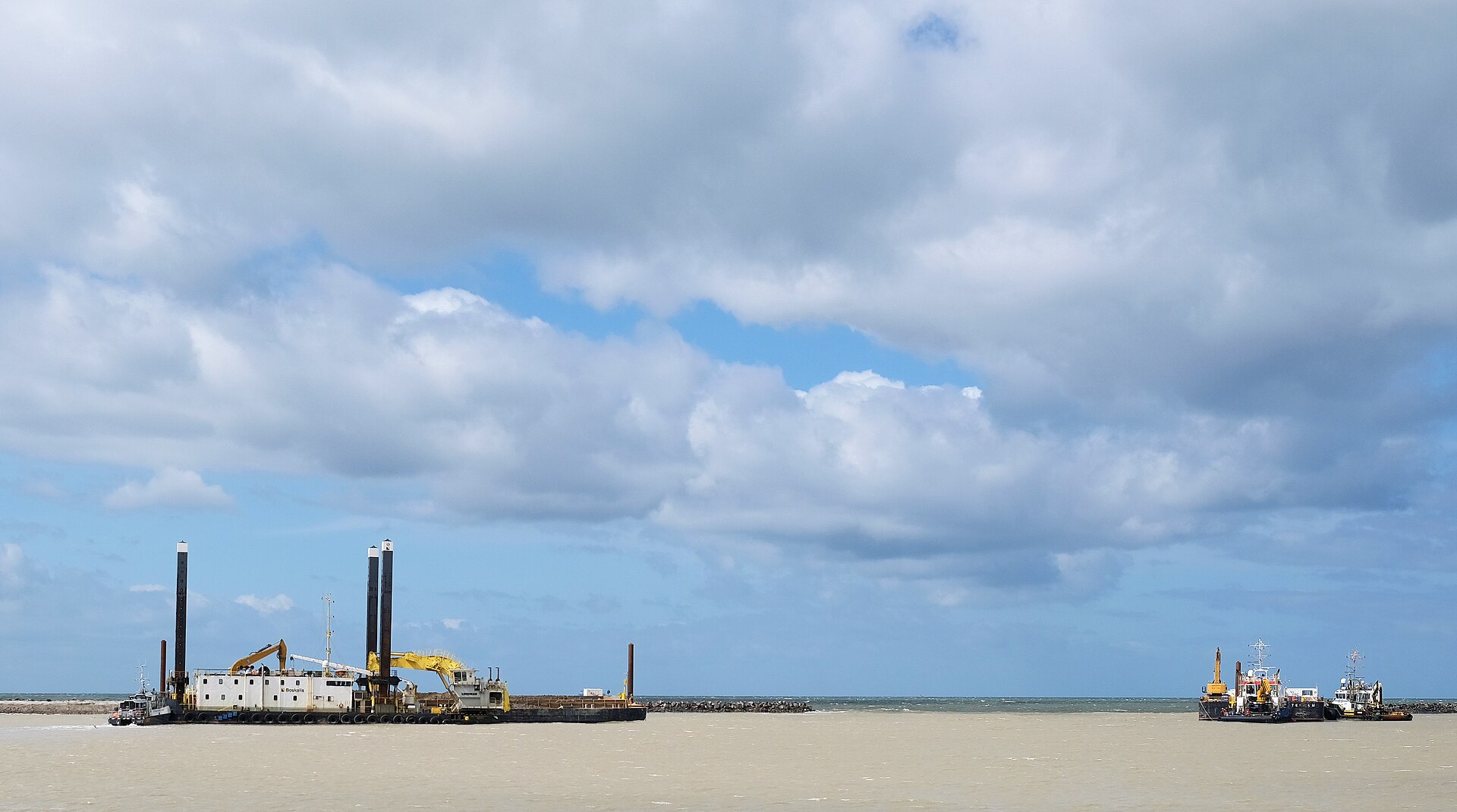
The Fehmarnbelt Tunnel is the longest immersed tube tunnel ever attempted, an 18-kilometer road-and-rail crossing being sunk in pieces across the strait between Denmark and Germany. It won’t be bored or floated on a bridge. Instead, 89 prefabricated concrete elements are cast on land, towed out, and lowered into a dredged trench on the seabed, then joined end to end. The first element was immersed in spring 2026, the start of a process that runs through the end of the year and beyond.
Project Scope
The tunnel carries a four-lane motorway and a two-track electrified railway in a single structure, replacing the ferry that has shuttled between Rodbyhavn and Puttgarden for generations. Of the 89 elements, 79 are standard segments 217 meters long; the rest are specialized elements housing systems and access. A purpose-built tunnel-element factory on the Danish side at Rodbyhavn casts the segments, a piece of temporary industrial infrastructure nearly as notable as the tunnel itself. The construction budget runs about 52.6 billion Danish kroner, roughly $8.2 billion, financed through Danish state loans repaid by tolls, with EU support and a German motorway connection on top.
Why It Matters
The crossing collapses a journey. A trip that takes 45 minutes by ferry becomes a 7-minute drive or a 10-minute train ride, and it knits Scandinavia tighter to mainland Europe along the Hamburg-Copenhagen corridor. For the rail freight network it removes a maritime bottleneck that has shaped logistics across the Baltic for decades.
It also works as a proving ground for immersed-tunnel engineering at a scale nobody has tried. The original 2029 opening has slipped, with operations now expected around 2031 in phases, a reminder that prefab-and-immerse is precise, weather-dependent work. The technique sits alongside other European megaprojects like the Grand Paris Express in the catalog of continent-scale transport bets now under construction. If Fehmarnbelt lands its tolerances element by element, it becomes the reference case for the next generation of long immersed crossings.
Project Team & Details
| Developer | Femern A/S (Sund og Baelt) |
|---|
| Owner / Client | Femern A/S (Danish state) |
|---|
| Consultants | Ramboll-Arup-TEC JV (Design) |
|---|
| General Contractor | Femern Link Contractors (VINCI / Per Aarsleff JV) |
|---|
| Status | Under Construction |
|---|
| Delivery Method | Design-Build |
|---|
| Funding Source | Public (Federal) |
|---|