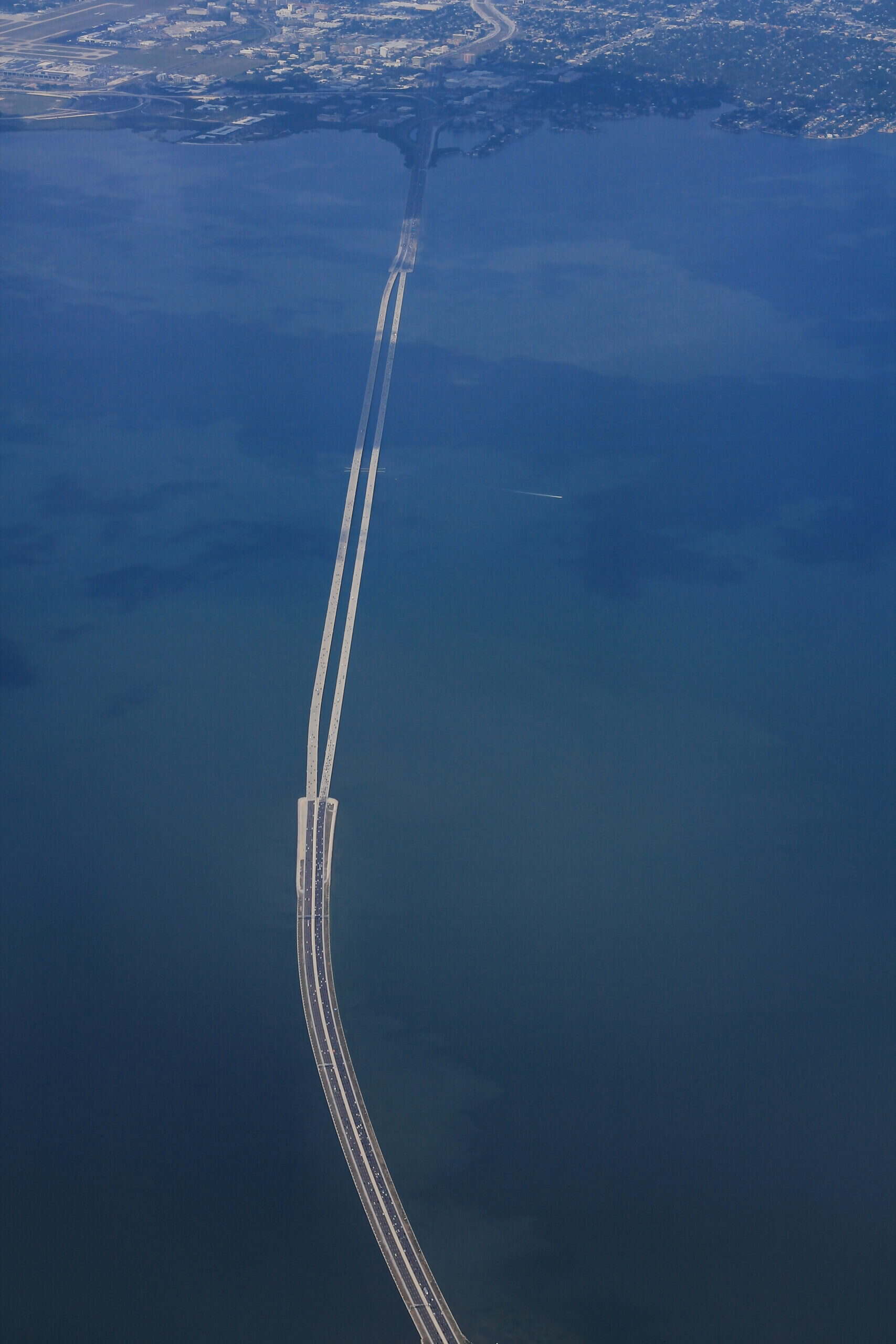
Howard Frankland Bridge — New Southbound
A Tampa Based Infrastructure Construction Project.

howard-frankland-bridge-aerial
Business Details
Key information about the business.
Project Details
Website
Social Media
A Bit About Howard Frankland Bridge — New Southbound
The new southbound Howard Frankland Bridge is the largest bridge in Florida and the most expensive crossing the state has ever procured. The $865.3 million design-build project replaces the 1960s-era northbound structure and adds tolled express lanes alongside general-purpose lanes between Pinellas and Hillsborough counties. Construction began in fall 2020 and is targeted to wrap in 2026.
Project Scope
The new span runs more than three miles across Tampa Bay and carries 2.6 million square feet of bridge deck across 113 spans. Each direction will eventually offer four general-purpose lanes and two tolled express lanes, with the new structure paired to the existing 1990s-era bridge to give I-275 a coordinated six-lane-each-way profile through the bay.
The Archer Western and Traylor Bros. joint venture is delivering the project as design-build, with BCC Engineering as engineer of record. The construction problem is harder than the span length suggests: the alignment crosses one of Florida’s most sensitive shallow-water environments, the soils under the alignment vary from soft marine clay to limestone over relatively short pile runs, and the structure has to absorb vessel-collision forces from working commercial traffic in the bay’s shipping channel.
The old 1960s-era northbound bridge will be demolished after the new structure opens to traffic, which itself is a multi-quarter marine demolition program with its own permitting envelope. Removal will free water column and reset the visual experience of the crossing for the first time in 60 years.
Why It Matters
The Howard Frankland carries the spine I-275 connection across Tampa Bay, the busiest north-south corridor between St. Petersburg and Tampa. The new structure expands capacity at the only natural pinch point in the regional network, and the tolled express lanes give FDOT a managed-lane revenue stream to underwrite future maintenance on the asset.
For Florida’s design-build program, the project is also a benchmark. FDOT has used the procurement model on its biggest civil work since the mid-2010s, but the marine, geotechnical and environmental complexity of this crossing tested how much risk the state can move to the contractor without driving bids out of reach. Archer Western and Traylor Bros. priced the job under a hard cap and held it through pandemic-era supply shocks, which is the result FDOT now points to when defending the model to legislators.
The completion of this bridge clears the deck for the next round of Tampa Bay corridor work, including planned improvements at the Westshore interchange and continued I-4 expansion further east.
Project Team & Details
| Developer | Florida Department of Transportation |
|---|---|
| Owner / Client | Florida Department of Transportation |
| Architect | BCC Engineering (Engineer of Record) |
| Consultants | BCC Engineering (Structural Engineer of Record) |
| General Contractor | Archer Western / Traylor Bros. JV |
| Status | Under Construction |
| Delivery Method | Design-Build |
| Funding Source | Public (State) |
Sorry, no records were found. Please adjust your search criteria and try again.
Sorry, unable to load the Maps API.
Howard Frankland Bridge — New Southbound
A Tampa Based Infrastructure Construction Project.

howard-frankland-bridge-aerial
Project Details
Key information about the construction project.
Project Type
Project Value
Project Schedule
Location
Website
Social Media
A Bit About Howard Frankland Bridge — New Southbound
The new southbound Howard Frankland Bridge is the largest bridge in Florida and the most expensive crossing the state has ever procured. The $865.3 million design-build project replaces the 1960s-era northbound structure and adds tolled express lanes alongside general-purpose lanes between Pinellas and Hillsborough counties. Construction began in fall 2020 and is targeted to wrap in 2026.
Project Scope
The new span runs more than three miles across Tampa Bay and carries 2.6 million square feet of bridge deck across 113 spans. Each direction will eventually offer four general-purpose lanes and two tolled express lanes, with the new structure paired to the existing 1990s-era bridge to give I-275 a coordinated six-lane-each-way profile through the bay.
The Archer Western and Traylor Bros. joint venture is delivering the project as design-build, with BCC Engineering as engineer of record. The construction problem is harder than the span length suggests: the alignment crosses one of Florida’s most sensitive shallow-water environments, the soils under the alignment vary from soft marine clay to limestone over relatively short pile runs, and the structure has to absorb vessel-collision forces from working commercial traffic in the bay’s shipping channel.
The old 1960s-era northbound bridge will be demolished after the new structure opens to traffic, which itself is a multi-quarter marine demolition program with its own permitting envelope. Removal will free water column and reset the visual experience of the crossing for the first time in 60 years.
Why It Matters
The Howard Frankland carries the spine I-275 connection across Tampa Bay, the busiest north-south corridor between St. Petersburg and Tampa. The new structure expands capacity at the only natural pinch point in the regional network, and the tolled express lanes give FDOT a managed-lane revenue stream to underwrite future maintenance on the asset.
For Florida’s design-build program, the project is also a benchmark. FDOT has used the procurement model on its biggest civil work since the mid-2010s, but the marine, geotechnical and environmental complexity of this crossing tested how much risk the state can move to the contractor without driving bids out of reach. Archer Western and Traylor Bros. priced the job under a hard cap and held it through pandemic-era supply shocks, which is the result FDOT now points to when defending the model to legislators.
The completion of this bridge clears the deck for the next round of Tampa Bay corridor work, including planned improvements at the Westshore interchange and continued I-4 expansion further east.
Project Team & Details
| Developer | Florida Department of Transportation |
|---|---|
| Owner / Client | Florida Department of Transportation |
| Architect | BCC Engineering (Engineer of Record) |
| Consultants | BCC Engineering (Structural Engineer of Record) |
| General Contractor | Archer Western / Traylor Bros. JV |
| Status | Under Construction |
| Delivery Method | Design-Build |
| Funding Source | Public (State) |
Sorry, no records were found. Please adjust your search criteria and try again.
Sorry, unable to load the Maps API.
Project Team & Details
| Developer | Florida Department of Transportation |
|---|---|
| Owner / Client | Florida Department of Transportation |
| Architect | BCC Engineering (Engineer of Record) |
| Consultants | BCC Engineering (Structural Engineer of Record) |
| General Contractor | Archer Western / Traylor Bros. JV |
| Status | Under Construction |
| Delivery Method | Design-Build |
| Funding Source | Public (State) |