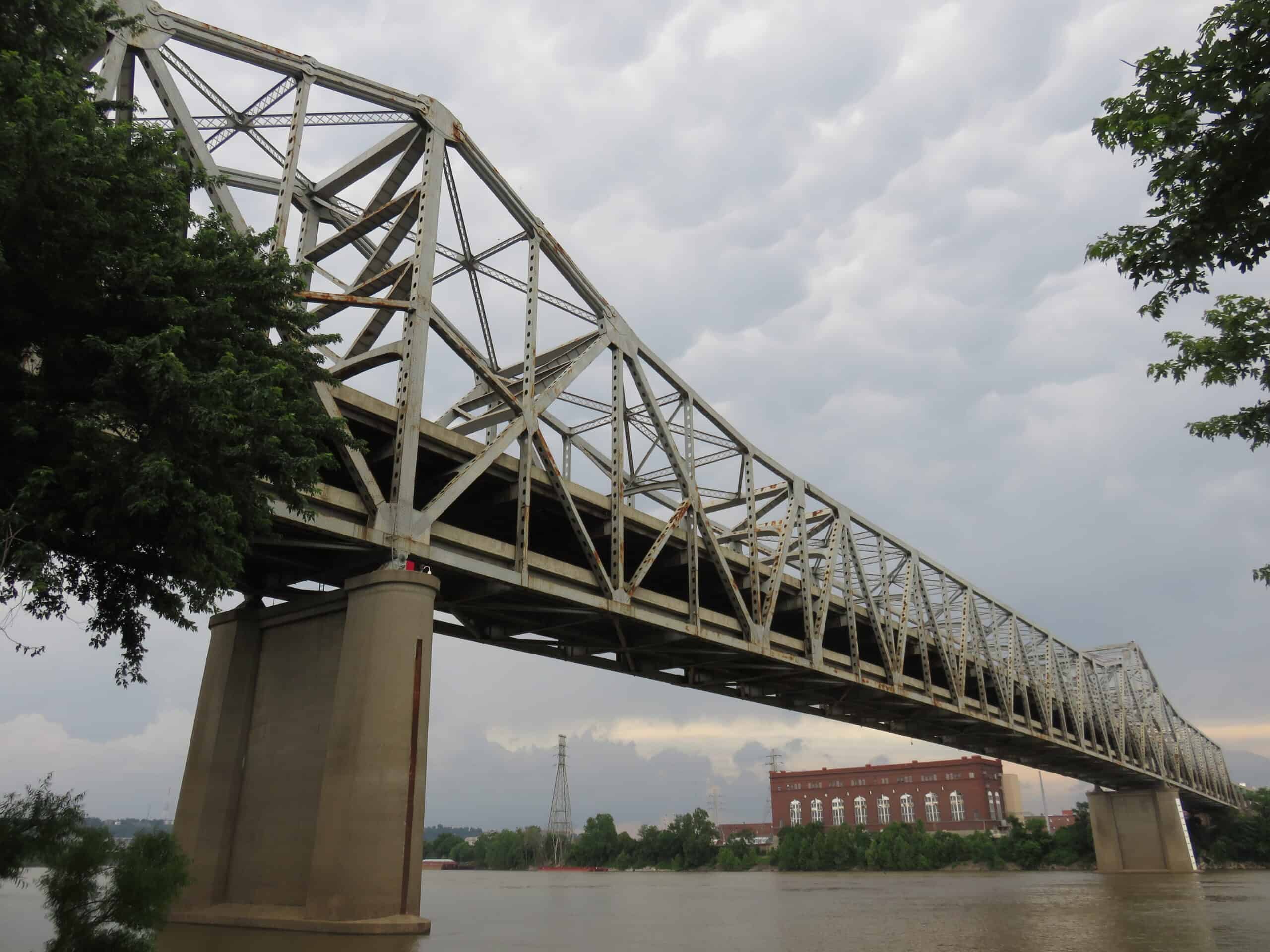
Brent Spence Bridge Corridor Project
A Cincinnati Based Infrastructure Construction Project.

brent-spence-bridge-real
Business Details
Key information about the business.
Website
Social Media
A Bit About Brent Spence Bridge Corridor Project

The shovels finally hit dirt May 8, 2026. Governors Mike DeWine of Ohio and Andy Beshear of Kentucky broke ground on the $4.05 billion Brent Spence Bridge Corridor Project, a 25-year political problem that has been queued for federal money since the 1990s and finally moved with Bipartisan Infrastructure Law dollars. Walsh-Kokosing Joint Venture is the lead design-builder under a progressive design-build contract awarded in 2023.
Project Scope
The corridor program is one project on paper and three problems on the ground. Walsh-Kokosing will build:
- New companion bridge over the Ohio River, just west of the existing Brent Spence, carrying through I-71/I-75 traffic
- Approximately 5 miles of I-71/I-75 reconstructed through Kentucky from south of the river toward the I-71/I-75 split
- Approximately 1 mile of I-75 reconstructed through Ohio, including interchanges at Pete Rose Way and Linn Street
- Rehabilitation of the existing Brent Spence Bridge for redirected local and truck traffic once the companion span carries through-movements
The bridge is being procured under a progressive design-build, which means design is being completed in parallel with early construction packages. Design has crossed the 60% milestone for the major structures, with the bridge superstructure design tracking ahead of substructure work.
Construction at peak is expected to consume roughly six million labor hours from a workforce of approximately 700 tradespeople at peak.
Current Status
Active construction. Heavy work is ramping through summer 2026 with barge and crane mobilization on the river supporting pier and pylon work for the new bridge. The companion span is scheduled to open by 2031. Total program substantial completion is expected by 2033.
Why It Matters
The Brent Spence is one of the most-watched freight bottlenecks in the country. The existing 1963 bridge carries roughly 3% of the nation’s GDP across its deck on a typical day — disproportionate cargo for a bridge that was designed for 80,000 vehicles a day and now carries close to 160,000. Functional obsolescence has been the official rating since the 1990s.
For the construction sector, the project matters in three specific ways:
- Progressive design-build at megaproject scale: PDB is the trend for state DOT megaprojects under the BIL. Walsh-Kokosing’s execution here is a leading indicator for procurement on the next wave of Ohio River, Mississippi River, and Pacific Northwest crossings.
- Federal money actually flowing: BIL funding was authorized in 2021 and announced for this project in late 2022. The May 2026 groundbreaking is the cleanest case study of money-to-mobilization timing under the law. Roughly 39 months from authorization to dirt is fast for a $4B program.
- Workforce demand in the Ohio Valley: Combined with other ongoing infrastructure programs, the BSB Corridor is going to absorb close to a thousand specialty trades in a region that hasn’t seen sustained heavy-civil work at this scale in a generation.
Key Stakeholders
- Owners: Ohio Department of Transportation; Kentucky Transportation Cabinet (joint procurement)
- Federal funding: $1.6 billion BIL Mega Grant; additional BIL formula and INFRA funding
- Design-Build Team: Walsh-Kokosing Joint Venture (lead)
- Lead Designer: HNTB Corporation
- Construction Engineering / Inspection: TYLin / Stantec
- Local engagement: City of Cincinnati, City of Covington, City of Newport
The companion bridge concept and progressive design-build approach were selected after multiple failed attempts at P3 procurement under earlier administrations.
Sorry, no records were found. Please adjust your search criteria and try again.
Sorry, unable to load the Maps API.
Brent Spence Bridge Corridor Project
A Cincinnati Based Infrastructure Construction Project.

brent-spence-bridge-real
Project Details
Key information about the construction project.
Project Type
Project Value
Project Schedule
Location
Website
Social Media
A Bit About Brent Spence Bridge Corridor Project
The shovels finally hit dirt May 8, 2026. Governors Mike DeWine of Ohio and Andy Beshear of Kentucky broke ground on the $4.05 billion Brent Spence Bridge Corridor Project, a 25-year political problem that has been queued for federal money since the 1990s and finally moved with Bipartisan Infrastructure Law dollars. Walsh-Kokosing Joint Venture is the lead design-builder under a progressive design-build contract awarded in 2023.
Project Scope
The corridor program is one project on paper and three problems on the ground. Walsh-Kokosing will build:
- New companion bridge over the Ohio River, just west of the existing Brent Spence, carrying through I-71/I-75 traffic
- Approximately 5 miles of I-71/I-75 reconstructed through Kentucky from south of the river toward the I-71/I-75 split
- Approximately 1 mile of I-75 reconstructed through Ohio, including interchanges at Pete Rose Way and Linn Street
- Rehabilitation of the existing Brent Spence Bridge for redirected local and truck traffic once the companion span carries through-movements
The bridge is being procured under a progressive design-build, which means design is being completed in parallel with early construction packages. Design has crossed the 60% milestone for the major structures, with the bridge superstructure design tracking ahead of substructure work.
Construction at peak is expected to consume roughly six million labor hours from a workforce of approximately 700 tradespeople at peak.
Current Status
Active construction. Heavy work is ramping through summer 2026 with barge and crane mobilization on the river supporting pier and pylon work for the new bridge. The companion span is scheduled to open by 2031. Total program substantial completion is expected by 2033.
Why It Matters
The Brent Spence is one of the most-watched freight bottlenecks in the country. The existing 1963 bridge carries roughly 3% of the nation’s GDP across its deck on a typical day — disproportionate cargo for a bridge that was designed for 80,000 vehicles a day and now carries close to 160,000. Functional obsolescence has been the official rating since the 1990s.
For the construction sector, the project matters in three specific ways:
- Progressive design-build at megaproject scale: PDB is the trend for state DOT megaprojects under the BIL. Walsh-Kokosing’s execution here is a leading indicator for procurement on the next wave of Ohio River, Mississippi River, and Pacific Northwest crossings.
- Federal money actually flowing: BIL funding was authorized in 2021 and announced for this project in late 2022. The May 2026 groundbreaking is the cleanest case study of money-to-mobilization timing under the law. Roughly 39 months from authorization to dirt is fast for a $4B program.
- Workforce demand in the Ohio Valley: Combined with other ongoing infrastructure programs, the BSB Corridor is going to absorb close to a thousand specialty trades in a region that hasn’t seen sustained heavy-civil work at this scale in a generation.
Key Stakeholders
- Owners: Ohio Department of Transportation; Kentucky Transportation Cabinet (joint procurement)
- Federal funding: $1.6 billion BIL Mega Grant; additional BIL formula and INFRA funding
- Design-Build Team: Walsh-Kokosing Joint Venture (lead)
- Lead Designer: HNTB Corporation
- Construction Engineering / Inspection: TYLin / Stantec
- Local engagement: City of Cincinnati, City of Covington, City of Newport
The companion bridge concept and progressive design-build approach were selected after multiple failed attempts at P3 procurement under earlier administrations.
Sorry, no records were found. Please adjust your search criteria and try again.
Sorry, unable to load the Maps API.