Eleven cracks, between 17 and 55 centimetres long, found in a single span in 2011. That is what ended rail traffic over the 1937 Storstrombroen and set Denmark on the course to build its replacement.
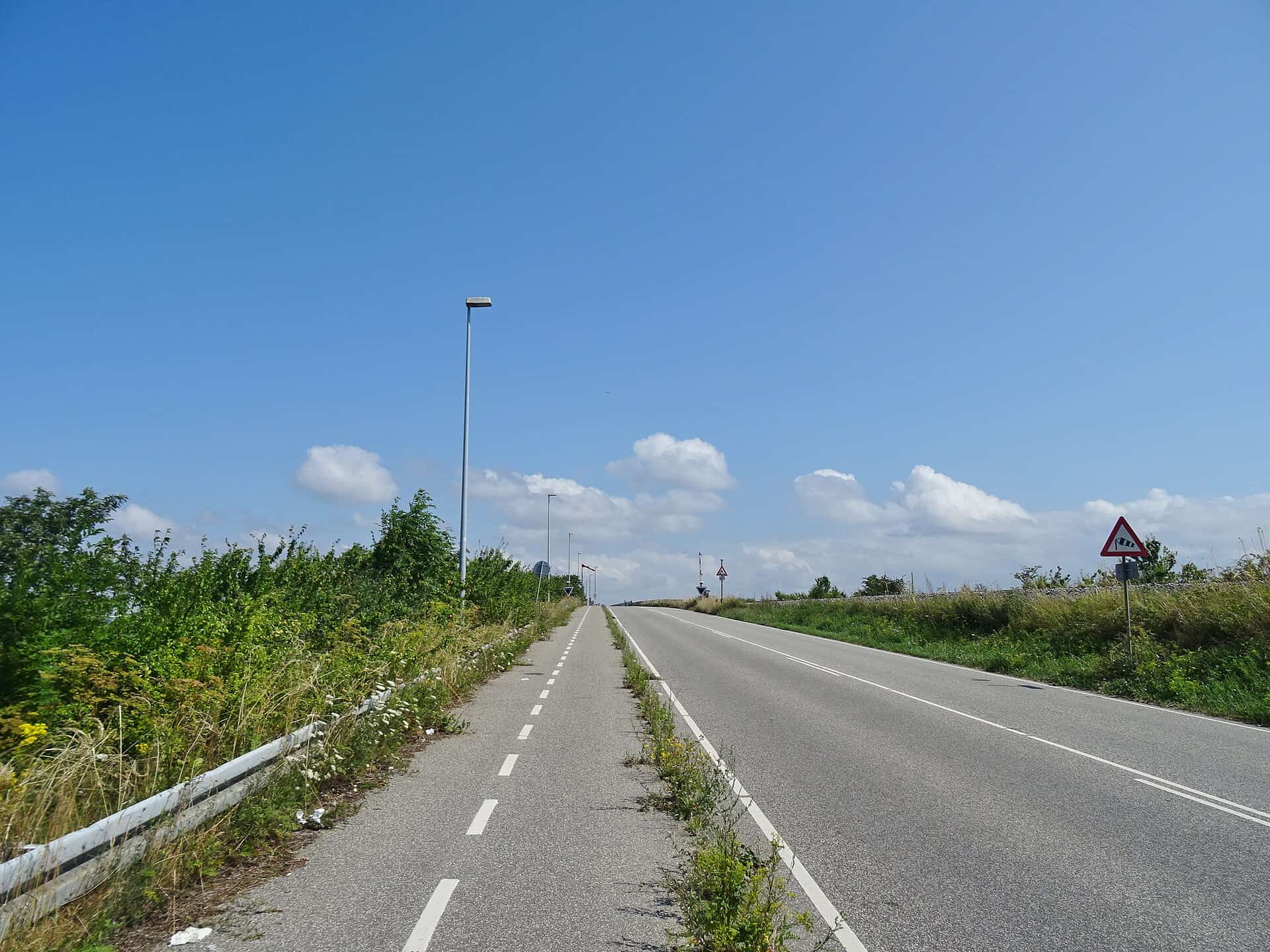
The old bridge is a 3,199 m steel tied-arch structure linking Masnedo to Falster, carrying a single rail track, two road lanes and a footway across the Storstrom. It was never designed for what the Fehmarnbelt Fixed Link now requires, which is double-track electrified rail all the way from Ringsted to Rodbyhavn. The new Dronning Margrethe II Bridge answers that: 3,832 m overall, a single-pylon cable-stayed main crossing with two 320 m spans, and 44 approach-viaduct spans at 80 m each.
Project Scope
Double-track electrified railway rated for 200 km/h, two road lanes at 80 km/h, and a combined foot and cycle path. The Storstrom Bridge Joint Venture of Itinera, Grandi Lavori Fincosit and Condotte d’Acqua holds the design-build contract under the Danish Road Directorate, with COWI on preliminary design, Dissing+Weitling on bridge architecture and Studio de Miranda Associati as the contractor’s design engineer. Condotte entered insolvency partway through the works, one of several reasons the programme ran years past its original 2022 target. Road traffic opened on 23 March 2026 and the 1937 bridge was decommissioned for road use in early June. Rail is expected to transfer in 2027. Demolition of the old structure runs under the same construction act.
Numbers here need care. The construction contract is roughly DKK 2.1 billion; the DKK 4.1 billion figure that circulates (DKK 4.7 billion in some 2026 reporting) is a programme total covering demolition and land works, not the bridge. Separately, the joint venture’s claim against the state was reported at DKK 3.4 billion in 2023 and DKK 4.58 billion in 2024. That dispute is unresolved, and the claim is close to the entire bridge budget.
Why It Matters
Most replacement-bridge jobs are about capacity or condition. This one is about a corridor. The Fehmarnbelt tunnel between Denmark and Germany has no value to rail freight if the approach north of it still narrows to one track over a bridge that can’t carry the load. Storstrom was the pinch point, and the schedule for the whole corridor bent around it.
There is also a plain lesson in the claim. A design-build contract on a marine crossing, with an insolvent JV partner and a five-year overrun, produced a dispute the size of the job. Anyone pricing similar work in Scandinavia should read the file.
Project Team & Details
| Owner / Client | Vejdirektoratet (Danish Road Directorate) |
|---|
| Architect | Dissing+Weitling |
|---|
| Consultants | COWI (Preliminary Design)
Dissing+Weitling (Bridge Architecture)
Ramboll (Design Services)
Studio de Miranda Associati (Contractor Design Engineer)
Haslov & Kjaersgaard (Landscape and Planning) |
|---|
| General Contractor | Storstrom Bridge Joint Venture (Itinera / Grandi Lavori Fincosit / Condotte d'Acqua) |
|---|
| Status | Under Construction |
|---|
| Delivery Method | Design-Build |
|---|
| Funding Source | Public (Federal) |
|---|