
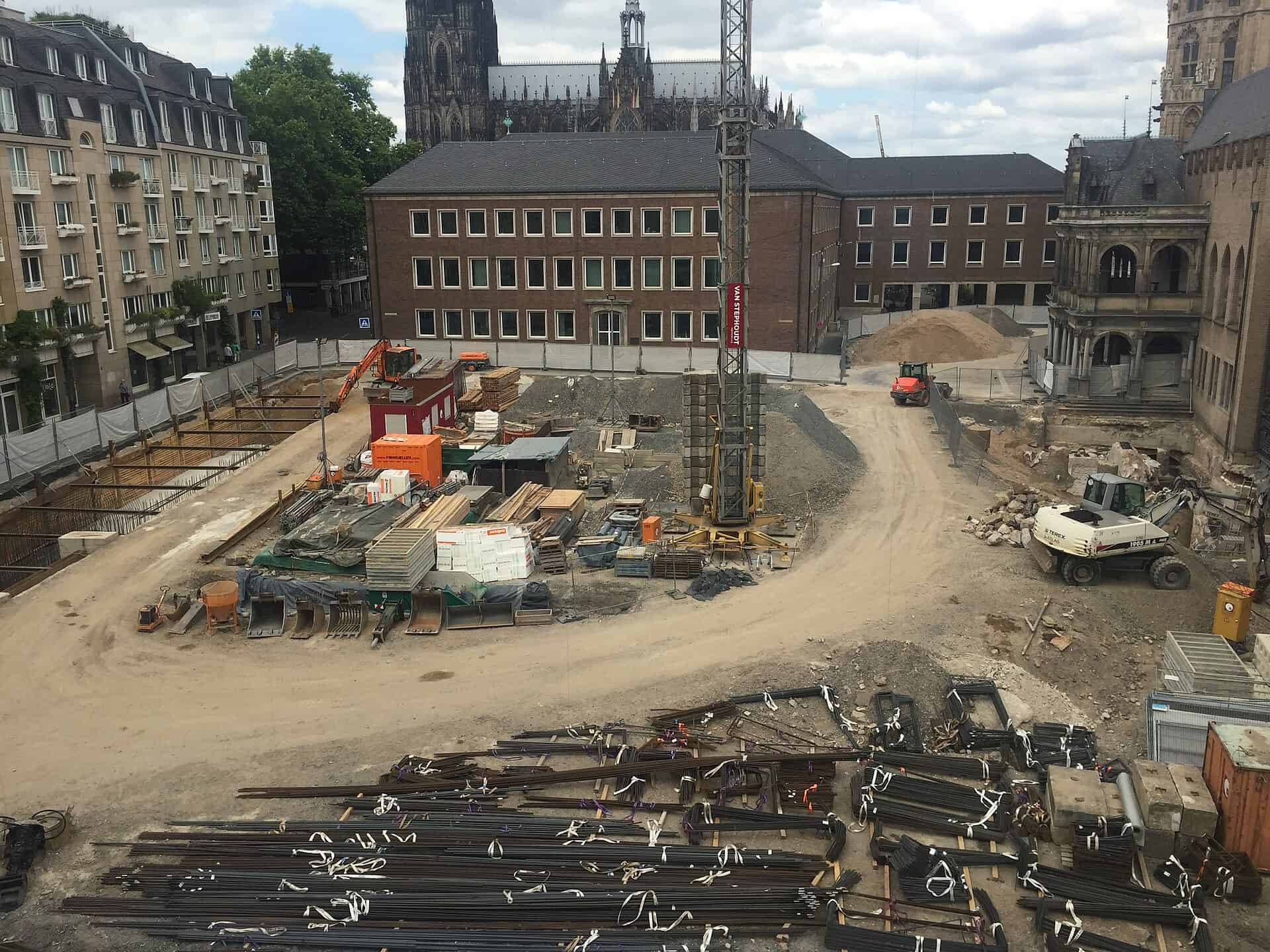
On hyperscale data center work the critical path has quietly moved. It used to run through trades productivity. Increasingly it runs through whether the switchgear showed up and whether anyone can find it in the yard.
CargoSense has acquired Adapt-IP, a Silicon Valley wireless firm, and folded its hardware into a platform aimed squarely at data center operations. Terms weren’t disclosed.
What was bought
Adapt-IP’s flagship is Spatial IQ, a tracker that combines short, medium and long-range wireless in one low-cost device. The company claims 3D location to within a meter and coverage of up to 20 million square feet from a single access point. Michael McNamara, Adapt-IP’s CEO, stays on to drive hardware strategy. Rich Kilmer, who founded CargoSense in Reston, Virginia in 2012, remains CEO.
CargoSense’s heritage is air cargo and pharmaceutical logistics, which is where its certifications from more than 60 airlines across 50-plus countries come from. It runs what it calls deterministic AI agents backed by a 24/7 human response team.
Treat the specs as claims
The one-meter accuracy and especially the 20-million-square-foot single-access-point figure are vendor specifications with nothing independent behind them. That coverage number is the one to hedge hardest. There are no named customers, no deployment counts on actual data center projects and no purchase price.
The $3 trillion market figure is JLL’s projection, not CargoSense’s, and it bundles IT spend with physical infrastructure. It is not a construction number and shouldn’t be quoted as one.
The part that matters to GCs
Owners on hyperscale jobs are pushing material-tracking obligations onto general contractors and MEP subs who never carried them before. Long-lead electrical gear, chillers and modular skids arrive months ahead of installation and sit somewhere, and “somewhere” is now a contractual exposure rather than a yard problem.
Cheap real-time location that works across an open laydown yard without building out infrastructure is the enabling piece, and consolidation in that layer suggests owners are starting to buy the oversight as a service. The same problem shows up wherever staging is separated from the work face: on Empire Wind 1, an entire marine terminal had to be rebuilt and rated to 6,000 pounds per square foot before a single turbine component could stage. Tracking what is in the yard is the cheap version of that problem.
Source: CargoSense.