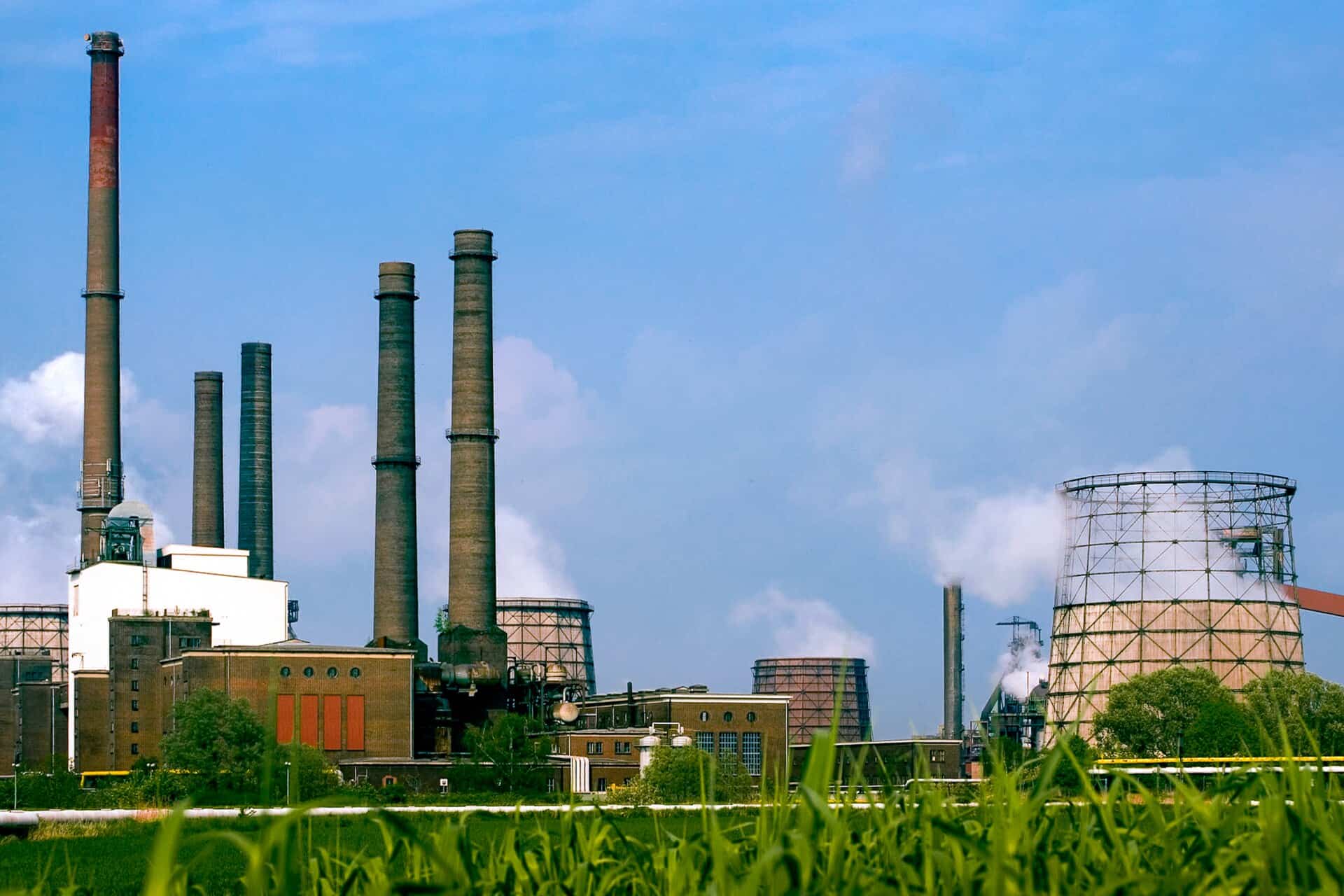
Stage 1 of SALCOS is going in inside a working mill, which is the hard version of this problem. Salzgitter is building a direct reduction plant of more than 2 million tonnes a year, an electric arc furnace, and a 100 MW-class electrolysis plant on a site that has to keep making steel the entire time.
Project Scope
The DRI unit uses Tenova HYL’s Energiron ZR process and runs on flexible hydrogen and natural gas blends, so it can start on gas and shift as hydrogen supply firms up. A consortium of Tenova, Danieli and DSD Steel Group holds the plant contract, with Drees & Sommer on project management and engineering support. Stage 1 carries about €2.3 billion of investment, roughly €1 billion of it from the German federal government and the State of Lower Saxony. Startup is targeted for 2027.
Tie-ins are the schedule risk. Every connection to existing gas, power, water and material handling has to land in a planned outage on a mill that runs continuously, and the electrolysis plant adds a electrical load profile the site’s distribution was never sized for.
Why It Matters
Salzgitter pushed its Stage 2 and Stage 3 investment decisions out to 2028 and 2029, from 2026, and full programme completion now sits in 2033 for a cut of up to 95% against roughly 8 million tonnes a year of direct CO2. That delay is worth stating plainly: the engineering works, and the thing slowing it down is hydrogen supply economics and capital timing rather than the process itself. Anyone bidding green-steel work in Europe should read the revised dates as the realistic pace, not the announced one.
Project Team & Details
| Owner / Client | Salzgitter Flachstahl GmbH |
|---|
| Consultants | Drees & Sommer (Project Management)
Tenova HYL (Energiron Technology Licensor) |
|---|
| General Contractor | Tenova / Danieli / DSD Steel Group (Consortium) |
|---|
| Status | Under Construction |
|---|
| Delivery Method | Design-Build |
|---|
| Funding Source | Mixed |
|---|