Riyadh Metro
A Riyadh Based Infrastructure Construction Project.

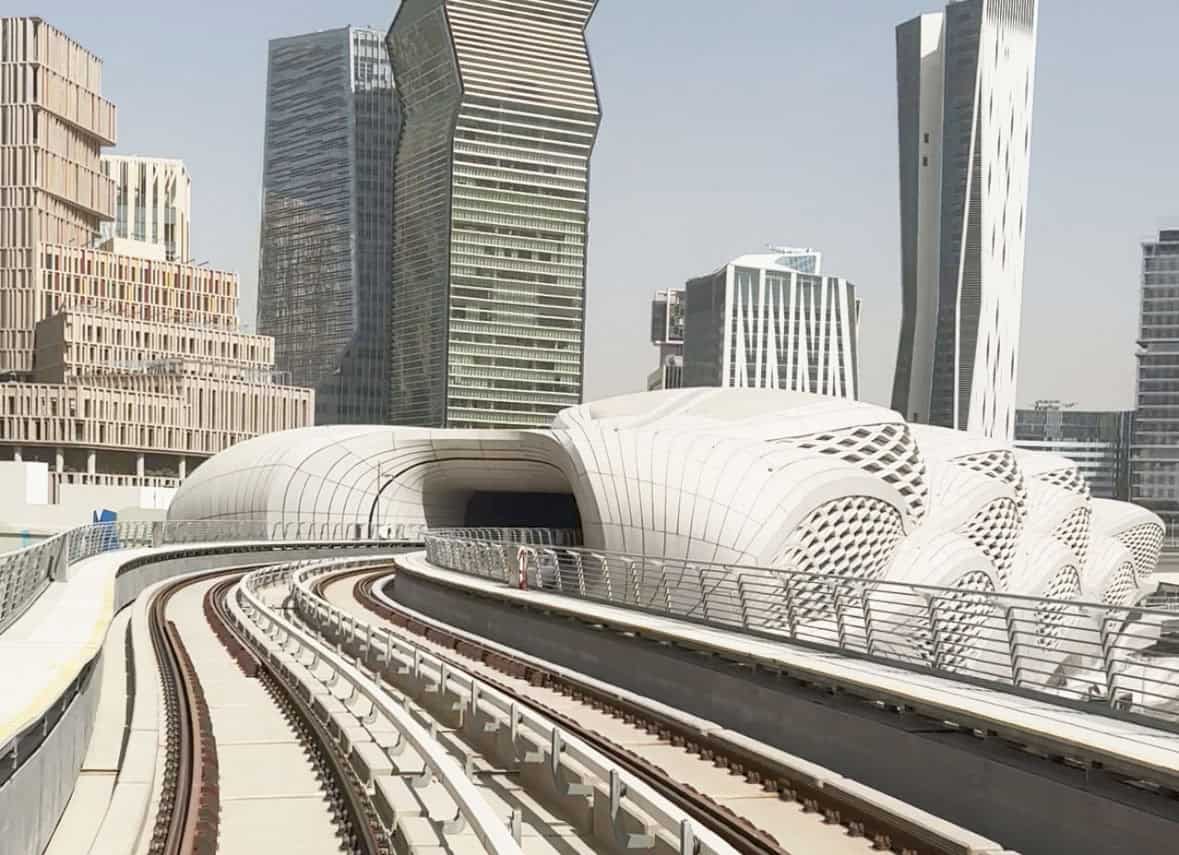
riyadh metro kafd station
Business Details
Key information about the business.
Location
Website
Social Media
A Bit About Riyadh Metro
Most cities build a metro line. Riyadh built a whole network at once. The Riyadh Metro is the largest driverless rapid-transit system ever delivered in a single program, six lines totaling 176 kilometers and 85 stations, dropped into a city that had run almost entirely on cars. Phased opening ran from December 2024 into early January 2025, capping more than a decade of construction.
Project scope
The roughly $22.5 billion program was split among three international consortia, each taking whole lines turnkey. The BACS group, built around Bechtel with Almabani, CCC and Siemens, delivered Lines 1 and 2 and their depots and park-and-rides. A separate consortium handled the fully automated Line 3, and a third built Lines 4, 5 and 6. The system runs driverless trains across underground, at-grade and elevated sections, knitting together residential districts, the airport and the central business core.
Stations carry real architectural ambition rather than utility-grade finishes. The standout is the King Abdullah Financial District interchange by Zaha Hadid Architects, an 8,150-square-meter station where Lines 1, 4 and 6 meet the district’s monorail. Several other “iconic” stations got their own signature designs, a deliberate choice to make transit feel like civic infrastructure, not an afterthought.
Why it matters
Riyadh is one of the most car-dependent capitals on earth, and the metro is the spine of a wider plan to change that, paired with a new bus network under the King Abdulaziz Project for Public Transport. It’s also a Vision 2030 set piece, meant to cut congestion and emissions while signaling that the kingdom can deliver complex infrastructure at scale.
For the region, the project is a benchmark. It shows that a Gulf city can stand up a full automated network in roughly a decade, a timeline that puts a lot of slower-moving transit programs to shame. The harder test now is ridership: getting drivers out of their cars and onto the platforms is a different challenge than pouring the concrete. The Riyadh Metro sits alongside other ambitious rail builds Exchange tracks, from Brightline West in the U.S. to Toronto’s Eglinton Crosstown West Extension.
Project Team & Details
| Developer | Royal Commission for Riyadh City |
|---|---|
| Owner / Client | Royal Commission for Riyadh City (Government of Saudi Arabia) |
| Architect | Zaha Hadid Architects (KAFD station); Snohetta, Gerber, Omrania (other landmark stations) |
| General Contractor | BACS / ANM / FAST consortia |
| Major Subcontractors | Siemens Mobility (Lines 1-2 trains and signaling) Alstom (Lines 4-6 rolling stock) Hitachi Rail / Ansaldo STS (Line 3 driverless system) |
| Status | Completed |
| Delivery Method | Design-Build |
| Funding Source | Public (Federal) |
Sorry, no records were found. Please adjust your search criteria and try again.
Sorry, unable to load the Maps API.
Riyadh Metro
A Riyadh Based Infrastructure Construction Project.

riyadh metro kafd station
Project Details
Key information about the construction project.
Project Type
Project Value
Project Schedule
Location
Website
Social Media
A Bit About Riyadh Metro
Most cities build a metro line. Riyadh built a whole network at once. The Riyadh Metro is the largest driverless rapid-transit system ever delivered in a single program, six lines totaling 176 kilometers and 85 stations, dropped into a city that had run almost entirely on cars. Phased opening ran from December 2024 into early January 2025, capping more than a decade of construction.
Project scope
The roughly $22.5 billion program was split among three international consortia, each taking whole lines turnkey. The BACS group, built around Bechtel with Almabani, CCC and Siemens, delivered Lines 1 and 2 and their depots and park-and-rides. A separate consortium handled the fully automated Line 3, and a third built Lines 4, 5 and 6. The system runs driverless trains across underground, at-grade and elevated sections, knitting together residential districts, the airport and the central business core.
Stations carry real architectural ambition rather than utility-grade finishes. The standout is the King Abdullah Financial District interchange by Zaha Hadid Architects, an 8,150-square-meter station where Lines 1, 4 and 6 meet the district’s monorail. Several other “iconic” stations got their own signature designs, a deliberate choice to make transit feel like civic infrastructure, not an afterthought.
Why it matters
Riyadh is one of the most car-dependent capitals on earth, and the metro is the spine of a wider plan to change that, paired with a new bus network under the King Abdulaziz Project for Public Transport. It’s also a Vision 2030 set piece, meant to cut congestion and emissions while signaling that the kingdom can deliver complex infrastructure at scale.
For the region, the project is a benchmark. It shows that a Gulf city can stand up a full automated network in roughly a decade, a timeline that puts a lot of slower-moving transit programs to shame. The harder test now is ridership: getting drivers out of their cars and onto the platforms is a different challenge than pouring the concrete. The Riyadh Metro sits alongside other ambitious rail builds Exchange tracks, from Brightline West in the U.S. to Toronto’s Eglinton Crosstown West Extension.
Project Team & Details
| Developer | Royal Commission for Riyadh City |
|---|---|
| Owner / Client | Royal Commission for Riyadh City (Government of Saudi Arabia) |
| Architect | Zaha Hadid Architects (KAFD station); Snohetta, Gerber, Omrania (other landmark stations) |
| General Contractor | BACS / ANM / FAST consortia |
| Major Subcontractors | Siemens Mobility (Lines 1-2 trains and signaling) Alstom (Lines 4-6 rolling stock) Hitachi Rail / Ansaldo STS (Line 3 driverless system) |
| Status | Completed |
| Delivery Method | Design-Build |
| Funding Source | Public (Federal) |
Sorry, no records were found. Please adjust your search criteria and try again.
Sorry, unable to load the Maps API.
Project Team & Details
| Developer | Royal Commission for Riyadh City |
|---|---|
| Owner / Client | Royal Commission for Riyadh City (Government of Saudi Arabia) |
| Architect | Zaha Hadid Architects (KAFD station); Snohetta, Gerber, Omrania (other landmark stations) |
| General Contractor | BACS / ANM / FAST consortia |
| Major Subcontractors | Siemens Mobility (Lines 1-2 trains and signaling) Alstom (Lines 4-6 rolling stock) Hitachi Rail / Ansaldo STS (Line 3 driverless system) |
| Status | Completed |
| Delivery Method | Design-Build |
| Funding Source | Public (Federal) |